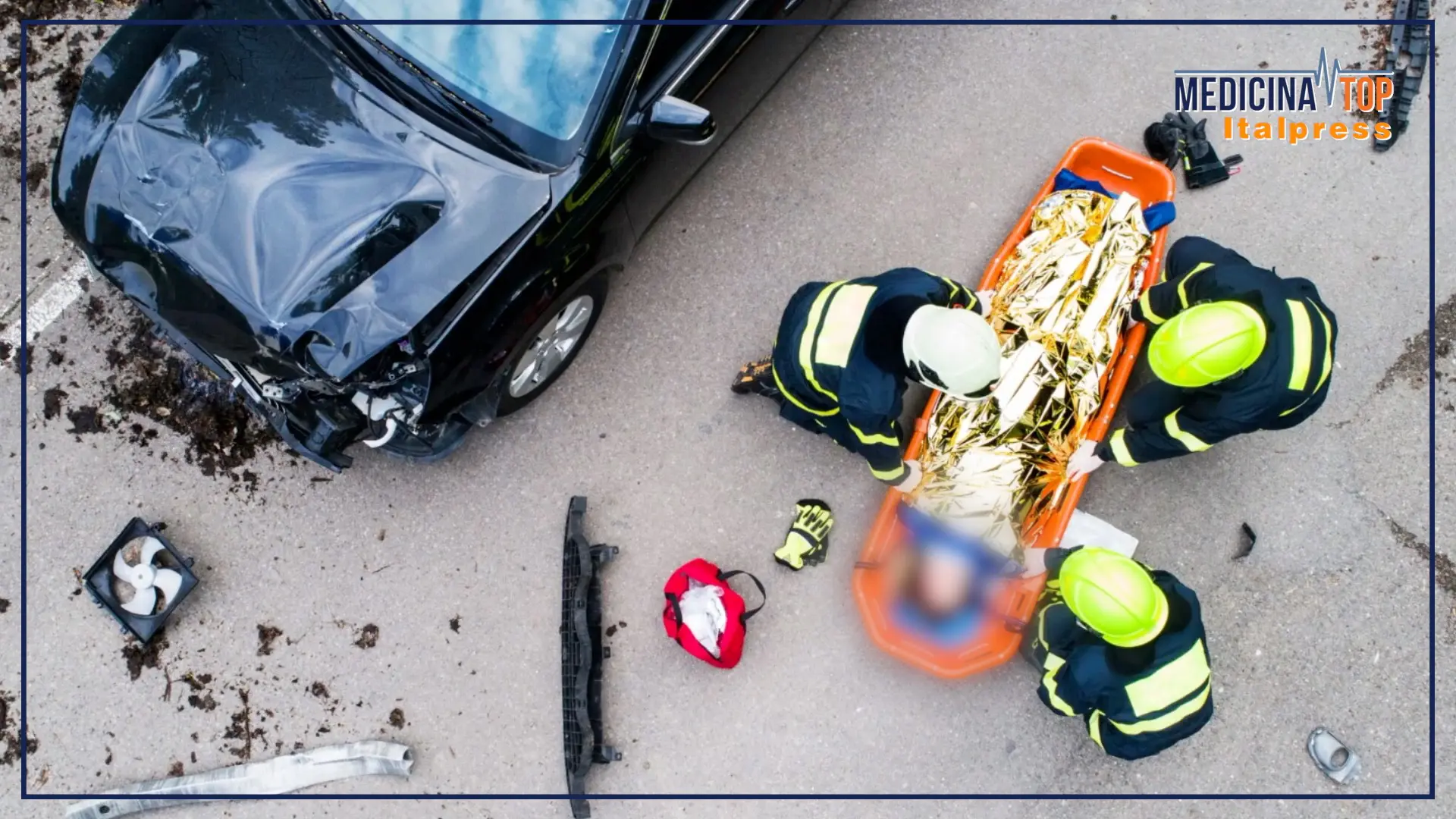
ROMA (ITALPRESS) – Severe trauma is not only a surgical issue: it is a challenge involving different skills, organization and ability to make decisions in very fast times. A polytraumatized patient can present multiple and potentially fatal injuries, requiring the intervention of different specialists and a coordinated path: a real system, trauma system. The chain starts from prevention, continues with the help on the event site, triage, transport and choice of the most appropriate hospital: continues with trauma team, diagnostics, bleeding control, surgery or interventional radiology, intensive therapy and finally rehabilitation. “The traumatologist cures the fractured bone, but the trauma is much more: it is cranial trauma, internal hemorrhage for a break of the spleen or the liver, a wound of firearm or a knifed, a broken bone or more broken bones. The Polyclinic receives many types of trauma, although the main Trauma Center is at the Niguard: the volume of trauma is huge, we do a little bit of effort to collect data. Globally, we have 5 million deaths per year for trauma: only a million and a half are linked to road accidents. In Italy we have three thousand people among men and women who die for a trauma: what however goes to impact society a lot is that trauma is the first cause of death in the young population, between 20 and 40 years. The costs for treatment, rehabilitation, loss of functionality, return to their activities, are very often huge: it is something very complicated for these patients, who have suffered enormous damage.” Hayato Kurihara, Head of Emergency Surgery at the Milan Polyclinic, interviewed for Top Medicine, TV format of the news agency Italpress.
The first reflection of Kurihara is dedicated to the most important aspects on which a traumatologist must focus attention: “For the priorities in managing a polytraumatized patient there is a sequence of actions, starting from the compromise of the airways: what fundamentally interests us is the control of bleeding. To make the difference is the way the health team is managed that manages trauma, it works as in the gearbox of the Formula 1: losing three minutes of time in the control of bleeding increases the mortality of 1%, six minutes of 2%, nine minutes of 3% and so on.” Another theme is the unpreparedness of people without medical experience in the face of such scenarios: “A common citizen, in the face of severe bleeding or trauma, remains absolutely smoothed and is afraid to touch a wounded man, when sometimes it would simply take the jacket and compress the source of bleeding: this is something we learned when there was the Boston Bombing, there was a particular situation because there were so many veterans of war that in their backpack had the Course lacci to stop the bleeding, at least stop the Stople.
The Trauma System, Kurihara explains, is “the chain of survival. Of course, I am very proud of the fact that in Italy they made the helmet compulsory for skiing mandatory, we are perhaps the only European country to have done so. The Trauma System requires an extra-hospital service that must centralize the patient in the best hospital, not necessarily in the nearest one: there is then intraospedal activity with the rehabilitation phase. The two main features of the surgeon who specializes in trauma are team decision-making skills and leadership, which can sometimes be made up of ten people: communication skills are fundamental. An emergency surgery and optimal trauma should have the opportunity to deal with 70% of urgencies and 30% of elective surgery: the Polyclinic we have succeeded in doing so also thanks to the collaboration of the other operating units, which also give a hand on the situations not urgent”. For him, he tells in conclusion, there is a new professional experience: “I was contacted by the government hospital in Abu Dhabi: in recent years in the United Arab Emirates they managed to break down almost 50% road accidents, but it is not enough yet and they have to reorganize the Trauma Team and the trauma register, so they asked me for help on the organizational and training plan but also in the management of the transfer protocols with the other hospitals.”.
– photos taken from video Medicine Top –
(ITALPRESS)