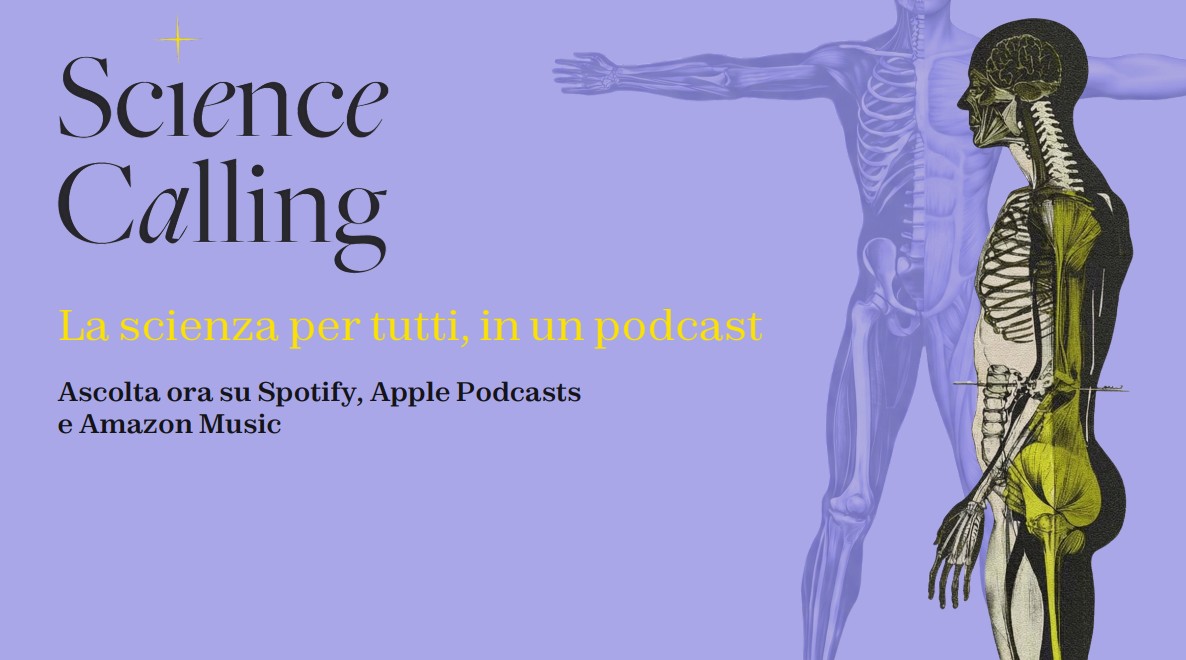
ROMA (ITALPRESS) – In the new episode of the podcast Science Calling the starting point is a gesture of reading: to return on an ancient work and to recognize, in the represented body, a sign that we can interpret today. From that image, the episode moves to the ground where oncology operates daily, between cell biology, diagnosis and therapeutic choices built on evidence. Available on Spotify, Apple Podcast and Amazon Music, Science Calling is the podcast conducted by Myrta Merlino and produced by Edulia, by Sapere Treccani. Guest of the conversation is Sunday Lorusso, Head of Oncological Gynaecology at Humanitas San Pio X and Professor of Gynaecology and Obstetrics at Humanitas University. The comparison, made with AbbVie’s non-consistent contribution, comes into the merit of contemporary oncology, which today distinguishes tumors based on specific biological and clinical characteristics: the isthological type, genetic alterations, receptors present on cancer cells and the general conditions of the patient. This information depends on the choice of therapeutic strategies. The personalization of care is then presented as a process that integrates molecular data and clinical evaluation, with direct effects on the organization of the treatment path. The focal point of the episode is dedicated to ovarian cancer, neoplasia characterized by frequent late diagnosis, little specific symptoms and absence of a screening program valid for the general population. The standard treatment is reconstructed in the advanced phases and the theme of relapse, until the passage that most affects the successive choices: platinum-resistance, associated with a reduction of the available options and a greater management complexity. In this phase, clinical research directly enters the patient’s path, both through the enrolment in studies and through the integration of biomolecular evaluations useful to guide targeted strategies. Within this scenario, the role of biomarkers emerges as instruments of stratification and selection, distinguishing between predictive and predictive indicators. In addition, the functioning of drug-conjugated antibodies is deepened, a technology that combines an antibody capable of recognizing cancer cells to a chemotherapy molecule. In this way the treatment is transported directly to the target cell and released within it, with the aim of making therapeutic action more targeted and reducing exposure of healthy cells. The episode therefore recalls the importance of timely integrating the tests necessary for the identification of molecular targets and ensuring appropriate access to the available therapeutic options, at a stage in which effectiveness is measured also on the time of clinical decision. The dialogue then extends to the artificial intelligence tools applied to the interpretation of clinical and biological data, up to the digital pathology, indicated as a support in the quantitative reading of positivity to biomarkers and in the construction of predictive models. In the background there is a research objective that, for ovarian cancer, maintains a clear priority: anticipate diagnosis, also through approaches such as liquid biopsy and circulating tumor DNA. A principle that crosses the entire path of care is recalled: the quality of life as an essential component of the therapeutic strategy and the need for paths capable of integrating specialist skills, clinical research and welfare continuity. -photo press office Esperia Advocacy –(ITALPRESS).