ROMA (ITALPRESS) – Sarcomis are rare tumors that develop in the support tissues of the organism such as bones, muscles, tendons and cartilages, but also adipose tissue, blood vessels and nerves. In Italy, about three thousand new cases of sarcoma are estimated each year, equal to about 1% of all malignant tumors of the adult: worldwide the incidence is about 5-7 cases every 100 thousand inhabitants a year, with over 200 thousand new diagnoses. Sarcomas include over one hundred different subtypes, each with specific biological and clinical characteristics: these rare tumors can arise at any age. Some forms are more frequent in children and adolescents, while others mainly affect adults and elders: for their rarity and complexity it is essential that they be diagnosed and treated in highly specialized centers, where a multidisciplinary team can define the most appropriate therapeutic path.
“The sarcoma is a large box with so many isthologies, or subtypes each of which has very different characteristics from the point of view of clinical behavior, presentation, aggressiveness: they can be born everywhere, in all so-called soft tissues such as nerves, muscles, adipose tissue.” Thus Ferdinando Cananzi, head of the medical area Surgery of sarcomas, melanomas and rare tumors at the Humanitas Institute in Rozzano, interviewed by Marco Klinger for Top Medicine, Italpress news agency.
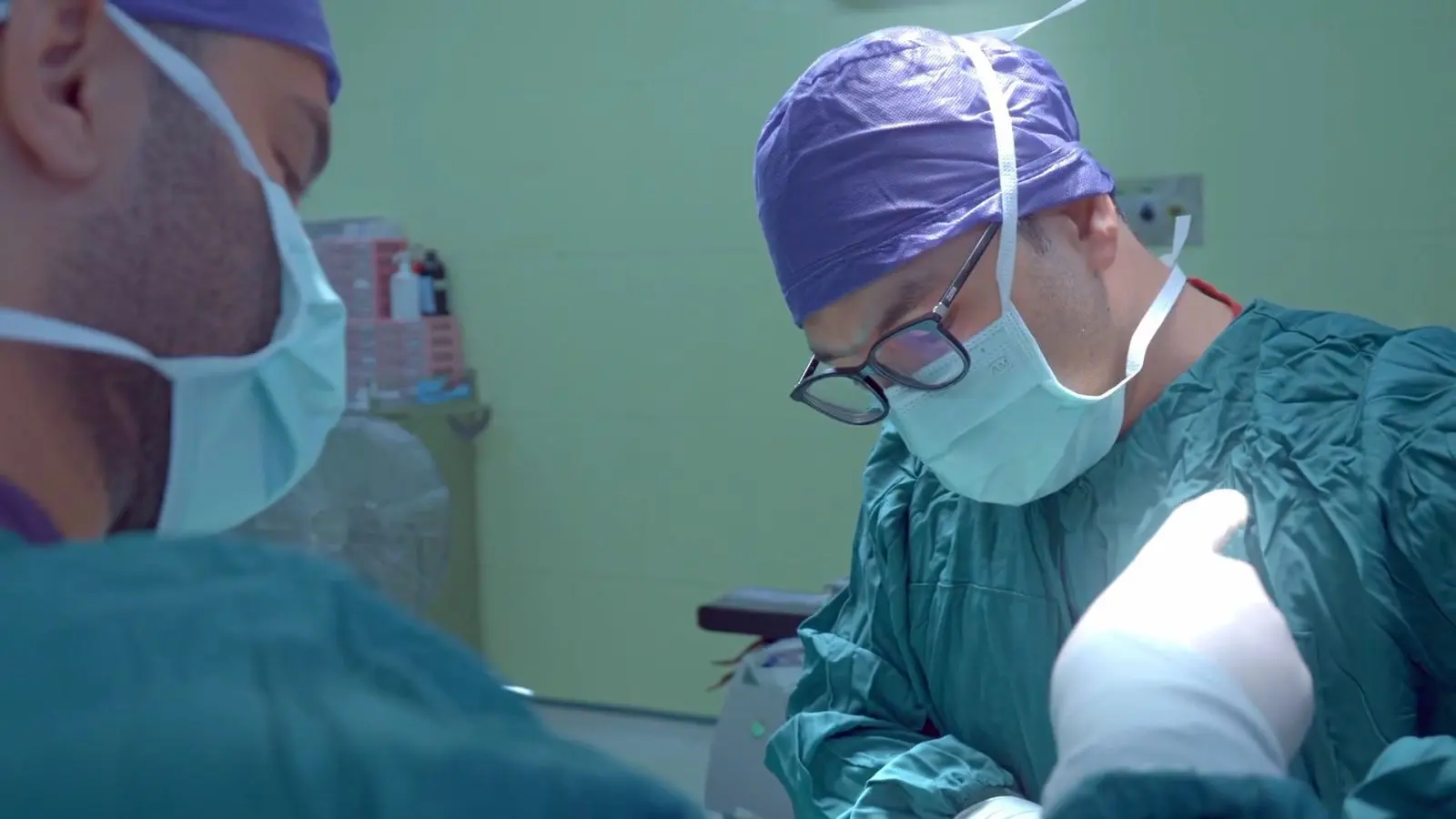
The first aspect to be taken into consideration on sarcomas, explains Cananzi, is the recognition: “The majority of injuries are fortunately benign, but some may have suspicious features: at that point it is always good to keep in mind that it might also be a sarcoma. These lesions, which can occur on legs, arms and trunk, can sometimes be exchanged for something different: if you arrive at a late diagnosis the tumor will have already reached obvious dimensions. There are sarcomas such as the retroperitoneal abdominal one: it is a very subdivided form, because it reaches very important dimensions but it can remain completely asymptomatic for so many months and does not give the patient any type of discomfort, until it reaches such dimensions for which 4/5 of the belly are occupied by this large neoplasia that moves the organs. Because of the remarkable dimensions that these tumors can reach, we must remove abundant tissue, with a series of structures that can be affected: in the belly and in the abdomen we must somehow touch and remove even several internal organs such as the kidney and the intestine; it is a very complex and varied surgery, but at the time when we can count on a number of specialists and reconstructors we can allow operations that otherwise we could not.”.
To date, he adds, “we still have no knowledge of factors that directly affect the development of this type of neoplasms: most are sporadic, some are associated with genetic syndromes. Some patients, like those who did radiotherapy, have a greater risk: in fact, however, there are no known factors that allow us to do prevention as for other more well-known neoplasms. Perhaps the only way to do prevention in sarcomas is to raise awareness: those who are sick are often unfortunate twice, because in addition to having a neoplasia they have a tumor they have never heard of before. Knowledge is therefore fundamental to both the patient and to help make a correct diagnosis: without this you get late, with often incorrect treatments”.
The selection of the structure in which to care, as well as of the reference professionals, is fundamental: “Every sarcoma has different characteristics – says Cananzi, – There are clinical factors related to the type of disease: if today a form of sarcoma is treated in a center with adequate clinical competence and multidisciplinaryity there are good chances of survival. It is a concert work among many specialists: having so many experiences working, studying and thinking about how to best treat the patient is the key to an effective treatment”.
Lombardy, in this sense, is avant-garde among the Italian regions as the network of sarcomas established on the regional territory “it aims to improve the efficiency and effectiveness of treatments: all forms of sarcomas can be treated only within hospital facilities with all clinical, surgical, diagnostic and radiological skills; there is a list of centers, identified with precise criteria, which will be able and treated patients with sarcoma. A greater understanding of tumor subtypes will allow us to tailor the treatment for each patient and decide who will have to receive a certain type of medical therapy, chemotherapy or biological medicine, who will have to do a surgery or a more or less extended radiotherapy: with this type of information we will be able to better cut the treatment for each patient and heal more.”.
– Photo Italpress –
(ITALPRESS)