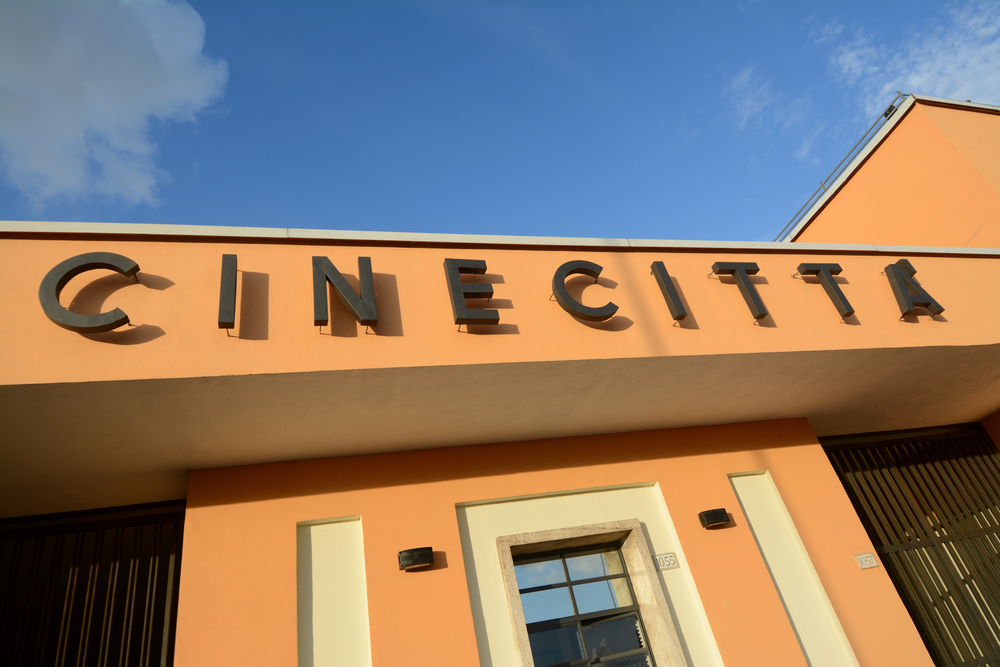
The axis Rome – Los Angeles has always been very strong. Just think that the greatest Italian actors and producers have lived long periods in Hollywood. The first two that come to my mind are Sofia Loren and Dino De Laurentiis. But also Rome, between the 1950s and 1960s was a crossroads of the international jet set, represented by the splendid Via Veneto and told by one of our most famous directors, Federico Fellini in “La Dolce Vita”. Cinecittà represented a Hollywood on the Tiber.
Of course, time passes and things change naturally, but Italian cinema is a story that has interested the whole world and, despite the changes, we can still feel very satisfied. The Italian box office offers us continuous improvement in an international context crossed by global platforms, technological changes and new consumption habits. But the most significant figure is national production. In 2025 Italian films reached 32.7% of the collection and 33.3% of the attendance. A good news on the economic level and not only, is proof that the public loves cinema art.
To fully understand the value of these numbers, we must remember that Italian cinema has gone through seasons of great battles. “No emotion is interrupted” is Fellini’s slogan against advertising interruptions in private TV films in the 1980s. While Hollywood consolidated its industrial domain and commercial television radically changed the media landscape, this slogan became the manifesto of a generation of authors. The film, supported the director, is not a container to break at will, but a flow of emotions, with its own rhythm and its own inner music. In those years, free television was asserting itself thanks to the intuition of Silvio Berlusconi, at the time visionary entrepreneur able to build in a few years a media empire with Channel 5, Italy 1 and Retequattro. Then with the acquisition of the Cineriz da Rizzoli catalogue, in 1983, he scored a watershed: entire film library passed under the control of a private television subject, free to program and interrupt them according to market logic. The conflict exploded openly in 1985, when Fellini denounced Channel 5 for airing his films with advertising inserts. His battle also found consensus in a political part: the Italian Communist Party first, and the Democratic Party of the Left, then, made the slogan in the 1995 referendum campaign against interruptions in films. The result was clearly in favor of the commercials with 55,77% of the Italians who chose no. Fellini died in 1993, so he could not witness this epilogue. Moreover, with the advent of free TV, the films also became so accessible to all. No cost.
Thinking about it today seems like a movie thinking about that battle. Yet, history has reserved unexpected developments. In the following years, the Mediaset group has promoted important restorations of the great Italian classics, bringing in the hall and international museums masterpieces of directors like Rossellini, Visconti, Pasolini, as well as Fellini himself. One of these is the project “Cinema Forever”, which allowed a high impact cultural enhancement operation. Restored films have traveled to Moma in New York, reaffirming the role of Italy as an indispensable reference in the history of world cinema.
Looking at the current scenario, Italian cinema would probably need more private investors who join the public facilitation system so as to encourage production and give a greater sprint to the virtuous economic flywheel that revolves around the cinema art.
While America has represented for decades the dominant production model, Italy has offered an authorial look marked by a certain narrative depth, and narrative capacity that has influenced generations of American filmmakers and not only. Dialogue always remains the best form of virtuous contamination.
L’articolo Roma–Hollywood, the golden thread of cinema proviene da IlNewyorkese.