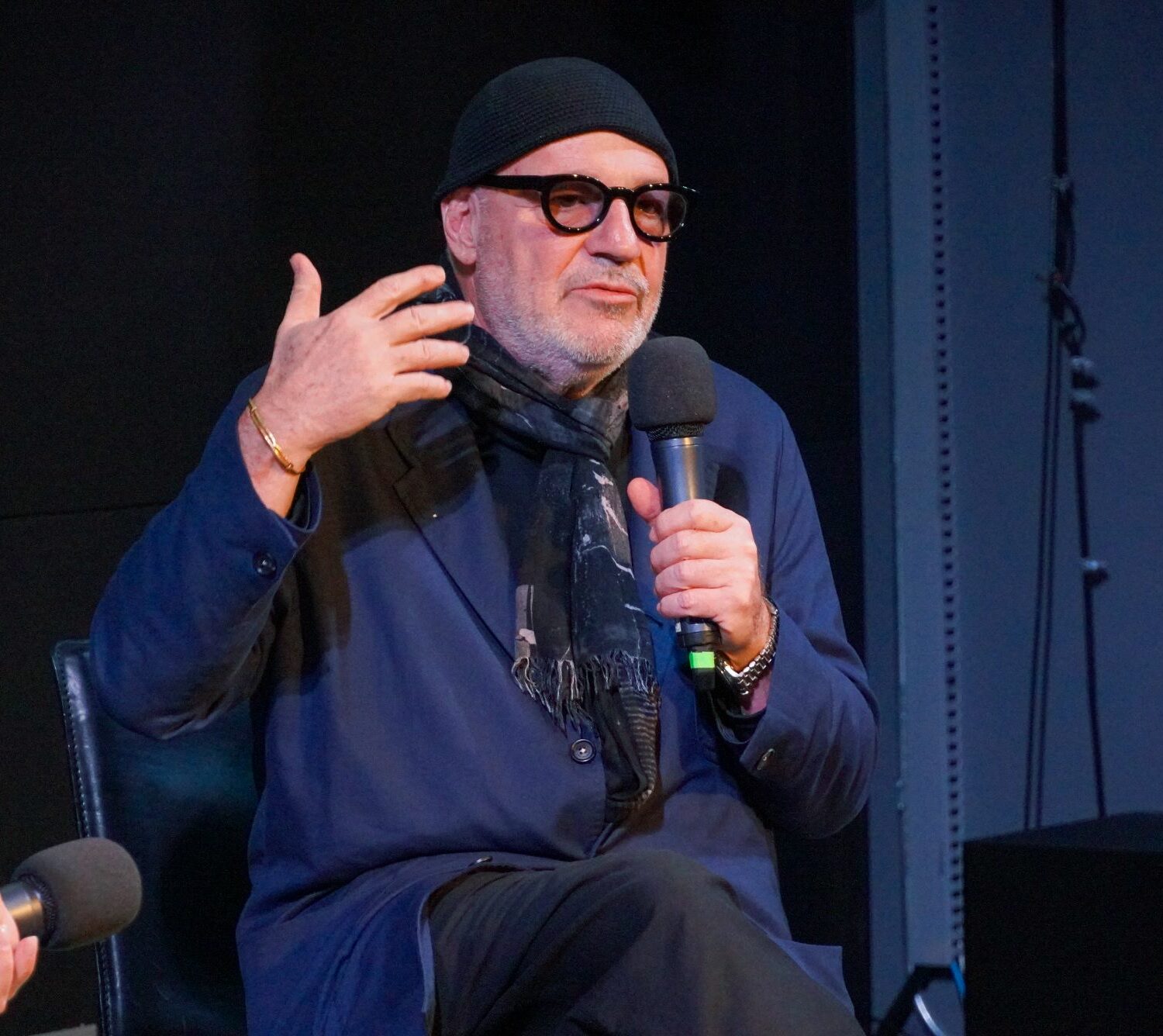
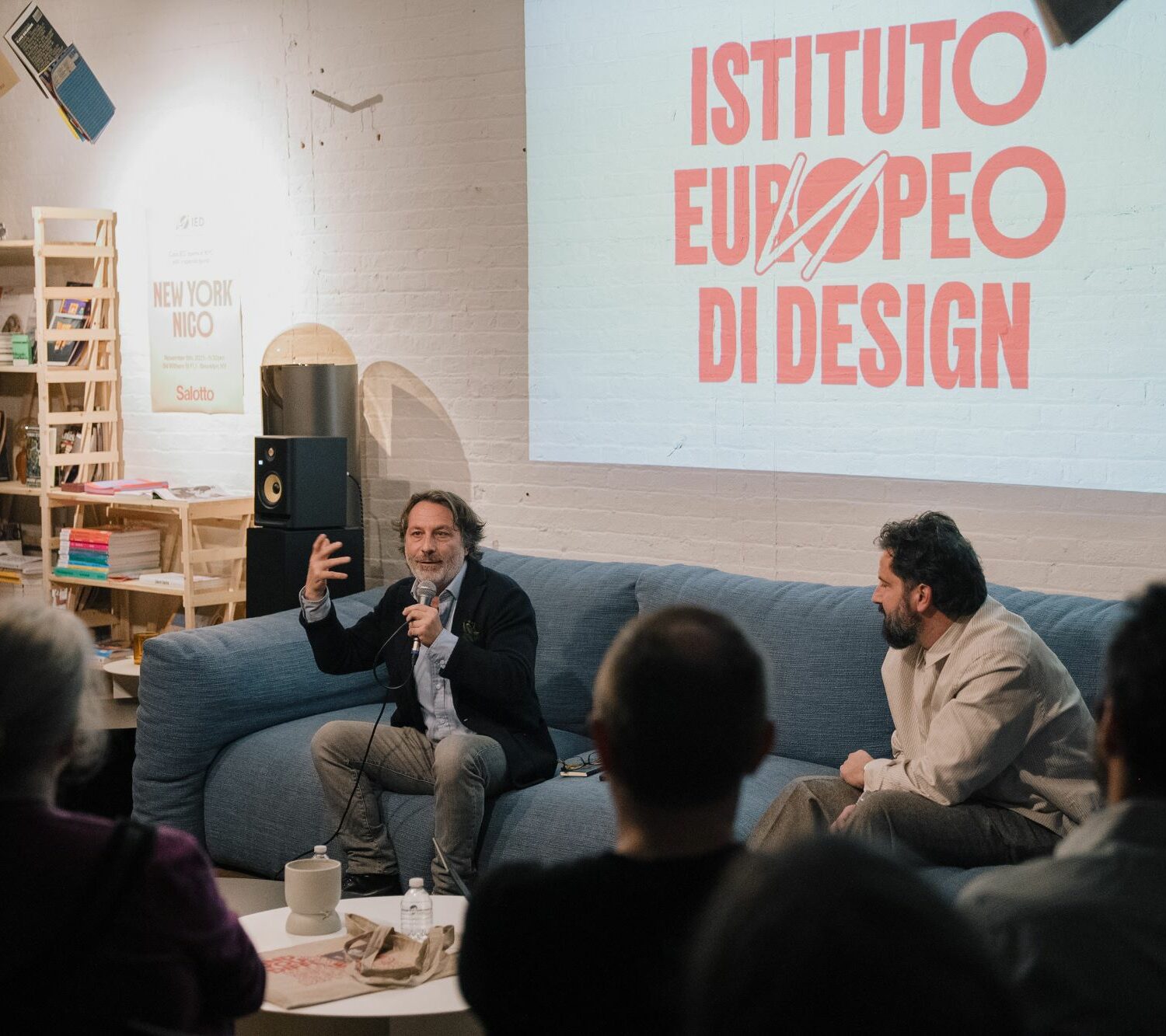
Riccardo Balbo is the Chief Academic Officer and Academic Director of the IED Group and President of the Fondazione Francesco Morelli, owner of the European Design Institute. Architect and PhD in Theory and Construction of Architecture, has an international experience in guiding IED Turin until 2017 and, between 2008 and 2013, in the direction of Masters in Urban Design and Regeneration and Digital Architectural Design at the School of the Built Environment (SOBE) of the University of Salford in the UK, contributing to the foundation of the MIND – Mediated Intelligence in Design research group. Its activity focuses on urban regeneration, complex systems, project culture and educational innovation, with a vision strongly oriented to the transdisciplinary and social responsibility of design. We interviewed him for IlNewyorkese.
What are the reasons behind IED’s decision to expand in the USA?
The idea comes from a reflection that Alan Brivio and I have been carrying on for a long time. The IED, which next year will take sixty years, has always expanded opening offices in creative and central cities in the cultural landscape. Each school is different, but all are born in a traditional vision of the concept of institute, that of our founder. Meanwhile, however, a wealth has emerged that we had never really activated: the community of former students, divided into chapters and small communities spread in many countries. It is not a commercial value, but a live system that transmits and receives signals between the school and the territory. We started using a diplomatic metaphor to tell this idea: the offices as embassies, the chapters as consulates, and then of the “honourous consoles” which are the alumni active on the territory. Hence the will to create a first chapter in New York. The goal is not to open a commercial outpost, but to tell a transversal design school, based on the relationship between thought and practice and the relationship between designers and society.
What is the main message you want to convey to American students and partners?
We want to introduce a school that, although deeply rooted in Italy, has an international presence in three different countries, private but managed by a non-profit foundation, and which interprets design in an authentically transversal way. Transversal for us is not a password or a marketing strategy: is a concrete commitment, a daily work that requires discipline, consistency and a certain dose of fatigue. It is the result of an approach that tries to overcome the traditional boundaries of the individual disciplines, creating connections between different worlds and stimulating the ability to look at design from multiple perspectives. This effort is not only intellectual: It is also practical, because it allows students and teachers to face the complexity of the real world, where solutions are never found within pond compartments. Without this opening, a school would risk stiffening, focusing on a single discipline to lose elasticity and ability to innovate. On the contrary, facing complexity keeps us alive, stimulates curiosity, nourishes creativity and allows us to stay ahead with time, anticipating new challenges and opportunities in the field of design
Can the European model become competitive with the American university system and its costs?
American universities are excellent, among the best in the world, but they have reached such high costs that they are increasingly inaccessible. Paradoxically, today many Americans can no longer afford them. The market is self-regulated: if you can’t stay here anymore, you move elsewhere.
Europe – with all its differences – has maintained a strong focus on humanities and soft skills. This allows design students to become versatile figures: competent professionals but also individuals capable of adapting, reasoning, questioning. It is a quality that allows you to work in different sectors, from consulting to pharmaceutical, to banking. The ability to rethink things is a force that Europe has never lost.
Are there differences in trends between young Americans and Europeans regarding training choices?
It is difficult to distinguish clearly the trends: they are now globalized. But something interesting is happening. After years of enthusiasm towards all that is digital and dematerialized, a strong attraction is returning to matter, towards doing. You can see hype unexpected around the jewel courses, at work with the file, at the craft. On the contrary, many product design courses – transformed over the years into “strategy”, “systemic”, “immersive experience” – today are found with less material content to work on. This is why we are reflecting a lot on materials, impact and responsibility. Students no longer ask what they will do, but why they will do it and what fate they will have what they plan. When this awareness is activated, students take off in their paths and this is a very powerful lever.
What is the strength of Made in Italy in the global formative imagination?
Made in Italy always works, but today it represents a much more complex system than the simple label. It is made up of relationships between productive districts, designers, schools, artisans. It is a difficult ecosystem to replicate elsewhere. In Italy design is taught in four different ways – Academies of Fine Arts, Polytechnics, Universities and ISIA – and especially in Academies resists a fundamental dimension: Techné, the union between technique and soul. Design is not learned in abstract: it should be done. You have to work, experiment, mistake. In that process you teach not only a technique, but inevitably also a part of yourself. This link between project, process and identity is what really characterizes the Italian model.
L’articolo Riccardo Balbo: bringing Italian design into the world, between complexity and transversality proviene da IlNewyorkese.