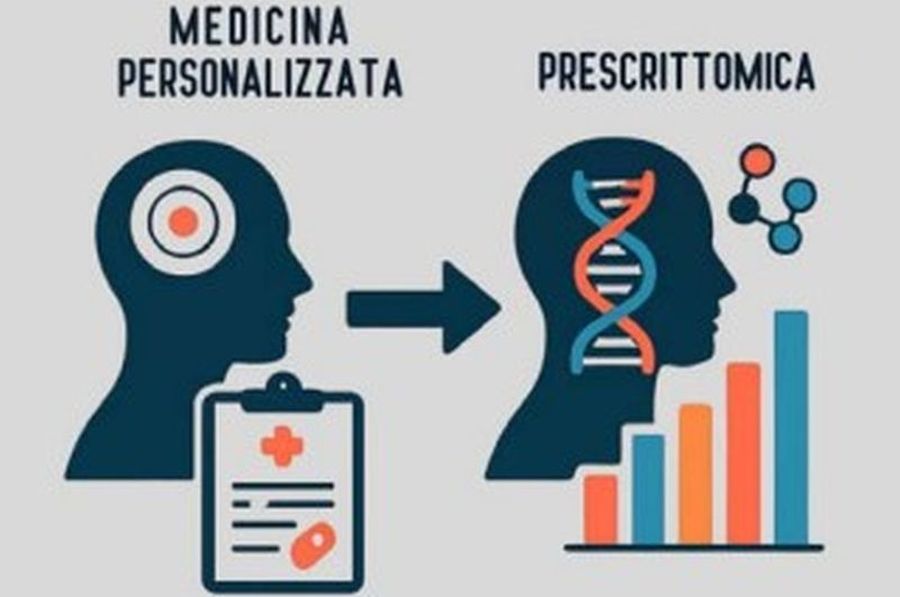
ROMA (ITALPRESS) – Medicine is experiencing a profound transformation: from the standardized approach, based on the “medium patient”, it is going to a person-centered model, able to adapt diagnosis and therapies to the genetic, clinical and environmental characteristics of each individual. It is the paradigm of precision medicine, at the centre of the AIFA dossier, which analyses the impact of this evolution on clinical practice and the sustainability of the National Health Service. In the last twenty years, the progress of genomics and digital technologies has made evident a limit of traditional medicine: patients with the same pathology can respond very differently to the same treatment. Hence the need for a more targeted approach, able to identify the most effective treatment for each individual, avoiding unnecessary or potentially harmful therapies. In clinical practice, this model translates into the use of innovative tools: genomics and pharmacogenomics allow DNA analysis to identify variants that influence the response to drugs; transcriptmics, proteomics and metabolomics allow to observe the biological activity of cell systems; epigenetics studies changes related to the environment and lifestyles; while bioinformatics and artificial intelligence integrate large amounts of clinical decisions. Thanks to these technologies you can predict the response to drugs, identify patients at risk of side effects and choose targeted treatments based on the molecular characteristics of the disease. “Precision medicine is not a luxury for a few, but a right for everyone” – says AIFA President Robert Nisticò – It is the most ethical and effective way to cure, because it allows you to avoid unnecessary treatments and really puts the person at the centre.” Change is particularly relevant in Italy, one of the longest-standing countries in the world. Population ageing involves increased chronic pathologies and so-called polytherapy. In fact, cohabitation with multiple diseases involves the need to take more drugs and represents one of the main clinical and social challenges of our time: 68% of over 65 receive prescriptions of at least five different drugs and 28.5% take ten or more. This condition increases exponentially the risk of drug interactions, therapeutic errors and adverse reactions, but also has a significant social impact: it reduces the autonomy of the elderly, complicates the life of caregivers and generates direct and indirect costs for the health system. A concrete risk is the so-called “cascade subscription”: a drug is prescribed to treat a side effect caused by another, triggering a vicious circle that leads the patient to take on an increasing number of medicines. “We can no longer allow politherapy to become a condemnation for the elderly – Nisticò points out – The challenge is to prescribe better, not more, using genetic and clinical information to avoid unnecessary risks.” In this scenario, the prescribed, discipline applies the principles of precision medicine to the management of pharmaceutical therapies, with the aim of optimizing prescriptions and reducing drug interactions. “Prescriptomics is the bridge between knowledge of genes and daily clinical practice – adds Nisticò – it means overcoming medicine for attempts and offering safer care, especially for fragile patients.” An area where this revolution is already reality is oncology. For decades chemotherapy has represented the main tool against cancer, indiscriminately striking tumor and healthy cells, with significant side effects. Targeted therapies, however, recognize and block specific molecular mechanisms of cancer cells, resulting in more selectiveand generally better tolerated. The main categories of targeted cancer drugs include: Thyrosin-kinase inhibitors (TKI): they act by blocking enzymes that are fundamental for tumor proliferation. They revolutionized the treatment of certain leukemias and are used in lung and gastrointestinal tumors. Monoclonal antibodies: molecules designed to recognize specific targets on cancer cells. Anti-HER2, for example, have changed the prognosis of HER2-positive breast carcinoma. Immunotherapies: drugs that activate the immune system against cancer, such as immune checkpoint inhibitors, today used in numerous advanced neoplasms. Immuno-conjugated (ADC): combine monoclonal antibodies and cytotoxic agents, transporting the drug directly to cancer cells and reducing the impact on healthy tissues. Therapeutic vaccines: still in development, aim to train the immune system to selectively recognize and affect cancer cells. Central is the role of biomarkers: to choose the most effective therapy it is not enough to know the location of the tumor, but it is necessary to analyze its molecular profile. Mutations in genes such as EGFR, ALK or ROS1 guide the therapeutic choice, moving attention from anatomical localization to the “genetic code” of the disease. Accuracy therapies have significantly improved the prognosis of many tumors, but still have important limits: the development of resistances, high costs and uneven access to molecular tests. “In oncology precision medicine is already reality, but it requires a paradigm change – Nisticò observes – we must move from an organ-based vision to a molecular characteristics of the disease.” Looking at the future, the dossier highlights the growing role of artificial intelligence and bioinformatics, which will allow to develop increasingly accurate predictive models and integrate clinical, genetic and environmental data. Among the most innovative perspectives is the pharmacogenomic passport, a genetic identity card of the patient who could accompany it throughout the life. “The pharmacogenomic passport represents a concrete perspective to improve the safety and effectiveness of care – Nisticò concludes – It is a challenge that requires governance, equity and responsibility in the use of data”. Precise medicine therefore represents not only a scientific evolution, but a structural and cultural change involving the entire healthcare system. The challenge is to make it accessible, fair and sustainable, transforming innovation into a concrete benefit for all citizens. The direction is outlined: to overcome the “equal for all” model to build a health more effective, more sustainable and really tailored for each person. -photo press office Aifa – (ITALPRESS).