ROMA (ITALPRESS) – The hand is one of the most complex structures of the human body: it consists of 27 bones, as well as dozens of joints, more thirty muscles and a dense network of tendons, ligaments, nerves and blood vessels working in perfect synergy to ensure strength, sensitivity and precision. Thanks to this unique architecture, the hand is able to perform gestures that require great power, such as grasping or sustaining a weight, but also extremely fine and coordinated movements: in sports activity the hand has a fundamental role, it is a direct protagonist in disciplines such as volleyball, basketball, tennis, padel, golf, climbing and fighting sports, but it is also fundamental in many other activities, where it ensures balance, coordination and control of the athletic gesture. Precisely because subjected to continuous stress, trauma and repetitive movements, the hand can meet numerous pathologies, from fractures to lesions of tendons and ligaments up to disorders caused by overload.
“It is not true that sport hurts, but in fact the higher the level of competitiveness and the higher the level of performance will be the risk of accidents. Contact sports and those with the ball definitely expose their hands to a series of traumas: the boxer is actually more protected than the cestist, the volleyball player or the tennis player, because they have a hand-punched organ commitment so intense that they can meet both traumatic and over-stress pathologies. Tennis and padel definitely had an exponential growth thanks to the Sinner phenomenon, but this is where we see a series of over-stress issues such as tendonitis and inflammations: these concern patients who are not prepared to do that kind of sport, but want to do so because they see Sinner and are inspired by him”, said Giorgio Pivato, head of the operational unit of the Humanitas Group, interviewed by Marco Klinger for Medicine.
In case of late or inadequate treatment, he continues, “the greatest risk, apart from fractures, is rigidity. For example basketists and volleyball players are often dealing with the unspoilt finger, which happens after a flattering, subluxation or however the involvement of the hair-binding apparatus: if not properly treated the structures stretched in these traumas heal with the interposition of a scar tissue, which becomes shorter and inevitably gives a rigidity; if managed by brilliants, it is not immediately shortened. When a finger comes out, it means that all the ligaments and the capsule have broken: without proper treatment you risk staying with your finger straight”.
Pivato then dwells on the difference between hands injuries in those who practice a sport discipline for passion and those who practice it by profession: “The most frequent interventions for me are collateral ligament injuries if we talk about skiing, while for contact sports are phalange fractures. On the latter, however, we talk about professionals: if these are hurt, they really feel it, because they know what they have to do; if amateurs get hurt usually it is a much lighter thing, more than other situations from lack of training or errors in heating or cooling”.
The next reflection is dedicated to what is probably the injury to the most striking hand of 2026: “I was lucky, and in a way bad luck, to confront me with Alcaraz’s medical entourage. His injury is certainly due to an inflammatory situation, however, linked to a partial injury of a fundamental ligament of the wrist which is called triangular fibrocartilages: in the movement of the reverse, where the hand is completely prone, this ligament tends to give up a little. There are also congenital situations: Sinner has anatomical characteristics that allow him to do a certain type of exercise, avoiding meeting this kind of thing, while the ulna of a human being is congeniously more unstable and therefore we cannot do such a thing; if we try, the risk is to meet a number of problems.”.
In closing Pivato again focuses attention on the differences between standard patients and specialized athletes, where the first “have a pain tolerance definitely higher than professionals: they are also supported by medical and rehabilitation teams that allow them to learn exactly the movement to do, avoiding the overload of the most exposed structures. These things are training: with proper heating and cooling you can eliminate many causes of over stress. Biology is the same for all, athletes are not superheroes: Sofia Goggia ran the day after breaking, on Ronaldo we all remember what happened, Marc Marquez split the plaque when he set himself to make his feet on the couch. We must have great respect for biology and remember that there is always an entourage around these characters, which have different functional needs to which we do not have to submit: there are different times and different guidelines. What I always say to my patients is to always get to the threshold of discomfort and never to that of pain: then you have to learn not to do yourself and learn techniques, but this also applies to musicians. If you have trainers who know biology, physicist and problems you do not encounter a certain type of situation: you only need adequate preparation.”.
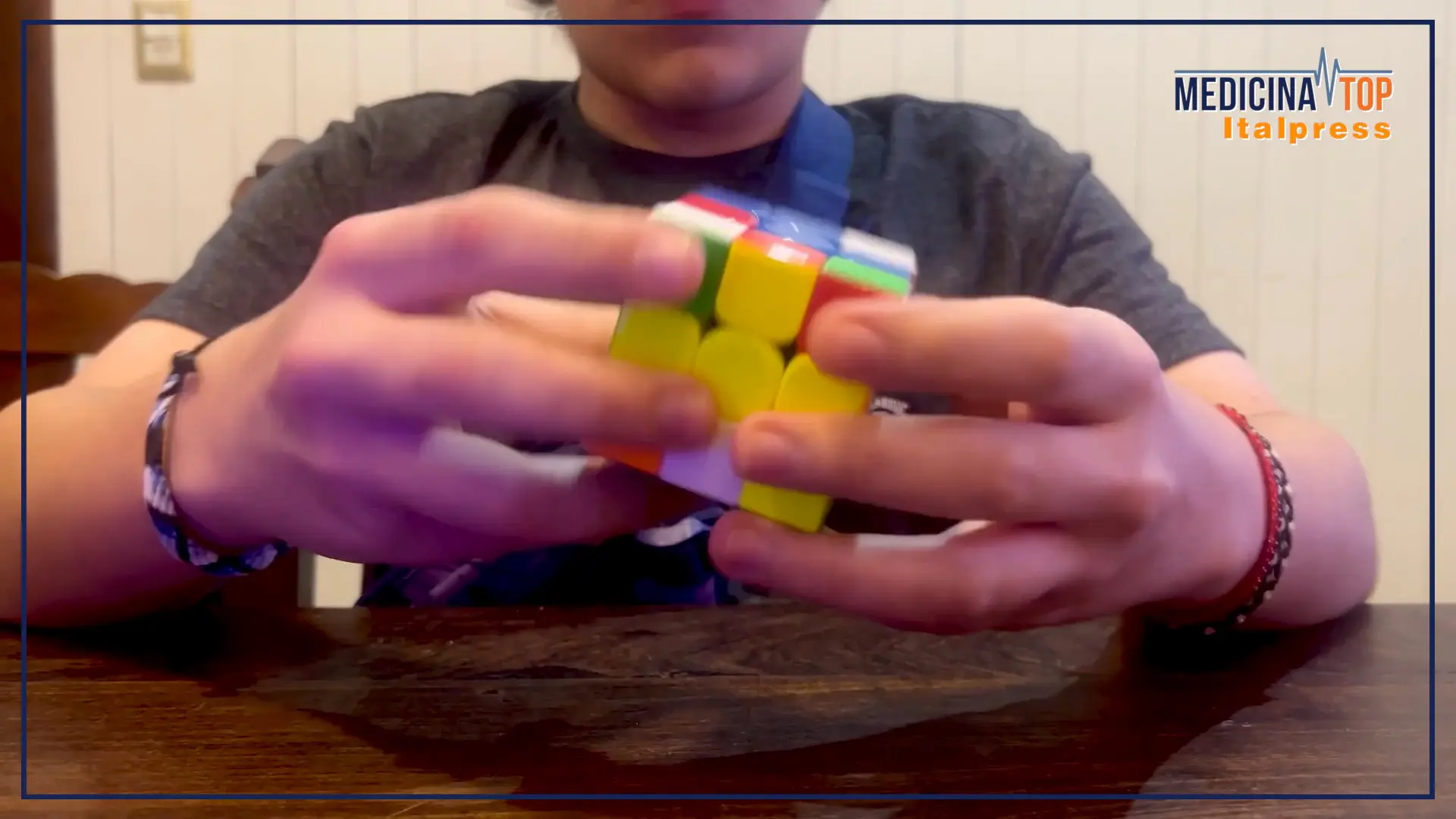
– photos taken from video Medicine Top –
(ITALPRESS).