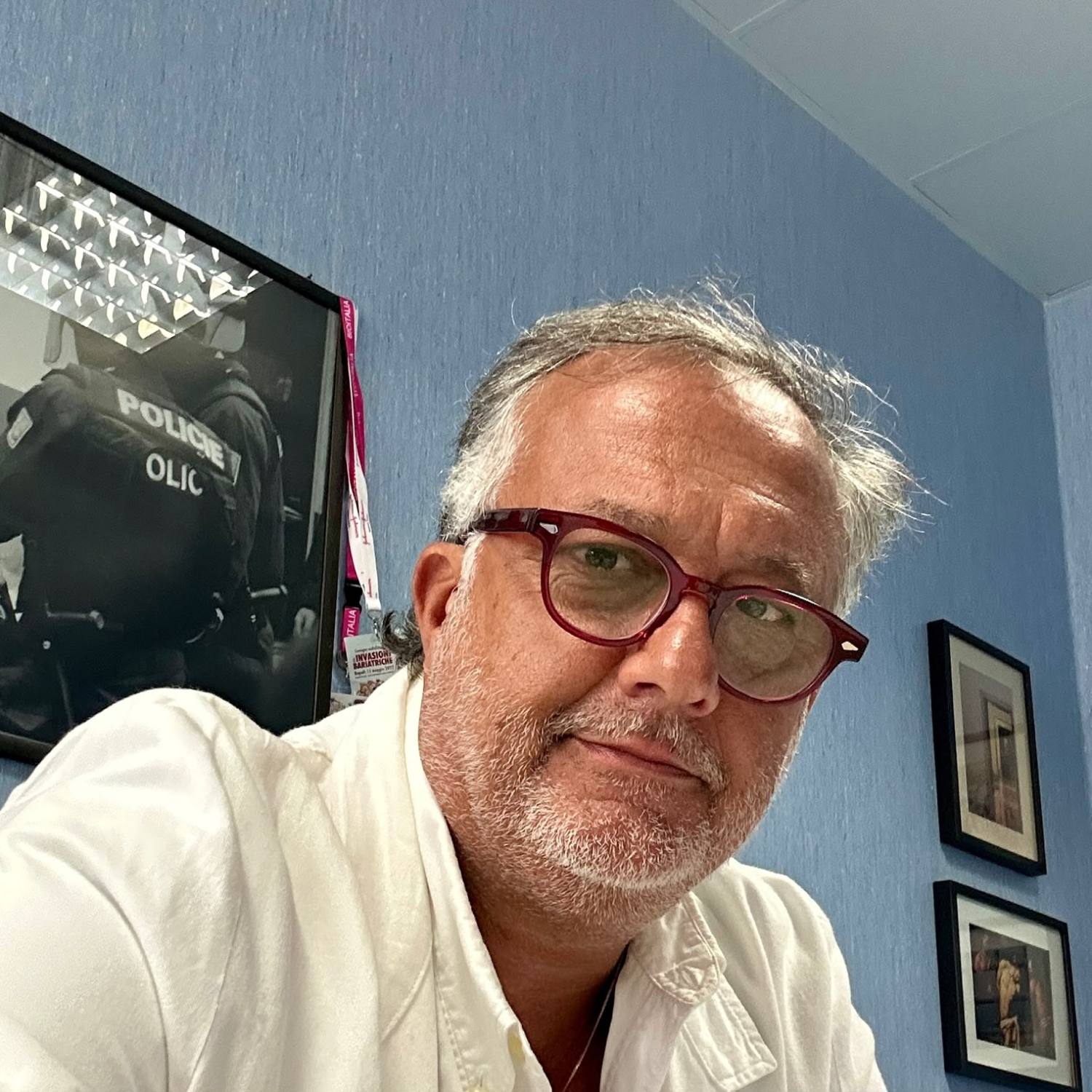
“Obesity must be considered a disease to all effects”. It is from this point that, according to Pasquale Mugione, should start any serious discussion on the subject. Medical surgeon of the Monaldi Hospital in Naples, where he deals with abdominal laparoscopic surgery and, for many years, of obesity surgery, Dr. Mugione intervened at the New York microphones in the podcast Portraits. In New York he will participate in the initiatives of Campus Salute 2026 together with Professor Annamaria Colao and other professionals who have joined the initiative, with the aim to speak above all about prevention, correct lifestyles and obesity, also among children and adolescents.
Obesity is a particularly obvious problem in the United States and also concerns Italian families moving there. “Our relations will address mainly to the Italians who live there and who, moving away, can absorb some bad food habits spread in the context in which they live”, said Dr. Die. Ordinaries that can involve the whole family and especially the youngest: “In the United States, among young people up to 19 years, obesity is about 21 percent of the population: it is a very important and alarming figure. Some of these boys have forms of severe obesity. If we look in particular at the band between 12 and 19 years, we basically talk about a boy out of five with problems of obesity”.
According to Pasquale Mugione, the spread of the disease cannot be explained through a single factor. The genetic predisposition counts, but also the environment in which we grow and live: “We Italians bear an important heritage, that of our food culture: historically we are not a population characterized by such high levels of obesity. We have become progressively.” And precisely this change shows the weight assumed in recent decades by daily habits: “There are certainly genetic factors, but environmental factors have contributed in a very significant way to the increase of this pathology also in Italy”.
Bariatric surgery is one of the treatment possibilities for patients with obesity, especially in severe cases or when other pathologies are present: “In adults we talk about obesity when we have a body mass index, the so-called BMI, above 30. There are different degrees of obesity: first, second and third degree. From the 40 of BMI up we are in front of conditions that find a greater surgical indication”. The BMI is not the only parameter to consider: “Even in the presence of a first or second degree obesity may be associated comorbidity, such as diabetes, arterial hypertension, arthrosis in more districts and other pathologies. They are all factors that can strengthen the indication to a surgical treatment”.
The point on which dott. Mugione insists more, however, comes before the therapies. It is the way society looks at people with obesity: “Unfortunately there is still a lot of ignorance about this issue and a part of society continues to consider obesity almost as a vezzo, something that can be solved simply by eating a little less or making a diet. Unfortunately it is not so». From this conviction, according to the surgeon, behaviors arise that can have heavy consequences on people’s lives: “The stigma, bullying and social ghettoization of people with obesity are born from this misunderstanding.”.
Dr. Pasquale Mugione compares the attitude towards obesity with that reserved for other diseases: “It doesn’t seem to me that a cardiopathic, diabetic or neurological patient is derided because he must undergo surgery or follow a therapy. A patient with obesity who decides to resort to a surgical or pharmacological treatment, instead, is still perceived by the collective imagination as someone who wants to solve their problem easily”. For this reason, he emphasizes, “the first mission must be this: to make it clear that obesity is a disease to all effects”. A battle that also considers personal: «I am carrying out a very strong battle against those who continue to create stigmas towards people suffering from obesity. It is no longer acceptable to resort to certain appeals or to treat these people in that way”.
The consequences of the stigma become even more serious when they concern children and adolescents: “Among adolescents we live dramatic situations, and I will also speak in New York. There are boys who end up in therapy because they are bullied by the comrades”. The problem, according to Dr. Mugione, born also in families and the way obesity is interpreted: “Probably because even in the families of those companions obesity continues not to be considered a disease, but simply the result of the desire to eat”. No need, add, replace the stigma with pietism: “I do not even want a merciful attitude towards those who are sick, because I also consider that form of pietism wrong. It needs understanding. A child or a teenager with obesity must be understood and even more included in the school and family community”.
It is in the family that should start prevention. One of the problems, according to Pasquale Mugione, is that still today many parents struggle to recognize a condition of overweight or obesity in their children: «We come from a post-war culture, after years of food shortages, in which to see a paffutello child meant to think that he was a healthy child. It is no longer so”. The old criterion according to which a child in meat would automatically be a healthy child must be, therefore, exceeded: «Prevention must begin within the family. The problem is that often obese parents have obese children. It is more rare to find a child suffering from obesity with both parents normopeso”.
The economic conditions and the availability of very calorie and little nutrient products are also affected: “Even the economic difficulties of society can lead us to eat less well. Very often it means resorting to so-called junk food. With a few euros a boy can buy foods very calories and poor nutritional value”. Dr. Mugione also mentions the spread of processed foods and sweetened beverages: “When we were young, Coca-Cola and Fanta were almost exclusively drinking at birthday parties or on some special occasions. Today drinks of this type are permanently present in the refrigerators of many families”. The problem is not the occasional consumption, but the transformation of these products in a habitual presence in the diet.
In recent years, in the meantime, new drug therapies have been added to the possibilities offered by surgery. Pasquale Mugione speaks of a “complementary and multidisciplinary approach”, in which drugs and surgery should not necessarily be considered alternatives: «The pharmacological therapy of obesity can become a therapy that allows the patient to arrive at the operating table with a lower BMI and, consequently, to reduce some of the risks related to surgery». Among the drugs available today cites tirzepatide: “They are obtaining significant results and are allowing to face a very complex problem like severe obesity”.
The great public attention around these drugs, often associated with the use by famous people to lose weight, is likely to confuse their therapeutic use with abuses: “We want to talk about Hollywood stars taking these drugs only to lose weight, but I think these deviations should not change our judgment on the value of therapy.” The same reasoning, according to Dr. Mugione, applies to the illegal market of medicines purchased online: “That is another world, also made of illegal markets. It cannot become the parameter with which we judge a medical therapy”.
Finally, the question of economic sustainability for the health system remains: “The real problem is that in Italy the impact of obesity on the National Health Service has yet to manifest itself completely. Such a large population of patients suffering from obesity and related pathologies can lead to enormous costs in the future”. For this reason Pasquale Mugione believes that even the possible gratuitousness of new drugs should be assessed on the basis of clinical conditions: “It is necessary to identify certain categories of patients, for example persons with serious heart disease or with specific clinical conditions, for which gratuitousness can have a real health justification”.
The message Dr. Mugione will lead to New York, however, remains above all that against the stigma: «You do not choose to be obese. Genetic predispositions exist and affect environmental and family factors in a decisive way”. From here a position that the surgeon claims without attenuation: «It is necessary to take the distance from those who continue to make stigma. On this I am very clearly: I do not admit derogations. We cannot continue to treat a person suffering from obesity as if his illness was simply the result of a choice”.
Article Pasquale Mugione: «Obesity is a disease, not a choice» comes from IlNewyorkese.