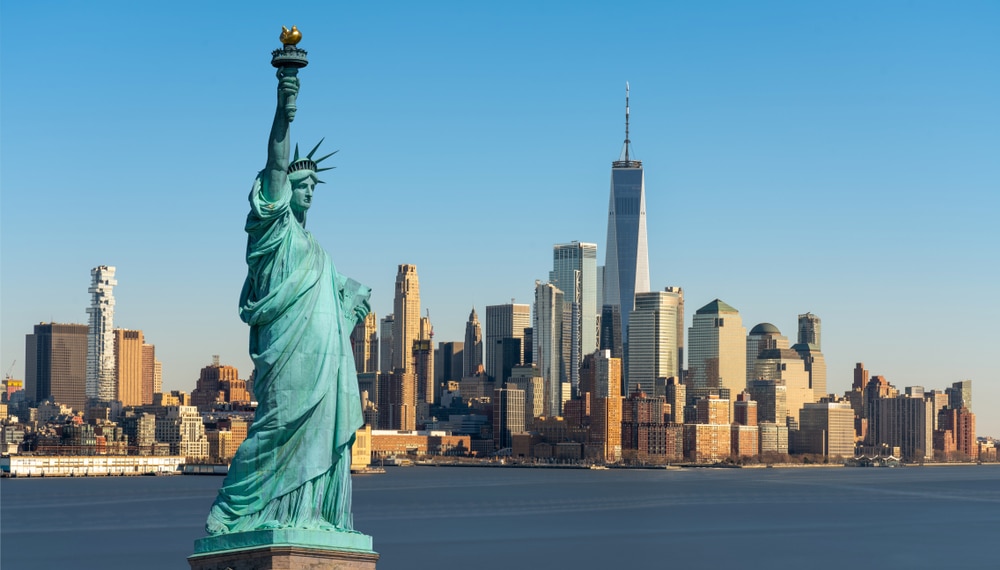
It is glamorous New York, the metropolis of Truman Capote, more paranoid and unlikely that of Jonathan Lethem, more psychological-existential than Paul Auster, sweetamara for Lawrence Felinghetti: amusement park and misery at the same time.
I imagine that from those houses climbed into the sky on Central Park, from those rooms, through the glass walls, you can embrace the green buds of the trees that change the color of their leaves: the green leaves the place in yellow, the bright orange, the red edged. Before they are taken away by the Hudson wind and return color to return white, pink, lilac in spring. A first autumn show that exhorts nature and man to reconcile.
I have always tried to figure out how life takes place in those houses, which close and frame the Central Park. I look at them from down while sitting on one of the green benches, memory of happy and sad moments. A squirrel ignores me. He understood on the flight that I have neither nuts nor acorns for him. A squirrel and go away, jumping and discontent.
I do not miss a walk along the boulevard of the olmas between the statues of poets and writers, giving a grateful look to the playwright William Shakespeare, the poet Friedrich Schiller and the novelist Walter Scott. I arrive to the Carousel, where Holden Caulfield – in Jerome D. Salinger’s novel – looks, stuck in a catinelle rain, her sister Phoebe having fun shooting on the carousel sitting on a “old dark stallion with the air of the Malandata”. I push myself to the Pond of the ducks and ask myself, with the young Holden: “Where are the ducks going in winter when the water surface becomes frozen? ” It is a question that has gone through many generations of readers.
I’m going back to watching those houses climbed into the New York sky. Complica Federico Rampini, with an article on the Corriere della sera, I discovered what happened or still happens in one of them: guests are met who are called Patti Smith or Jonathan Franzen, Robert De Niro, also happened Philip Roth: “an impressive density of New York intelligence, from the great contemporary literature to the stars of the cinema d’autore”. That Upper West Side house-coffee-literary is by Antonio Monda. He’s been leading us through the streets of New York for a long time. He showed us, in his L’America does not exist (Mondadori, 2012), the city of the fifties and told us how Maria and Nicola, two brothers twenty years, arrived with the transatlantic from Italy. They were enchanting, those boys, “to look at the cars and the colored neon, and then the fumes that came out from the bottom of the streets. They seemed to be the engine of the entire city, of that island of cement that continued to generate energy”.
Everyone has always lived in New York as he wants, in a unique and original way. It also happens to the two young brothers, who choose different ways. She, Mary, dreamer, prefers Brooklyn; he, Nicola, greedy of opportunity and success, chooses Manhattan, “the place where everything, sooner or later, happens”.
For the title of the book Monda made its own provocation by Henry Miller: “There is no America. It is a name that gives an abstract idea” (Tropic of Cancer, Mondadori). But we know that, good or bad, America is there. We know it is the place where everything is possible.
But how was New York back in time? Monda entrusts, in a glorious morning (Mondadori 2026), to two others, Alfonso and Rosanna, Sicilian emigrants, arrived in 1912 at the New York pier with the greatest transatlantic ever built, to tell us other moments of other years of a city where everything happens and has always happened and where everyone wants to seize their part of American dream.
New York, it is known to all, it changes quickly but always remains itself.
Everyone lives New York as they want, in a unique and original way. It was the literature that captured its essence. New York inspired literary masterpieces of all time, works of writers who loved this city. Each writer tells his own New York. It is more glamorous than the metropolis of Truman Capote, more paranoid and unlikely that of Jonathan Lethem, more psychological-existential than Paul Auster. Dolceamara for Lawrence Felinghetti: amusement park and misery at the same time. Pages that allow you to rack up in New York without ever being there before.
When America was for us Italians a faded postcard we began to know NY through Ruggero Orlando, the historical voice of Rai from the 1950s to the 80s. Let us remember that “Here New York speaks to you Ruggero Orlando” that every evening reached with the news the houses of the Italians. And again that “Here New York City Never Sleeps”. His was Frank Sinatra’s NY and Cadillac’s one block long. Ruggero Orlando liked to write: he was at the Rockefeller Center and while he was beating on the keys of his Olivetti Letter 22 from his window he looked at the Central Park. Throw thoughts from a NY already colored for Italy in black and white.
In America we are (Rizzoli, 1976) what he really thought of New York Ruggero Orlando said in this book: “New York is not beautiful. It is necessary. Like oxygen.”.
I’m very sorry, New York is also absolutely beautiful.
L’articolo New York City, timeless city proviene da IlNewyorkese.