
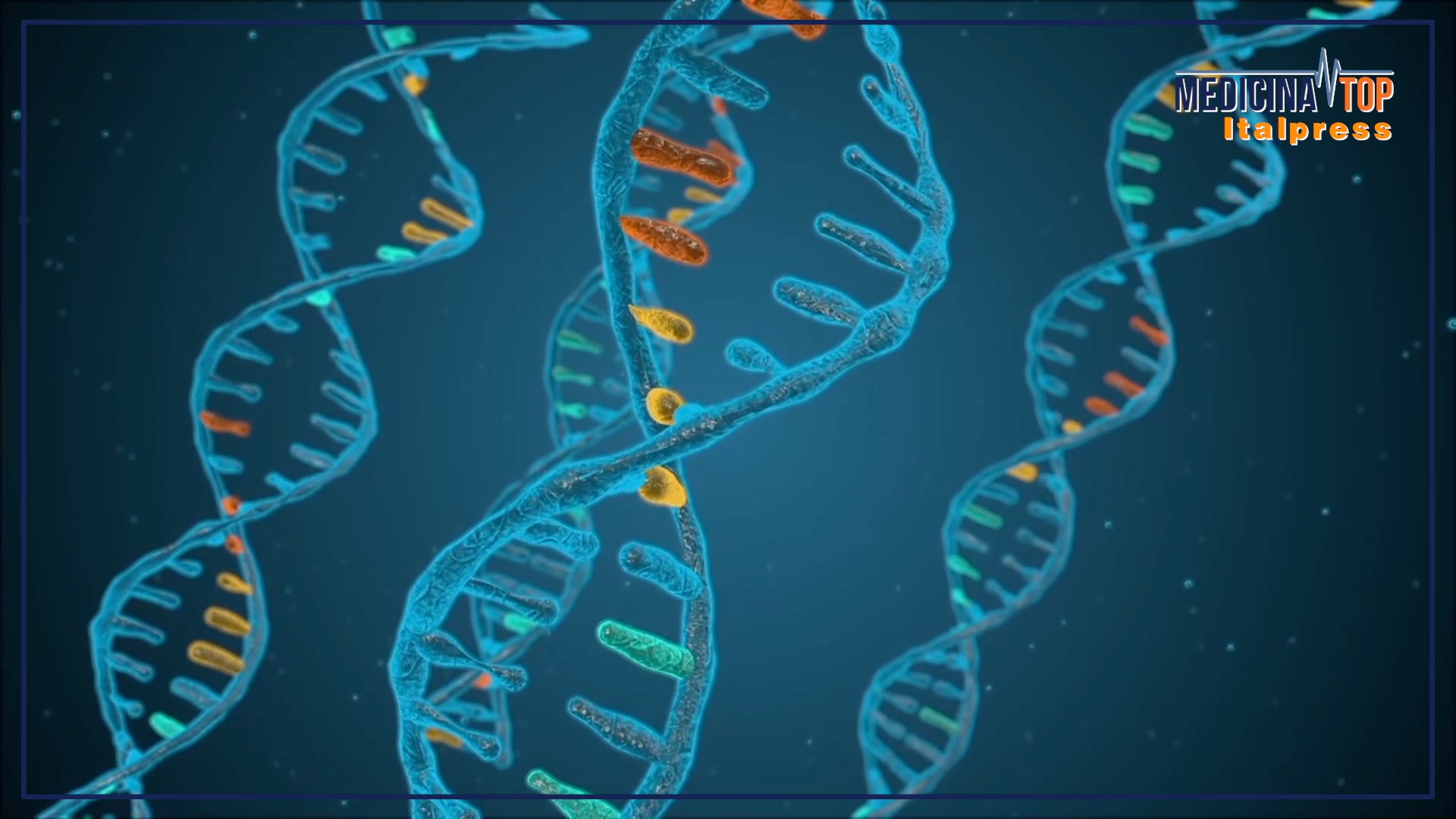
ROMA (ITALPRESS) – Genetics have an increasingly central role in medicine: its contribution is fundamental to understanding the causes of many diseases, improving diagnosis and identifying people with a greater risk of developing certain diseases. Genetic tests allow us to identify mutations associated with hereditary tumors, rare diseases and other conditions that may benefit from targeted prevention or surveillance programs: genetics is also one of the pillars of personalized medicine, an approach that adapts prevention, diagnosis and therapy to the biological characteristics of each individual; analyzing the patient’s genetic profile is in fact possible to choose more effective treatments, predict drug response, reduce side effects and develop increasingly targeted prevention strategies.
“Medical genetics is a science that has come out of the niche and has become an important tool: it studies the information written in the Dna, a sort of booklet of biological instructions transmitted by the parents that contains information for the development, the functioning of the cells, individual characteristics such as blood types; in genetics we can also find useful information to understand why a person has become sick of a certain pathology, mostly rare diseases but as a whole quite common. For some pathologies, the genetic basis is linked to the development of the disease itself, even if it can be manifested with a certain heterogeneity; in other cases, genetics can give us the basis of susceptibility, which does not mean certainty of disease but risk that it manifests itself with certain factors, some known and others less.” This was said by Monica Miozzo, director of the complex operating unit of Medical Genetics at Asst Santi Paolo and Carlo in Milan, interviewed by Marco Klinger for Medicina Top, TV format of the news agency Italpress.
With regard to genetic testing, he explains, “there must always be a precise clinical question: they should not be made out of curiosity and that is why the DIY tests do not work, because the path that the patient undertakes provides advice, pre-test and clinical framework in order to understand if the genetic test can be useful to explain his disease or how it is transmitted to the family, which reproductive risks there might be and which are very important genetic therapy. Brca1 and Brca2 genetic tests perform very important functions in our cells, because they repair a lot of damage to the DNA: when one of these two genes does not work, the person has a higher risk than the general population to develop a breast cancer, ovary or other points; it is a risk and take awareness puts the clinical in a condition of creating an adequate path of surveillance and prevention. These tests must be done in a month, because if a patient risks developing the tumor a timely molecular diagnosis is fundamental: it is however a very complex procedure that provides information knowledge, because our genome is very variable among individuals and define the lesion that can explain the predisposition can be a long process. Years ago genetic tests were expensive, while today sequencing costs have greatly lowered: when a family or patient needs it and the doctor decides that the test can be done, the health system takes charge of it.”.
One of the areas where genetics play a leading role is precision medicine: “We think about tumors – notes Miozzo, – Knowing the molecular base allows to identify the right drug not only for the disease, but for the person suffering it. The molecular basis becomes an opponent for the precision drug but also for the person himself, because the pharmacogenics explains that we all respond to the drugs in a different way and therefore a test helps us to understand the dosage and prevent many side effects: at the same disease there are subclassifications that are now molecular, so genetic tests in the tumor explain to us what was the injury that triggered it.”.
Equally important is the role genetics can play in identifying and contrasting rare diseases: “First of all, an early diagnosis avoids diagnostic odyssey, this serves not only for a classification of the disease but precisely to understand what it means for a patient, so as to implement as soon as possible all suitable clinical paths; moreover, deep knowledge of genome and molecular alterations has allowed to develop therapies that can completely change the course of the disease.”.
Miozzo concludes with a reflection on the next steps that await the discipline: “The future, of which already there are signs, are genetic investigations to all newborns. We know that most genetic diseases are already expressed in childhood: there are already programs in the world and also in Italy that aim to genetically profile newborns, to understand the situation already before the irreparable effects of the disease itself; in this way when a person grows he can question the genetic code to extrapolate information that can be useful when he is adult.”.
-Photos taken from video Top medicine
(ITALPRESS).