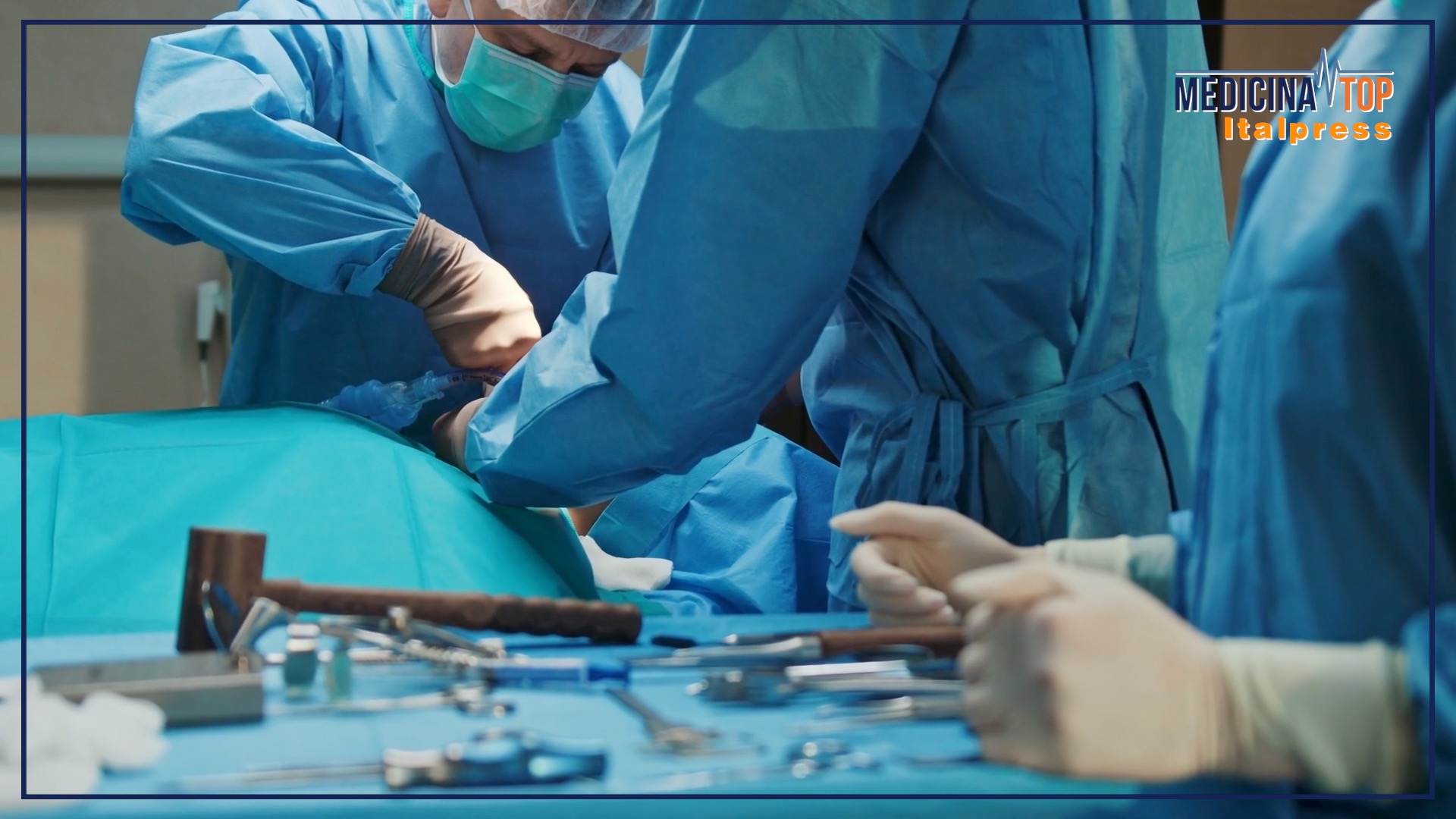
ROMA (ITALPRESS) – Plastic surgery is a medical discipline that combines reconstructive, regenerative and aesthetic skills, with the aim of restoring function, form and harmony of the body: moreover, the plastic adjective comes from the Greek modeling and expresses well the nature of this specialty. Reconstructive plastic surgery intervenes in cases of congenital malformations, traumas, burns, tumors or loss of tissues, helping to restore functionality and quality of life: in recent years the discipline has also developed a strong regenerative component, thanks to the use of innovative techniques such as lipofilling, fat-derived fat cells. Plastic surgery includes the aesthetic component, which is concerned with improving proportions and harmony of the body and face: perhaps the most known defillation is definitely the most chatted, but linked to double thread with reconstructive surgery with which it shares techniques and knowledge.
“Plastic surgery is considered the last major surgery because the general one is now disappearing for the benefit of specialists, who are becoming increasingly affirmed: the plastic surgeon remained the only one able to move along the body. Our interventions change the anatomy of the face, of the breast, of the arts, of the hands: in our formation we know very well the anatomy of both surface and depth”, said Franco Bassetto, director of the clinic of Plastic Surgery at the Hospital Company of the University of Padua and president of the Italian Society of plastic surgery, reconstruction, regenerative and aesthetics (Sicpre), interviewed by Marco Klinger for Medicine Top.
For Bassetto a fundamental step for the future of the discipline can come with the constitution of Orthoplasty, that is “a unit composed of an orthopaedic and a plastic surgeon: we have the possibility to move parts of our body where there was a fracture, if these two figures work together also the evolution of the same fracture is different and much more consolidated, leading people to heal much earlier; we hope to develop the unity of Orthoplasty. In the past, the orthopaedic first intervened and after the plastic surgeon for soft tissues, but it was too late: we must immediately intervene with Orthoplasty, agreeing from the beginning a surgical program”.
The tragedy of 1 January in Crans-Montana, adds, is served to “explain what regenerative surgery is: these tissues of nonhuman but animal origin, called matrices, are processed by companies that market them with the aim of regenerating the tissue. In the past our masters in the Burning Centers tried to induce us to develop a fabric on which to put a graft, now the thing has changed and we do regenerative surgery from the beginning: we remove the burned tissue with enzymes or other and immediately start with regeneration, using these matrices. In New Zealand, for example, they have many sheep and their stomach, used to work 24 hours a day, they have obtained very sensitive matrices to neovascularization: they are fabrics that are used precisely to start regenerating lost skin in the great burn. Having a plastic surgeon next to it means having a propositive and innovative person: our specialty goes to the speed of light”.
One of the aspects on which Bassetto’s commitment is unbroken is the denunciation of the “mutilation of female genitals as a crime not only in those countries that make it not so much a religious belief as a tribal practice, with the amputation towards these girls at the level of the clitoris and the infibulation at the vulvare level: in Italy we began to talk about why the new generations turn and begin to see girls. In this case, regenerative plastic surgery, through the removal of the scar created by the vandal act, intervenes with the injection of adipose tissue or stem cells: the goal is to change female genitals so that these girls can have a normal life.”.
The last reflection of the president of the Sicpre is dedicated to the importance of carrying out the interventions of plastic cosmetic surgery “in structures in which you immediately understand if there are safety codes. We’ve heard so many bad things, such as that patient who died in Rome with his fiancé to film what was happening: these are interventions that need an anesthesiast, an operating room, serious professionals. Today we can easily inform and not be misguided by the web, which is our great enemy: we must also talk to the basic doctor, who is the person who most of all wants to do the interest of the patient because having known it over the years is the right figure to indicate where, how and with whom to do an eventual intervention of aesthetic surgery”.
– photos taken from video Medicine Top –
(ITALPRESS).