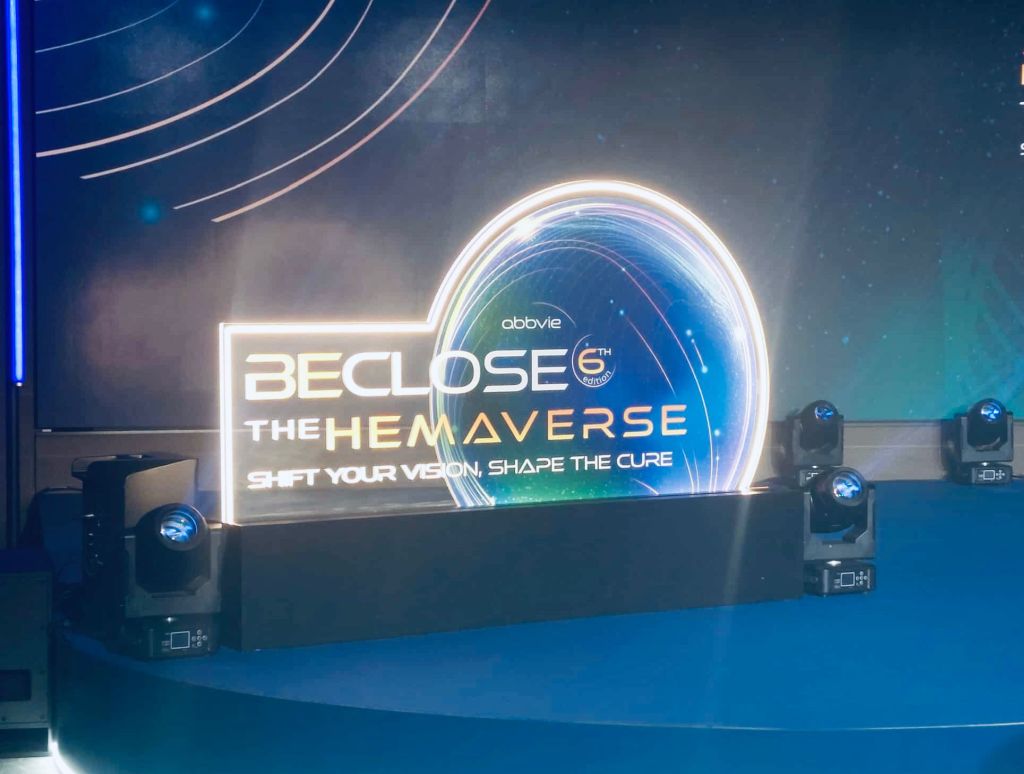
ROMA (ITALPRESS) – Hematological pathologies are an area of great clinical and social importance, characterized by still unsatisfied needs but also by important therapeutic opportunities. In recent years, the evolution of biological knowledge, the introduction of targeted therapies and innovative immunotherapies and the increasing availability of clinical data have profoundly altered the way blood diseases are diagnosed and treated. In this context AbbVie launches the sixth edition of BeClose, an appointment dedicated to the hematological community that is born with the aim of supporting this evolution in hematology, fostering the confrontation between specialists and sharing of knowledge as fundamental levers to improve clinical practice. At the centre of this edition, a new concept: “The Hemaverse”, a representation of contemporary ethology as a dynamic ecosystem where clinical experience, data and scientific evidence, digital tools and predictive models converge to support increasingly personalized therapeutic decisions. The event begins today and sees more than 300 hematologists gathered for two days in Rome. “AbbVie is today one of the most active realities in hematology. Scientific research is the starting point of everything we do and BeClose 6 – The Hemaverse is born to bring that research where it can make concretely the difference, i.e. in daily clinical practice – says Caterina Golotta, Medical Director of AbbVie Italy – With BeClose we renew our commitment in training, in comparison and in collaboration with clinicians. We believe that scientific rigour, innovation and listening are the essential conditions for excellence in research to be translated into real benefits for patients.” AbbVie is engaged in hematology in three main areas – chronic lymphatic leukemia, acute myeloid leukemia and non-Hodgkin lymphoma – with a continuously evolving pipeline that also includes multiple myeloma, a pathology with a high epidemiological impact. In all these areas, innovation is leading to a paradigm shift: from traditional chemotherapy you go more and more to target therapies, immunotherapies and combinations that allow you to obtain deep, lasting answers and, in many cases, with a better tolerability profile. In this context, the role of the clinic also evolves: from the interpreter of evidence to the director of a decision-making process that integrates clinical data, technological innovation and patient needs. “The therapeutic innovation in non-Hodgkin lymphomas no longer represents a choice, but an indispensable necessity. We are experiencing an unprecedented transformation in hematology, which allows us to offer concrete hope also to patients who, until recently, remained devoid of therapeutic alternatives – says Pier Luigi Zinzani, Professor of Hematology and Director of the Institute of Emathology “L. and A. Seràgnoli”, University of Bologna – alongside the CAR-T therapies, the introduction of the two-specific antibodies Epcoritamab is today the only two-specific subcute antibody that can be used both for patients with large cell B (DLBCL) and follicular lymphoma (FL) refractory relapses after at least 2 treatment lines, and has a clinical development panorama in combination with immunomodulants and immunoconjugated in early treatment lines, setting where it is pointing out. In recent years, even in the field of leukemia, we have witnessed a change of therapeutic paradigm. In chronic lymphatic leukemia, the most widespread form in the Western world, the evolution of venetoclax based combinations has redefinitial treatment standards, contributing decisively to the affirmation of fixed-term therapy as an alternative to continuous therapy. Today we are at a stage where we can really talk about personalized medicine in chronic lymphatic leukemia: the availability of effective combinations both before and in the second line allows us to choose the most appropriate treatment according to the characteristics of the disease, to the comorbidity and the life objectives of the patient. “We have witnessed a radical change in the management of disease and patient life expectations,” explains Luca Laurenti, Associate Professor of Hematology, Catholic University of the Sacred Heart of Rome. The combinations based on venetoclax with BTK inhibitors, both before and second generation – such as venetoclax + ibrutinib and venetoclax + acalabrutinib – represent a key evolution towards completely oral, highly effective and manageable strategies. The combination of venetoclax + obinutuzumab, which has consolidated the role of fixed life in the front line. At the same time, even in patients with relapse or refractory disease, the availability of fixed-term regimes such as venetoclax + rituximab has further expanded therapeutic possibilities, allowing for deep responses with a defined approach over time. “These therapeutic options allow us today to offer highly effective and flexible treatments, adaptable to the patient’s clinical profile – continues Laurenti – in particular, the completely oral combinations represent an important step forward also in terms of quality of life and simplification of the therapeutic path, maintaining high standards of effectiveness and tolerance both in younger and older patients. The so far described therapy applies to most patients with LLC, except for those with unfavorable biology in which continuous therapy is preferred.” Even in acute myeloid leukemia, aggressive and rapidly evolving pathology, innovation is actually changing clinical practice, especially for first-line patients “unfit”, elderly or with clinical conditions that do not allow the use of traditional intensive chemotherapy. “For decades these patients have had limited options and modest results. Today the situation has profoundly changed – explains Adriano Venditti, Professor of Ethology at the University of Rome Tor Vergata – The combinations of venetoclax+hypometilants have redefined the standards of care, offering real and measurable clinical benefits. One of the most important aspects of these new approaches is the possibility to offer the patient not able to receive intensive chemotherapy a combination that guarantees greater effectiveness than the only hypomethylating agent (azacitidine or decitabine) used in the past. Thus, in an age when the goal is to customize the treatment, the venetoclax-hypomethylante combination also improves the survival of those patients historically considered to be worse prognosis for age or for the presence of concomitant pathologies.”.
– photo press office AbbVie –(ITALPRESS).