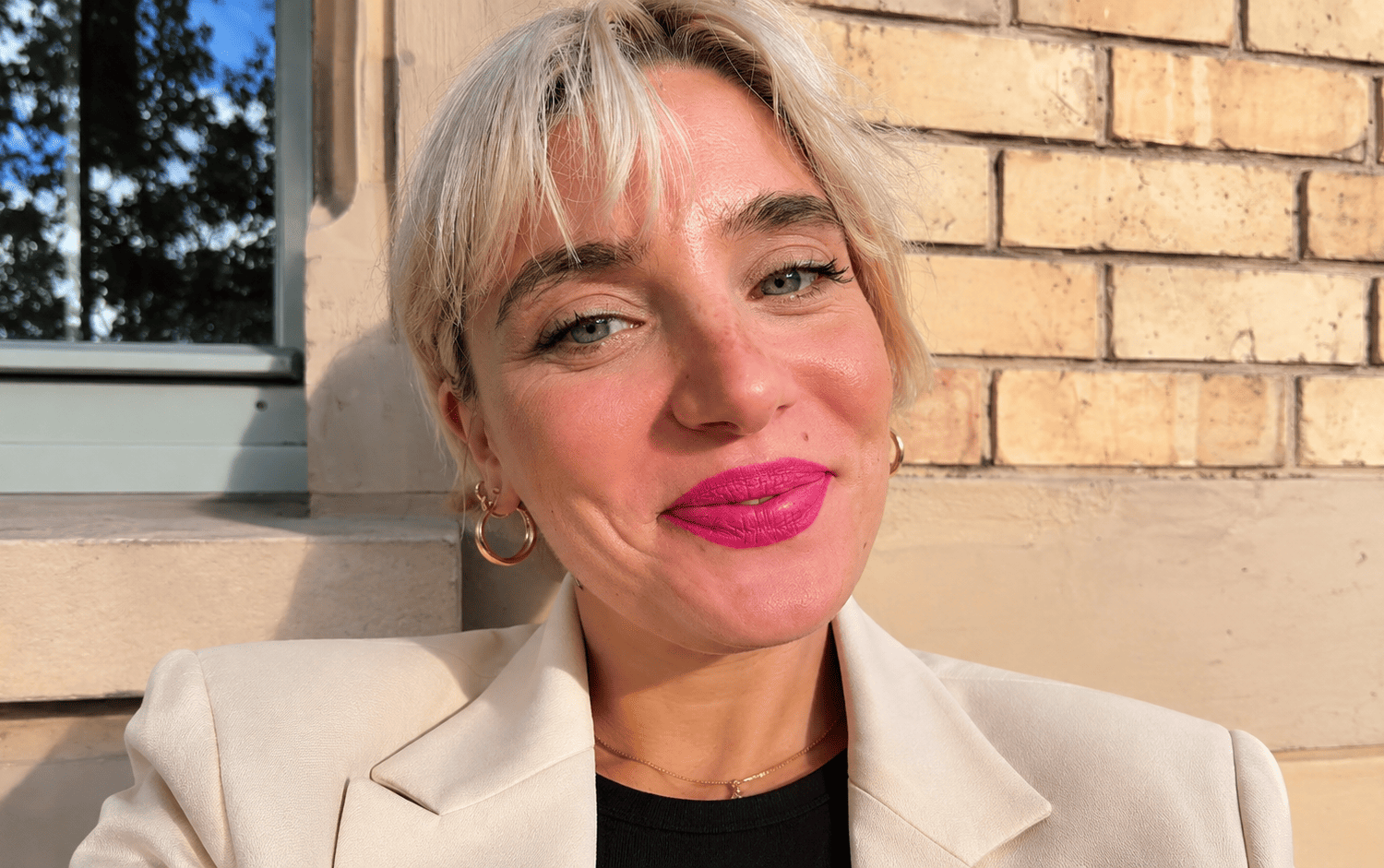
A book that leaves almost empty and fills with stories of people who meet him. It is the project of Ilenia Macera, writer, influencer and marketing professional, who has transformed his experience of loneliness into a collective initiative. Paper copies are left in circulation so that those who find them can write a thought and entrust the book to someone else. A site also allows you to share anonymous testimonies and follow volumes. In the interview with New York, Ilenia tells the birth of the project, its personal path, the difficulties encountered after the transfer to Germany and the desire to create an association dedicated to those who live loneliness.
Let’s start with his literary project. He created a book that is printed almost completely white and that are readers to write. How does it work?
It is a paper book that really becomes a book thanks to the people he meets. I wrote two initial pages in which I tell the project and my experience of loneliness. Then there are twelve questions distributed among the white pages, which serve to offer a point of reflection. Whoever finds the book can write a thought, a letter, tell something about his life and then leave it to someone else. In this way every person adds something and the book continues to build through meetings. I wanted him to leave practically empty, without testimonies collected earlier. He left alone, just like solitude, and then met other people.
How was the idea born?
She was born on a night when I was very vulnerable, I felt lonely and I was really tired of everything. I started writing and came up with this idea. Besides, many of the things I’ve accomplished are born of pain. It is often thought that pain brings only negativity, while for me it was also something positive, because it has pushed me to create a concrete tool to help people. I tried to transform what I had lived into something that could be useful to others. I don’t know how far it has been, but the feedback I get makes me think this project has had meaning for many people.
The book travels materially from one person to another. How many copies are in circulation and how can you follow their movements?
I personally released two copies, but there are also other copies purchased by readers, especially through Amazon. Some people buy the book, write their own thoughts and then leave it around so that someone else can find it. I received reports from Rome, Terni, Pietrasanta and other places. I don’t know exactly how many copies are traveling, because some are purchased and put in circulation independently. I created a site dedicated to the project, connected to the book through a QR code, with a map that allows to follow its movements. When someone finds a copy, they can report where they are and I deceive the map. People also send me pictures of the messages written on the pages. In this way I can know a part of the stories collected, although the book is not physically with me. Each copy follows a different path and collects different testimonies.
Next to the paper copies there is also a digital space in which people can tell. What have you collected so far?
Over two hundred messages of people have arrived on the site who have told their story and their loneliness. Some have been able to express themselves after years. I wanted the site to be anonymous just to allow everyone to feel free to tell themselves, without fear of being judged. Who wants can sign, but it is not mandatory. There is a space called Letters to Invisible, in which people can write letters, and there are other possibilities to leave a message or report where the book is located. I wanted to create a place where people could stop and talk about what they feel. We live in a world that runs fast and often does not find time to listen. Through this project I discovered how many people just need to be heard.
Why did you choose handwritten letters as a central element of the project?
I have always written letters, I write them again today and I will continue to do so. I think we lost something fundamental. Today we communicate mainly through WhatsApp, everything is very fast, while I wanted to create something that remained in time. Writing a letter is different from sending a message, because it means stopping and devoting time to someone. And I think that’s exactly what we lost: the ability to take time for another person. I wanted to unite letters, thoughts, humanity and empathy in a single project. Writing can help express things that we can’t often say in voice. I wanted to encourage people to take a pen and tell each other.
What did the people who participated tell you?
Many wrote me on Instagram to thank me. They told me that after so many years, they had returned to write. Some were almost amazed to be able to communicate something about themselves again. I’m not talking about normal daily conversations, about telling what has been done at work or during the day, but about the possibility of saying: “At this moment I’m sick, my work weighs me, I’m going through a difficulty.” These are things we keep in. Through writing these people found the way to get rid of them, to express something they couldn’t tell. For me it was a huge satisfaction, because I saw that the project gave many the desire to open up.
In the first message of the book you tell your loneliness. It is a theme that has also marked its personal path. Where does this relationship come from?
I lost my mom when I was eight and a half years old. I grew up without that figure that gives you support, strength and that helps to build your teens as well. I had a very large family, but I always missed that presence. I have often felt lost, not understood, abandoned. I think everything started from there, even my way of dealing with people and trying to understand them. I have experienced so many difficulties, but I have always tried to create beauty starting from pain. It’s like when the rainbow comes out after a storm: I wanted to create my rainbow through writing. I have written a lot about the human soul, about the relationships between people and loneliness. Everything starts from the word of comfort that I missed during growth: I tried to give her a body, turning her into something that could help others.
What is solitude for her? A state of mind or a condition that also depends on the behavior of the people around us?
One can think that it is a state of mind, but for me solitude is above all a circumstance, something that also arises from the lack of empathy of people. If we had a little more touch and attention to others, many people would feel less sun. We live in a society that I consider increasingly poor in values and emotionality, in which we are often afraid to say openly that we are not well. Sometimes you find the courage to ask for help and someone answers you: “But how do you feel bad? You have everything.” People see you strong, they think you don’t have a problem, so you need to be okay. But it’s not. Loneliness can cause deep discomfort and, in the most serious cases, have terrible consequences. That’s why I think it’s important to be close to people. Sometimes a word can really change someone’s day.
His training, however, began in a very different field from writing. What was your professional path?
I studied fashion and graduated as a designer. It was one of the paths I wanted to take, but since childhood I also had the desire to become a psychologist. That is why I began studying self-taught psychology, trying to understand people and the human soul. I’ve always been very emotional and sensitive, and I’ve been writing since I was a child. I was especially interested in human relationships and people’s behavior, trying to go beyond appearances. I worked in marketing in Italy, in the clothing industry and also became an influencer. They are different experiences, but in all I have maintained the same interest towards people. Even in everyday work I always try to establish a dialogue that goes beyond the surface.
On the one hand there is the world of social media, made of video, visibility and immediate communication. On the other hand, writing, which requires silence and introspection. How do these two dimensions live together?
They are two seemingly opposite worlds, but I think they can live very well. On the one hand there is the noise of social media, on the other the silence of writing. I’ve been working on social media for about ten years and I’ve always tried to communicate something that went beyond the immediate content. I feel a little different from many of my colleagues, because I try to bring a part of depth even on Instagram. I’ve been surrounded by so many people who follow me, but despite this I’ve always felt alone. And this is precisely the contradiction: you can be surrounded by millions of people and still need a word, a comfort, a confrontation. I think today there is a lot of lack of the ability to confront each other. I do not consider these two incompatible dimensions, because they are both part of me. I am a reflexive person, but also a light person, and I think that in life we need both.
Loneliness can also be a choice, a way to regain a balance. Did you happen to seek it voluntarily?
Yeah, and I’ve been looking for her a lot lately. In the people I’ve been close to, I haven’t always found that level of understanding I needed. Sometimes it’s hard to find someone to really feel understood with. When you find only chaos outside, you need to breathe, find yourself. That’s why I learned to choose solitude. I must say, however, that since I created the book I felt less alone, because I met people willing to tell themselves and share their fragility. The messages I received gave me an understanding that I often had not found elsewhere. It was one of the most important aspects of this experience.
Has the transfer to Germany changed its relationship with loneliness?
Yes, very much. Germany has given me the strength to no longer be afraid of loneliness. I was afraid before, now not anymore. I was very well received, but living in a place that is not your home and where you do not speak your language is difficult. At first I didn’t know German and I couldn’t communicate how I wanted to. My words were my eyes. I had to rely on my gaze, because I had no tools to explain what I felt. For someone like me, accustomed to speaking a lot, even their own fragility, it was a concrete difficulty. I’m a very free person from this point of view, I talk about everything and I’m not afraid to tell me. Finding myself without words was complicated, but this experience taught me to stay with myself and build a balance.
For those living abroad, the community of compatriots can be a reference point. Did you find support among the Italians in Germany?
I must say that I did not find true support in the Italian community. I noticed that meeting an Italian abroad is different than meeting him in Italy. It seems to me that people are more reluctant, perhaps more fearful in building new relationships. I personally did not receive special assistance from people of my own nationality, while I found availability especially among the Germans, who tried to help me. For many things, I had to do it myself, even because the language was an important difficulty. There are many Italians also in the area where I live, but I did not find that desire to create a bond that you might expect among people away from your country. I don’t know if it’s shyness or fear, but this was my experience. It made me realize that human support does not necessarily depend on nationality or speaking the same language.
Let’s go back to the book. How did the initiative spread and how did its audience contribute to social media?
In fact, the project has spread mainly thanks to the journalists who have spoken about it. Interviews and articles allowed people to know the idea and understand its meaning. It may seem strange, since I also work as an influencer, but initially the spread came more from the journalistic world than from social. Then of course also on Instagram many people began to share the project. Who wants to participate can find links on my Instagram profile, Lenus 89, and on TikTok, or look for the book on Amazon. You do not need to buy it to leave a thought, because you can also contribute through the site. Those who find a paper copy can write on the pages and put it back in circulation.
Have you thought of an international version of the book, perhaps in English, or a future publication of the testimonies collected?
I would like to make versions in other languages, especially in English, but I’m still thinking about it. The initial idea was also to break down the boundaries between people and go beyond language differences, just as we should do when we meet someone. Many people, however, asked me for a translation. I could create a new version of the book by translating the two initial pages and the twelve questions, leaving space again so that readers can complete it. As for the testimonies already collected, I do not physically have all the copies in circulation. If one of these comes back to me one day, I might even think I can publish or translate the contributions it contains. It would be just part of the project, but it could be another possibility. For now I want especially that the book continues to travel and that people continue to write.
Have you ever been to the United States? Would you like to take the project there? And what future do you imagine for this initiative?
I’ve never been to the United States, but I’d love to go. Among the people who follow me there are also some who live there, although my audience is mainly composed by Italians and Germans. It would be very nice to be able to develop the project in the United States, reach other communities and allow the book to cross new boundaries. But my greatest desire is to create a true association against loneliness, something that does not limit itself to the book and that can concretely help people. All I have accomplished was born from the need to transform a personal experience into something useful for others. I would like this route to continue to grow and arrive in many other places. And who knows, maybe one day we’ll meet right in the United States.
L’articolo Ilenia Macera and its “non-book book” to share stories and solitudes proviene da IlNewyorkese.