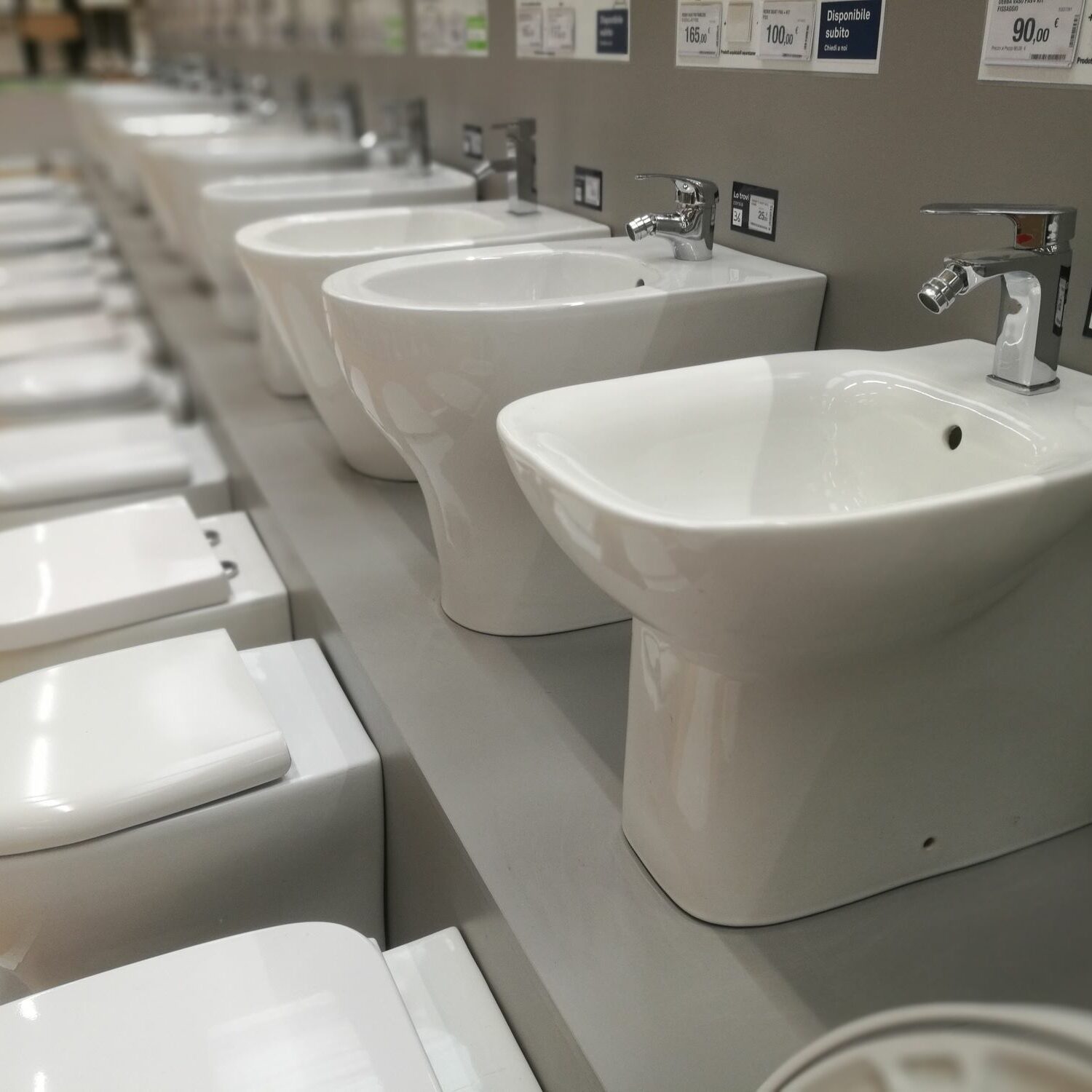
When Zohran Mamdani said that one of the first things he would like to do at Gracie Mansion is to install bidets, the news did the media round more for the object than for the intervention itself. Not so much because it concerns the official residence of the mayor of New York, built in 1799, but because the bidet in the United States remains an exception. Mamdani, 34 years old, the first Muslim and Sudanese mayor of the city, has defined it as an “aspiring goal”, meaning that it will not be easy to adapt a historic building to a little diffused plant in America.
Il sindaco Zohran Mamdani e la moglie Rama Duwaji sulla soglia di Gracie Mansion, prima di entrare per la prima volta nella nuova residenza | via Amny
The theme, however, goes beyond the anecdote. In the United States the norm remains the toilet paper, while the use of water for hygiene after being in the bathroom is perceived as something foreign, when not superfluous. Those travelling in southern Europe or in many Asian countries know the bidet or toilet showers as an integral part of the bathroom. In many Sudanese and Muslim families, as mentioned several times in pop culture – from comic Mo Amer to recurring social discussions – water is considered the standard method of cleaning.
@moamer
Why are bidets not the norm?♬ original sound – Mo Amer
The bidet was born in Europe between the 17th and 18th centuries, probably in France, where it was initially a separate furniture intended for personal hygiene. Over time, it has spread especially in Mediterranean Europe. In Italy, for example, its presence is mandatory by law in at least one bathroom of housing since 1975, according to a decree of the Ministry of Health. It is also very common in Portugal and part of Spain, while it is less frequent in France and Germany. In the countries of Northern Europe and the United Kingdom it is rare, partly due to the small size of the bathrooms, which make it difficult to add a dedicated healthcare.
“La Toilette intime” di Louis-Léopold Boilly (1761–1845)
In the United States the absence of the bidet is mainly linked to cultural factors. A frequently cited explanation dates back to World War II, when some American soldiers met the bidets in the French brothels, thus associating them with a “scandalous” use. This reconstruction is discussed by historians and is not unanimously accepted, but remains a recurring reference. The more solid is the role of puritanism and Victorian ethics, which have promoted for decades a symbolic distance from the body and in particular from the intimate parts, making it less acceptable the idea of using water and hands for personal hygiene.
In the 1960s, some producers attempted to introduce the bidet into the US market, but without success. The advertising of an object so related to the private sphere was considered problematic, both on television and on the press. Poor information also led to misunderstandings: for many Americans the bidet was seen as a washbasin for the feet or an accessory to wash delicate garments, therefore perceived as useless in houses already equipped with bathtub and shower.
In recent years, something has changed. During the COVID-19 pandemic, the lack of toilet paper prompted many Americans to seek alternatives. According to several analyses taken by US media, the sale of bidets to be applied directly to the toilet, such as those produced by brands like Tushy or Brondell, which do not require invasive renovations. This is also why, in the case of Gracie Mansion, the most realistic hypothesis would not be a traditional bidet, but an accessory that can be installed on existing plants.
Un carrello della spesa pieno di carta igienica durante le primissime fasi della pandemia da Covid 19 | via Shutterstock
Meanwhile, the Department of Environmental Protection in New York welcomed the announcement of Mamdani, stressing that “more bidet means less wet wipes”. The wipes, even when you declare “flushable”, then easily discharged into the toilet, cause serious sewer problems. The agency claims to spend millions of dollars each year to remove materials that affect wastewater treatment networks and plants in the 14 structures active in the city.
According to the Natural Resources Defense Council (NRDC), which takes data from healthcare manufacturers, the use of the bidet can reduce the consumption of toilet paper up to 75 percent. The estimates must be taken with caution, but we still talk about saving dozens of rolls a year for a single family. The production of toilet paper in virgin cellulose requires large amounts of water and wood, while the water used for the bidet is generally less than one litre for use, against the tens of litres needed to produce a single roll.
Another possible push to change comes from Japan, where technological WCs with integrated washing functions have long been the standard. One of the most famous brands, Toto, has exported these models also to North America, especially in medium-high-end contexts. These are solutions that avoid direct contact and respond to a part of the cultural resistances that have stopped the adoption of the traditional bidet.
Dettaglio di un WC giapponese: nella tazza si può intravedere il canale d’uscito del doccino integrato, mentre al lato vi è la console dei comandi | via Shutterstock
Of course, the phrase of Mamdani about the bidets in Gracie Mansion remains a marginal note compared to its political priorities, linked more to the cost of life and public services. But the fact that the matter drew attention says something about American habits and how they are slowly changing. Even when the starting point is the New York mayor’s bathroom.
Article If the mayor of New York also dreams of a bidet comes from IlNewyorkese.