The final of the American football championship ended with the Seattle Seahawks win, which won 29 to 13 New England Patriots at Levi’s Stadium in Santa Clara, California. The Super Bowl remains the most popular sporting event in the United States and one of the most visible globally, for TV numbers, advertising investments and cultural centrality.
For the Seahawks this is the second victory in Super Bowl history, after the success of 2014. Seattle’s franchise had already arrived twice to the final, leaving its defeat, one of which against New England in 2015. The victory consolidates the defensive identity of the team, historically one of the distinctive features of the sports project of the last ten years.
The Patriots arrived at the final with the weight of a unique tradition: Six Super Bowl winners, all between 2002 and 2019, in the period when the team’s face was Tom Brady, considered the most successful and recognizable quarterback of contemporary American football. The comparison with Seattle has however marked a clear discontinuity regarding that era.
Tom Brady con la divisa dei New England | via Shutterstock
The performance of the game was strongly influenced by the defense of the Seahawks, which systematically limited the attack of New England. To highlight the Seahawks’ defensive posture, he thought about the outcome of the match at the beginning of the fourth quarter, where the Patriots had not yet scored any point: a rare event in a final of this level. The MVP prize, awarded to the best player in the game, went to running back Kenneth Walker III. It is the first time since 1998 that a player in this role receives recognition in the Super Bowl: running back is the player who receives the ball from the quarterback and moves the ball in hand, trying to overcome the opposing line.
Alongside Walker’s performance, he also recorded quarterback test Sam Darnold, 28, at his first season with the Seahawks. Arrived in Seattle last March among many perplexities, after swinging seasons, he managed the attack with continuity and without decisive errors. In American football the quarterback is the central figure of the offensive action, called to choose in a few seconds if running, passing short or throwing long.
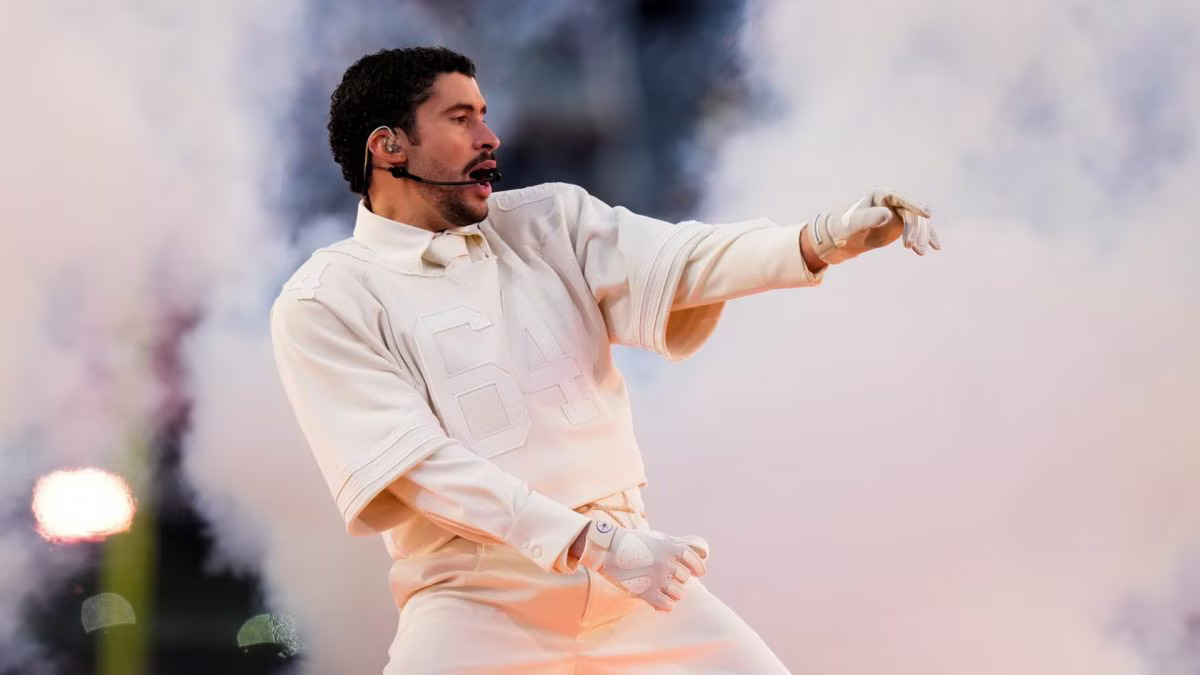
Like every year, the Super Bowl has flanked the sports show of the range. The protagonist of the halftime show was Bad Bunny, who brought on stage an exhibition entirely in Spanish, an unprecedented event in the history of the event. The set, lasted about fifteen minutes, was built as a visual and musical tale of Puerto Rican culture. The artist opened the show in a scenography that recalled a field of sugar cane, surrounded by figurative dresses from jíbaros, the traditional peasants of Puerto Rico. He performed “Tití Me Preguntó” and “Yo Perreo Sola”, all commercial successes, and presented himself to the public with his full name, Benito Antonio Martínez Ocasio.
In the course of the exhibition, Lady Gaga also staged, within a staging that simulated a wedding reception, gradually transformed into a neighborhood party. Among the dancers appeared several surprise celebrities, including Pedro Pascal, Cardi B and Jessica Alba. The central part of the show then assumed more explicitly political tones: Bad Bunny performed songs from the album Debí tirar más fotos (2025), such as “Baile Inolvidable” and “Nuevayol”, with visual references to the recurring blackouts of the island. Ricky Martin also appeared, while they were cited, musically, key moments of the recent history of reggaeton, including “Gasolina” by Daddy Yankee.
In the final, the Puerto Rican singer closed the show with the classic “God bless America”, followed by a series of names of South America countries while on the screen behind him the written “The only thing more powerful than hatred is love”. The exhibition was read as a cultural intervention with an explicit political meaning, even in the light of the public positions assumed by the artist against the anti-immigration policies of Donald Trump, which in the meantime defined the show “terrible”. In many reviews, the show has been combined, due to impact and consistency, to Prince’s in 2007, indicated as one of the most successful precedents in the history of the Super Bowl halftime show.
L’articolo How the Super Bowl went, between game and <i>halftime show</i> proviene da IlNewyorkese.