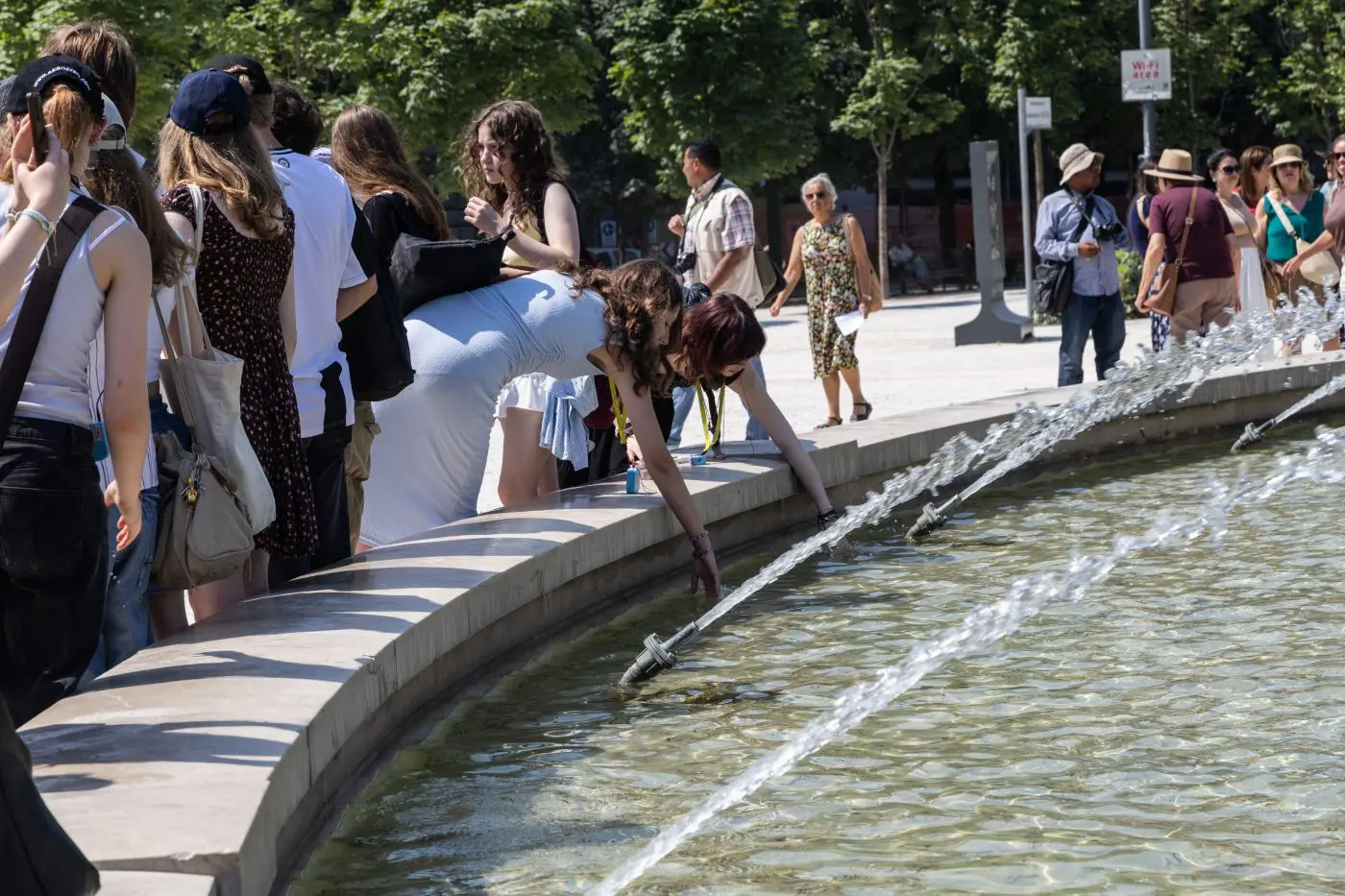
MILAN (ITALPRESS) – The high temperatures recorded since mid-June, with abundance of tropical nights that involved Italy from North to South without distinction, have prompted the various Regions to adopt real plans of contrast to the warm emergency to protect citizens. In Milan, the Agency of Health Protection (ATS) of the Lombard capital has launched and implemented its Plan Caldo 2026 starting from the strengthening of collaboration with the different local health companies.
“Among the innovation elements of this summer is the introduction of the heat code for access to the first aid,” explains Federica Rolli, Director of Socio Sanitaria ATS Milano. “In this way, the patient is identified who accuses a malore tied to high temperatures and intervenes accordingly.” The goal is to reduce waiting times and reduce heat stress, which in the most serious cases can come to vent in the heat blow. “It is a disorder that constitutes a health emergency and is linked not only to high temperature, but also to moisture and reduced ventilation, because this interferes with sweat, which is our main heat dispersion mechanism”, explains Dr. Marino Faccini, Director of the Department of Hygiene and Sanitaria Prevention ATS Milan. “The heat blow has symptoms ranging from cramps, headaches and nausea to fainting and convulsions, which require emergency intervention. One can have a rapid evolution especially in the most risky people, with an increase in the risk of mortality. It is essential to hydrate, feed with fruits and vegetables, avoid leaving during the hottest hours and try to keep the house temperature within an acceptable range.”.
At the base of Piano Caldo 2026 there was first of all an epidemiological analysis that concerned the whole Milan audience, that is three and a half million inhabitants. The ATS assessed their level of risk with respect to heat emergency and then focused on over 75 with disease. “We talk about 46 thousand people,” says Dr. Rolli. “Once identified, healthcare companies have activated a dedicated path of phone calls to inform these elderly about the risks of the situation, recalling the ten rules that the Ministry of Health has identified to protect itself. Calls are used to understand if these people needed interventions, so as to activate house interventions, report them and indicate where they could find other services, such as new cold spots.”.
The cold spots are air-conditioned places, mostly in the Community Houses. “People find infirmaries and doctors who can give an initial clinical evaluation of the person who presents himself,” adds Dr. Rolli. “When you arrive at the cold spot, you will find a welcoming environment with availability of water and health care staff who, only if necessary, send to the emergency room.”.
The purpose of this type of structure is therefore to avoid unnecessary access in the emergency room, already overcrowded. “The important thing is to monitor the most fragile people, because they are those that can suffer the most serious damage, especially if they are sun,” recalls Dr. Faccini, who also dwells on how to deal with the first symptoms of the heat stroke: “It is necessary to bring the person who accuses an initial malore in an air-conditioned environment, so it must cool his body with sponges on head, neck and limbs. It is crucial to promote hydration and control vital parameters.” The warm emergency is such that it has led the Regions to adopt ad hoc measures also to protect workers forced to spend many consecutive hours under the sun. “This year there has been greater attention to the problem because, unlike last summer, the heat waves have been going on for two months and not for a few weeks,” says Dr. Faccini.
“Since June we have reminded companies, workers and social partners about prevention measures to be taken in both external and internal environments. Those working in the yards or in agriculture are more at risk, because the intense physical effort is combined with unfavorable weather conditions, but the emergency also extends to other workers. The Worklimate platform publishes every day geographical data for a single municipality and provides a level of risk, according to which to take measures that can understand the presence of shady areas in the outdoor workplace where the worker can stop, the availability of fresh water, individual protection measures such as hats, glasses and in general systems that can shield the irradiation. The breaks and rotation of workers are then contemplated, until the most impatient measure, the interruption of work in the hottest hours.”.
This last case was also foreseen by the order of Lombardy Region issued on 9 June: the measure concerns those who work outdoors and previews the suspension of activities from 12.30 to 16. Prevention against heat also affects pets. While having a higher body temperature than humans (38-39 degrees versus 36), dogs and cats also suffer the effects of heat waves.
“Their thermoregulatory mechanisms are a little different from ours, because the only area in which the fingertips are so a very small area,” explains Dr. Faccini. “Their main mechanism to cool off is hyperventilation. The hair also has a thermoregulation action, because it protects from irradiation, so you don’t have to to weave them.” Among the other recommendations to protect the health of pets, there are the guarantee of fresh environments in the house, have availability of water, place the bowl away from the sun and avoid taking them to walk in the hottest hours. “Since sweating only passes through the fingertips, walking the dogs under the sun on one side prevents their natural thermoregulation and on the other can cause burns, because asphalt can come to measure temperatures up to 60-70 degrees,” Dr. Faccini warns. The Plan Caldo 2026 of ATS Milano will be active until September 15. “This is the date identified by the Ministry of Health as the end of the official activation period of the heatwave surveillance plan,” says Dr. Rolli. “But you will see what will happen. Seasons change.”.
– Photo Ipa Agency –
(ITALPRESS).