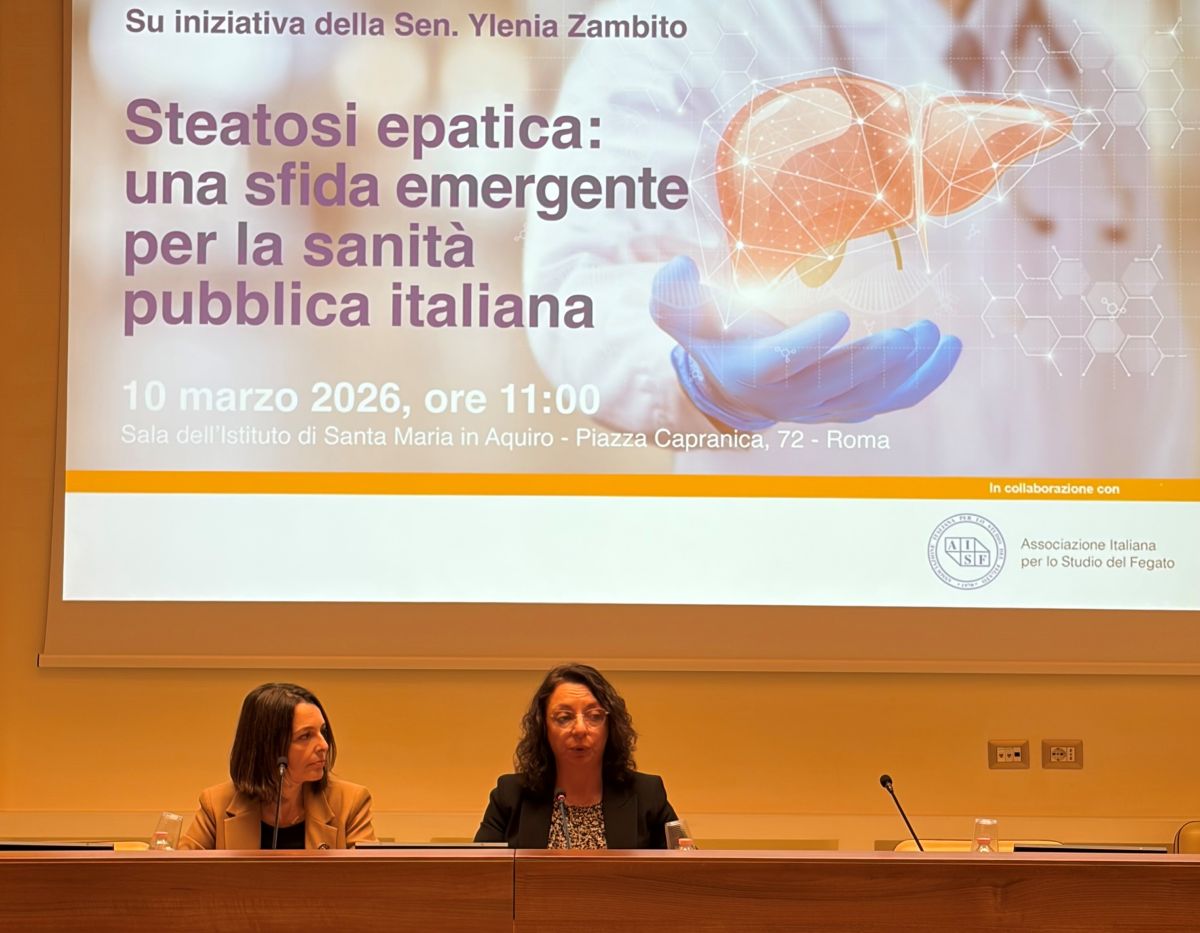
ROMA (ITALPRESS) – A discussion table was held in Rome, at the Senate of the Republic, at the initiative of Secretary X Commission of the Senate Ylenia Z scope, to discuss the taking into account of the patient suffering from liver disease. The event was attended by representatives of the scientific community, institutions and associations of category. The attention focused on the most serious forms of this condition, which today represents an emerging challenge for the National and Regional Health System, to define what are the best diagnostic and therapeutic strategies to address it. The most severe form of hepatic steatosis, called steatohepatitis (MASH), represents the progressive phenotype of this condition that can lead to the deposition of fibrosis and, potentially, to cause cirrhosis. fibrosis is the main risk factor for hepatitis clinical events, which increase mortality and may be an indication of liver transplantation. It therefore represents an important prognostic predictor, and its staging enables monitoring and care programmes to be implemented. In fact, later diagnosed and treated, the greater the risk of progression of the disease and the incidence of clinical events related to it. Therefore, a timely and correct takeover of patients at greater risk of clinical events, as suffering from MASH and/or advanced fibrosis, is not only the best strategy to prevent evolution towards cirrhosis and its complications – hepatocarcinoma and liver failure – and to reduce mortality and need for liver transplantation, but is a concrete resource saving opportunity for the National Health System. In fact, hepatic steatosis is rapidly becoming one of the main challenges for Italian public health: diagnosis is often late and this entails direct health costs (recurred hospitals, complications, complex diagnostic paths and transplants) and high indirect costs (loss of productivity, early retirement, invalidity, premature death, growing load for caregivers and families). The percentage of patients with liver steatosis and liver transplant candidates has increased significantly in recent years (from 12.54% to 20.16% in the period 2012-2022). “We are faced with a very complex clinical condition, with a significant social and clinical impact. It is a pathology that requires a structured and multidisciplinary patient taking over the territory, shared paths and diagnostic rapidity. Today’s meeting between institutions, associations, third parties and medical class aims to analyse the complexity of the disease, starting from epidemiological data that clearly indicate the urgency and opportunity of taking into account severe cases to reduce mortality and significantly contain direct and indirect costs under the National Health Service,” said Senator Ylenia Z scope, Secretary X Commission of the Senate. “Hepatic steatosis, along with its more progressive form (steatohepatitis), today represents one of the main causes of liver damage in western countries and will have an increasingly important impact on the onset of cirrhosis, hepatocarcinoma and liver failure, resulting in an increase in the need for liver transplantation. In Italy, every year, about 16,000 people die due to cirrhosis and its complications, and about 1,700 liver transplants are performed. Thanks to a targeted take-up of patients at risk, i.e. those suffering from progressive disease and/or advanced fibrosis, and thanks to the therapeutic innovation they could reduce mortality and associated costs – explained Giacomo Germani, Secretary of the Italian Association for the Study of the Liver (AISF) and Director of the Multivisceral Transplant Unit of the Hospital Company – University of Padua -. It is not a question ofcondition limited to the liver, but of a complex clinical and systemic framework, which involves an increased risk of diabetes, cardio- and cerebrovascular events, kidney problems and an increase in the development of neoplasms. Within this context, the role of the hepatologist is evolving: it is no longer the specialist who deals with the management of liver disease but is a clinical figure with multidisciplinary skills, working in a team integrated with diabetologists, cardiologists, interiorists and general medical practitioners, intervening throughout the path taken into account by the patient. The figure of the hepatologist therefore becomes central to ensure not only a timely diagnostic approach but also a treatment, which soon will also be pharmacological. This is fundamental to address a growing and high-impact pathology on public health.” On 3 November 2025, AISF published the results of the National MASLD/ Survey MASH, with the aim of photographing the volume, clinical characteristics and methods of managing patients already referred to the Italian specialist centers. “Hepatic steatosis, especially in its advanced stages, can no longer be considered a transitory condition: it is a serious disease and should be addressed with the same attention reserved to other chronic liver diseases. For this reason it is essential for patients to be followed by epatologist specialists, the only ones able to guarantee an appropriate and timely diagnostic-therapeutic path. We urgently believe that hepatic steatosis is finally inserted in the Essential Levels of Assistance and that a specific exemption code is created, within the current code 016 dedicated to chronic hepatitis: an indispensable step to protect patients, ensure equity of access and build really effective treatment paths”, said Massimiliano Conforti, Neo-President of the EpaC Association. “The epidemiological evolution of this disease imposes a paradigm shift. After the results obtained in hepatitis C management thanks to coordinated health policies, it is now necessary to focus attention on hepatic steatosis, strengthening early diagnosis and taking care of patients at risk. The population that needs specialist treatment is numerically contained, but its clinical and social weight is significant. The disease generates a significant economic impact for our healthcare system. The average annual cost per patient with a severe form can reach approximately 13 thousand euros, while the total burden for the National Health Service is estimated to be over 7.7 billion euros annually compared to the unspoken population. Numbers showing how early prevention and intervention are not only a clinical choice, but also a sustainability strategy for the Health System,” said Gianni Berrino, President of the Parliamentary Intergroup Epatiti Virali and Fegato Diseases.– photo press office AISF –(ITALPRESS).