ROMA (ITALPRESS) – The tumor of the stomach is in fifth place as an incidence between men and sixth among women, with about 14,500 new cases each year. In most cases the tumor originates from the glandular mucosa, the innermost part of the stomach wall: from here, if it is not diagnosed promptly, it can extend to the nearby lymph nodes and subsequently to pancreas, colon, spleen and liver. The tumor of the esophagus is less widespread but more aggressive, also due to the difficulty of making an early diagnosis: survival at years of diagnosis is only 13% in men and 22% in women. As many studies highlight, the incidence of gastrointestinal tumors is growing among young adults: a trend probably linked to the spread of new lifestyles.
“The tumor of the stomach is not expanding as the pancreas can be: despite all its incidence remains important in the eastern countries and also in our country is around 45%; it has quite a high mortality, because 70% of the cases diagnosed unfortunately do not make it. The tumor of the esophagus is a little different: it is more rare, it is slowly disappearing in the regions of the north-east. The increase in these cancers among young people is a plague that we are facing: stomach cancer has increased in patients under fifty years, especially women. I think that in reality 70-80% of these tumors are genetic mutations: we are studying a lot of genetics to understand if they have targets to hit”, said Giovanni De Manzoni, director of the complex operating unit of Surgery of the esophagus and stomach at the integrated university hospital in Verona, interviewed by Marco Klinger for Medicina Top, TV format of the Italpress press agency.
A multidisciplinary approach, emphasizes, “is fundamental: for a surgeon it means to confront oncologists, radiotherapists and anatomicalologists. Oncology, with therapeutic targets and immunotherapy, is taking steps as a giant: it does not mean that surgeons will no longer work, but the surgeon will work different patients after having always discussed it with the oncologist; it is no longer like a time when we were the only actors. Centralization in specialized places is essential in the field of stomach and esophagus: there are pathologies where it is necessary to be softer in centralization, but in this it is essential that this happen”.
The next reflection is dedicated to robotic surgery, which “has led to a precision revolution: when we go into a closed space like chest or esophagus, vision and accuracy in the removal of lymph nodes and reconstruction are exceptional. In the stomach we still have to work a bit to bring the robot to the same level of performance: sometimes the technique is still not perfectly developed. The robot with time will bring more and more: the advantages in precision concern the esophagus, the rectum, the prostate and in general all those spaces where the nerves and structures must be respected.”.
The group of specialists from the Verona team, says De Manzoni, “is composed of high-level radiologist, anatomist and endoscope: all surgeons can have complications, but when you have a team that knows how to deal with them mortality is lower. We accept patients from all over the Triveneto and also from outside: if a colleague has had difficulty it is right to help him on the sick, it is necessary to be open to welcome if there is any problem”.
In closing an appeal to patients, but in some ways also to doctors: no signal should be underestimated. “Endoscopy cannot be considered too invasive, it must be like ultrasound: nothing happens to make a gastroscopy, even if you are young. I see so many people with disorders that a doctor should not underestimate: even a simple dyspepsia, pains and feeling that they cannot eat well they must be investigated.”.
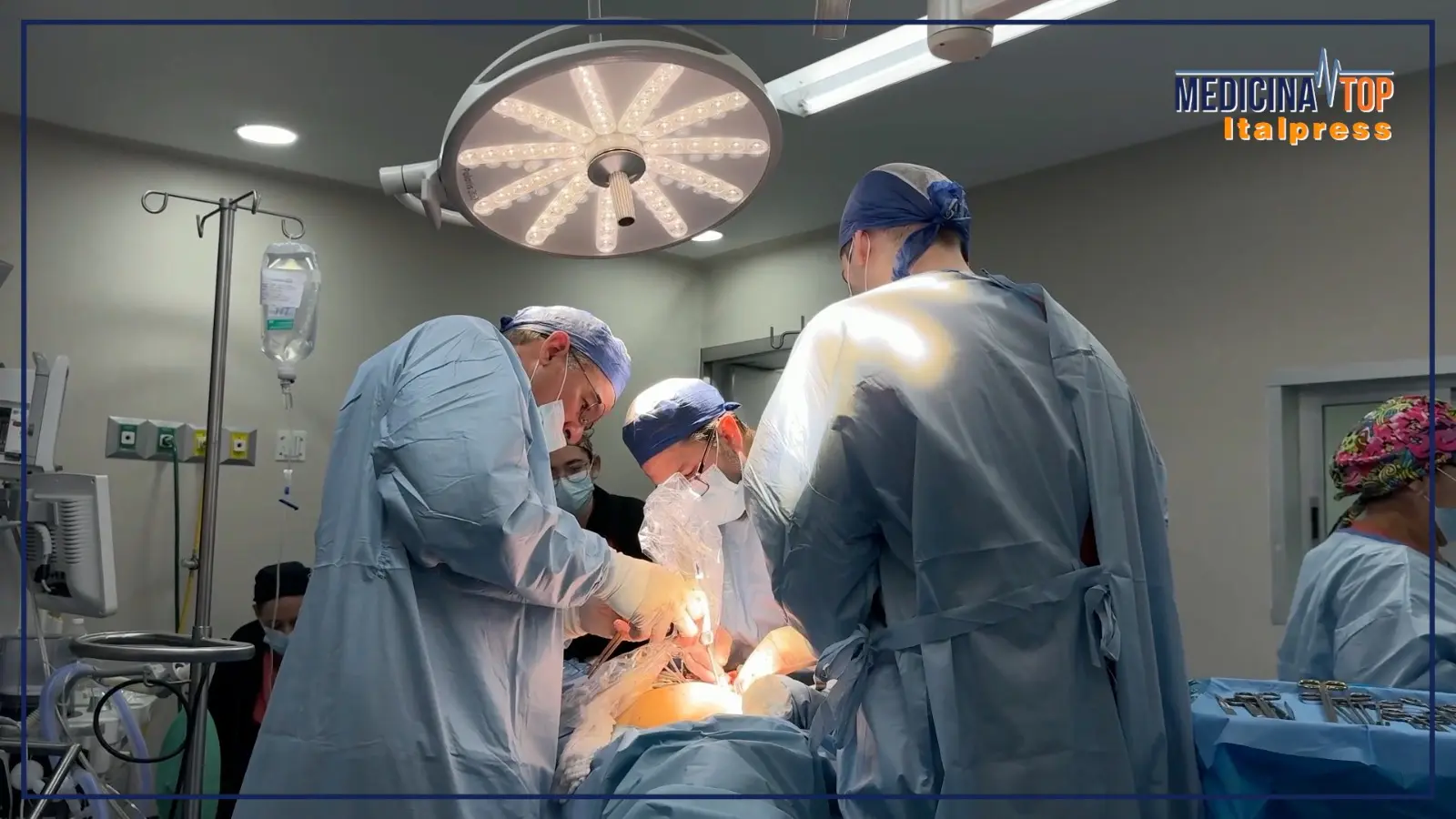
– Photos from Top Medicine –
(ITALPRESS)