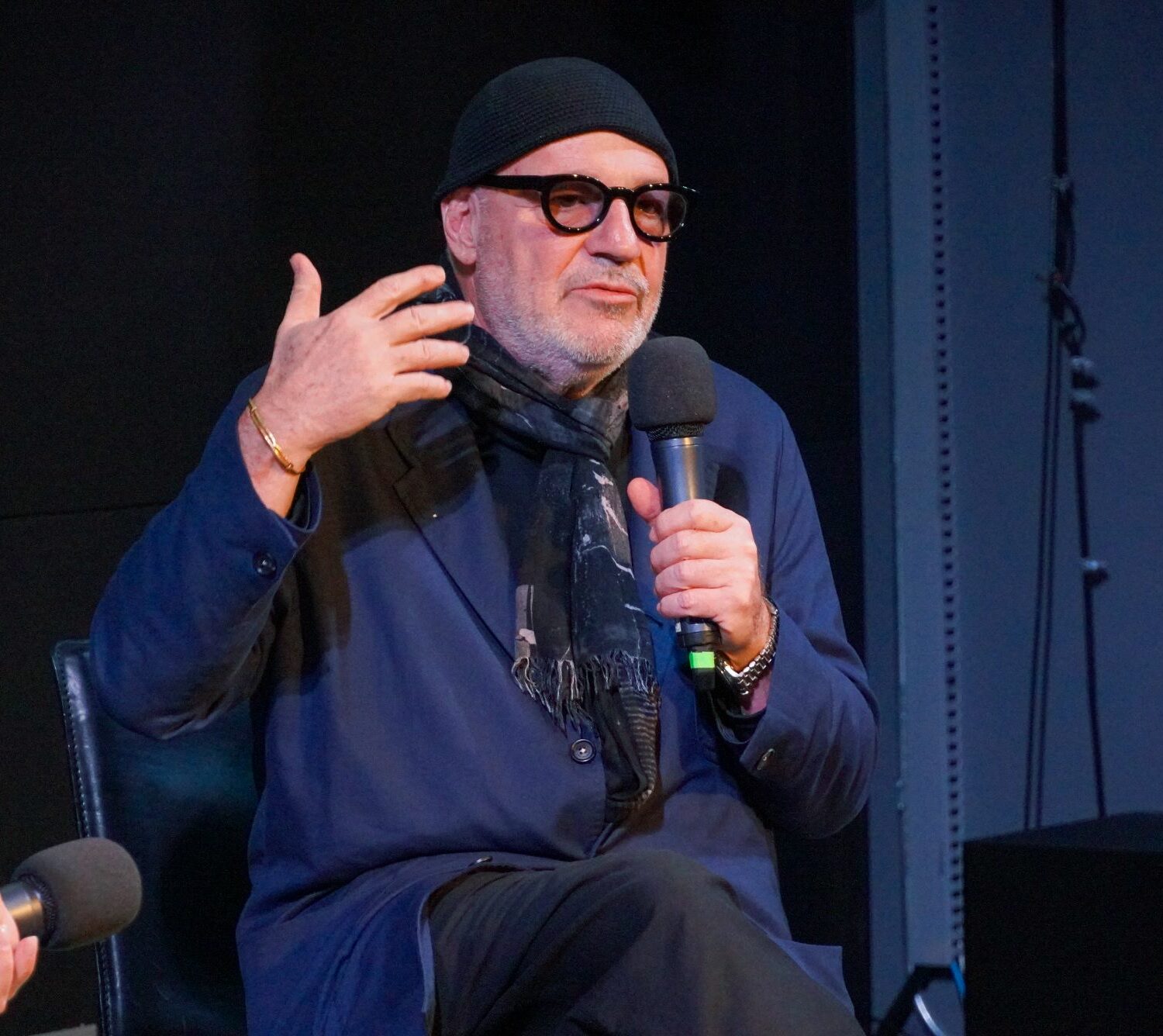
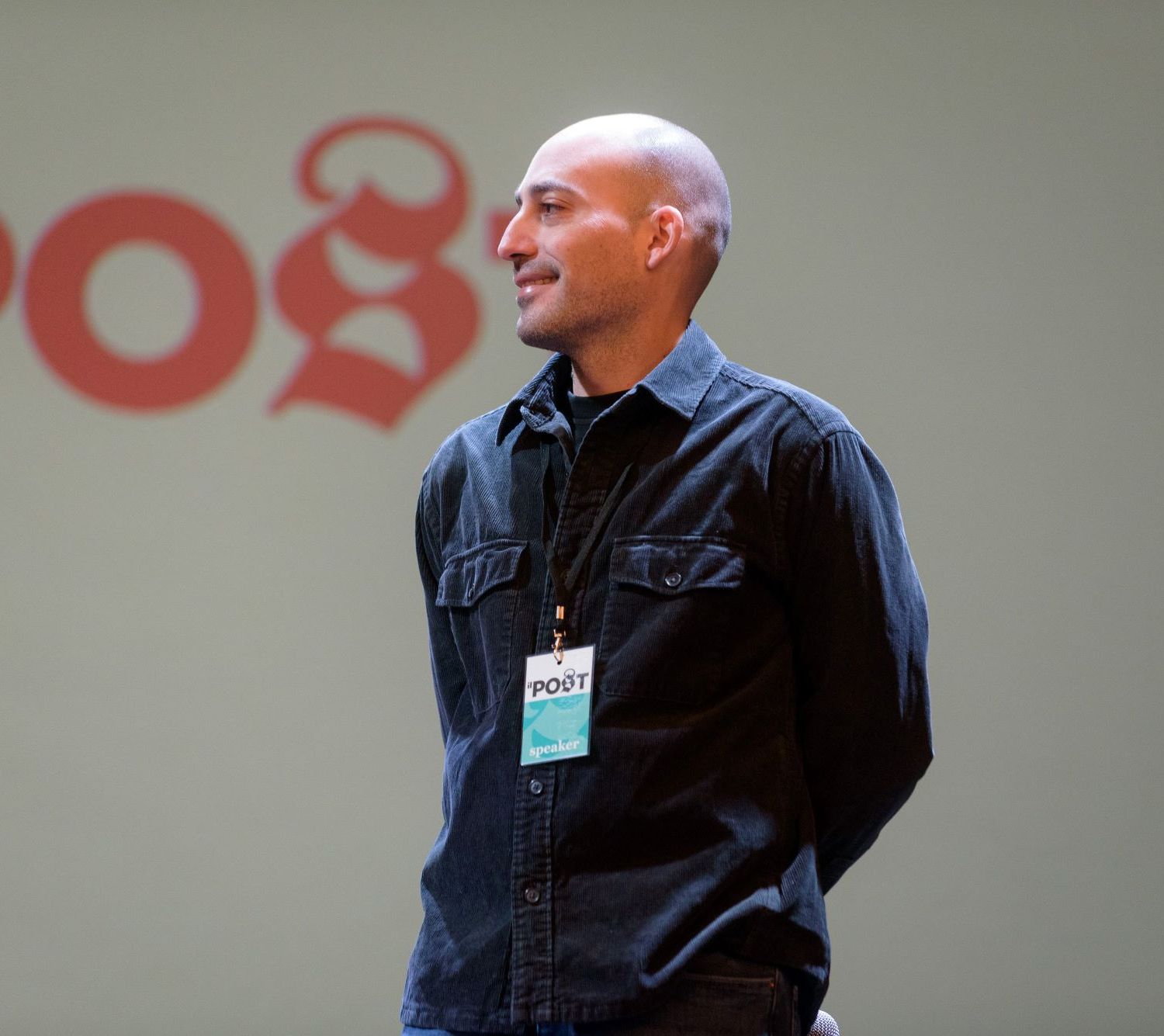
We met Francesco Costa in Faenza, during the Post Festival, the successful event organized by the newspaper of which he is director, and we almost immediately ended up talking about America. Of Chicago, in particular, and of a small thing: the taste of an ice cream that Costa cites in one of his videos on the city and that I had tasted a few weeks earlier. An almost irrelevant detail of the themes that cross his last book, but those who follow it for a long time know that his tale of the United States often starts right from there: from a street, a food, a habit, something concrete that helps to read the rest. For years Costa has crossed America and tells Italians through articles, podcasts, newsletters and books. How it comes out. The world after Donald Trump tries to look beyond Trump: to understand what made possible this political season, what is destined to remain and where signals of change can already be seen. That’s where we started.
Tell the United States for more than ten years and this book comes after This is America, California and Frontier. Has America changed all this time or has your way of looking at it changed?
Well, they both changed. With this is America I wanted to explain that the United States is a lot of different places and that much of what we believe to know comes from movies, TV series and common places. Meanwhile, American problems have become global: think about housing crisis, incomplete infrastructure and ideological rigidity of “California”. Now I go to the United States to understand what will happen to us, and I have lost some certainty about the ability of their system to correct themselves.
One of the central ideas of the book is that Trump is more the result of an earlier crisis than its origin. What is the aspect of this crisis that, according to you, we continue more often to simplify or misunderstand?
That America divides today between trumpists and anti-Trump. To force 340 million people into the distorted caricatures that make the parties and the media. Instead, a large part of who voted Trump in 2024 was very skeptical about the same Trump and certainly did not see him as a messiah. But it excluded in any case the vote Kamala Harris, for precise and not all national reasons: the poor quality of governments expressing Democrats locally, for example.
In the book you write that it is difficult to protect a democracy when it stops producing satisfactory results for people. But if the distrust is so deep, can it really be enough to rebuild it?
I don’t know any other roads. But it is not a question of optimism of will, we already see it happen. In the book I tell of when in 2023 a piece of the I-95 collapsed in Philadelphia and reopened it in twelve days, launching the governor’s popularity. The mayor of New York is rebuilding a relationship with the city by obsessively focusing on the results and quality of life. And on immigration today we know that Americans do not want the chaos of the Biden administration but not even the cruelty of the Trump administration.
In your journey tell places and people who are already trying different ways. How do you know if an experience can work elsewhere or if it only works in that particular context?
When those stories resound outside the community where they happen. That’s a lot. The question of immigration for a long time no longer concerns the border. The great American cities are almost all governed by the Democrats and have almost all the same problems. Cultural issues affect universities and from there all over the country. Corruption is a national matter. All politics are always local and national together, today more than ever that people build their worldview from what they see on their screens.
In New York stories Zohran Mamdani and his attempt to hold together radicalism and pragmatism. Where does the ability to listen and change end and where does the simple pursuit of what is most popular begin?
I would tell you that if something is popular a politician would have at least the duty to ask why it is, and understand if it can give an answer to that feeling or that request. Who else do you want to represent? The idea of impopularity as a necessary ingredient of a true left-wing policy – thinks of the infamous phrase of Moretti on the enjoyment of being minority – has relegated in irrelevantness and narcisssism some generation of politicians and progressive activists.
The subtitle of the book is The World After Donald Trump. What do you think is destined to remain even when Trump is no longer in the White House?
At least three things. The realization that a president can do alone much more than he thought. The tribunals have set Trump on many issues, but on many others have legally authorized him to act: it is a statement that I hope to remove even some alibi and laziness to the future Democratic presidents, which often in the Cincischian power. Second: the end for the United States of alliances and relations built on mutual trust. The word of the Americans today is worth much less than before and everyone knows that every deal can be strangled. Thirdly, as a result: in a large part of the world the American soft power must start from zero or almost.
new York talks to many Italians and Italians living in the United States. Is there something about America that, according to you, who watches it from outside tends not to understand all the way? And something that people here live here every day end up not seeing anymore or taking for granted?
From outside you don’t understand how much American politics is local politics: in San Francisco you don’t build houses because of what happens at neighborhood meetings, not the president’s decisions. Americans decide who to vote even when they find deodorants under key from Target. The right to abortion depends on the decisions of individual states. And putting Maine and Louisiana into the same cauldron – they’re Americans, aren’t they? – it’s a bit like saying that there are not so many differences between Greece and Sweden. Those who live in the United States, but this applies a little to those who live everywhere, sometimes they are so busy going on with their lives that forgets to look around and understand better what happens to them. When he does, he does it through the things that the algorithm proposes.
Open the book with a very shiny quote by Antonio Gramsci: “The crisis consists precisely in the fact that the old man dies and the new cannot be born: in this interregnum, the more diverse morbid phenomena occur.” Is there a signal that, according to you, tells us that this interregion is near the end and that something new began to moan?
I have to answer with caution, even because when Gramsci wrote that sentence then things got worse for a long time. The new world needs political conditions to be born. To write new rules, to do ambitious and creative things, as we did after 1945. Only that at the time to find those conditions we had to pass from a world war of over 60 million dead. The goal of our generation should be done without going through the same shock. Also because of shock we are already experiencing many.
L’articolo Francesco Costa e il suo <i> Come si qui</i>: che America sarà dopo Donald Trump? It’s from IlNewyorkese.