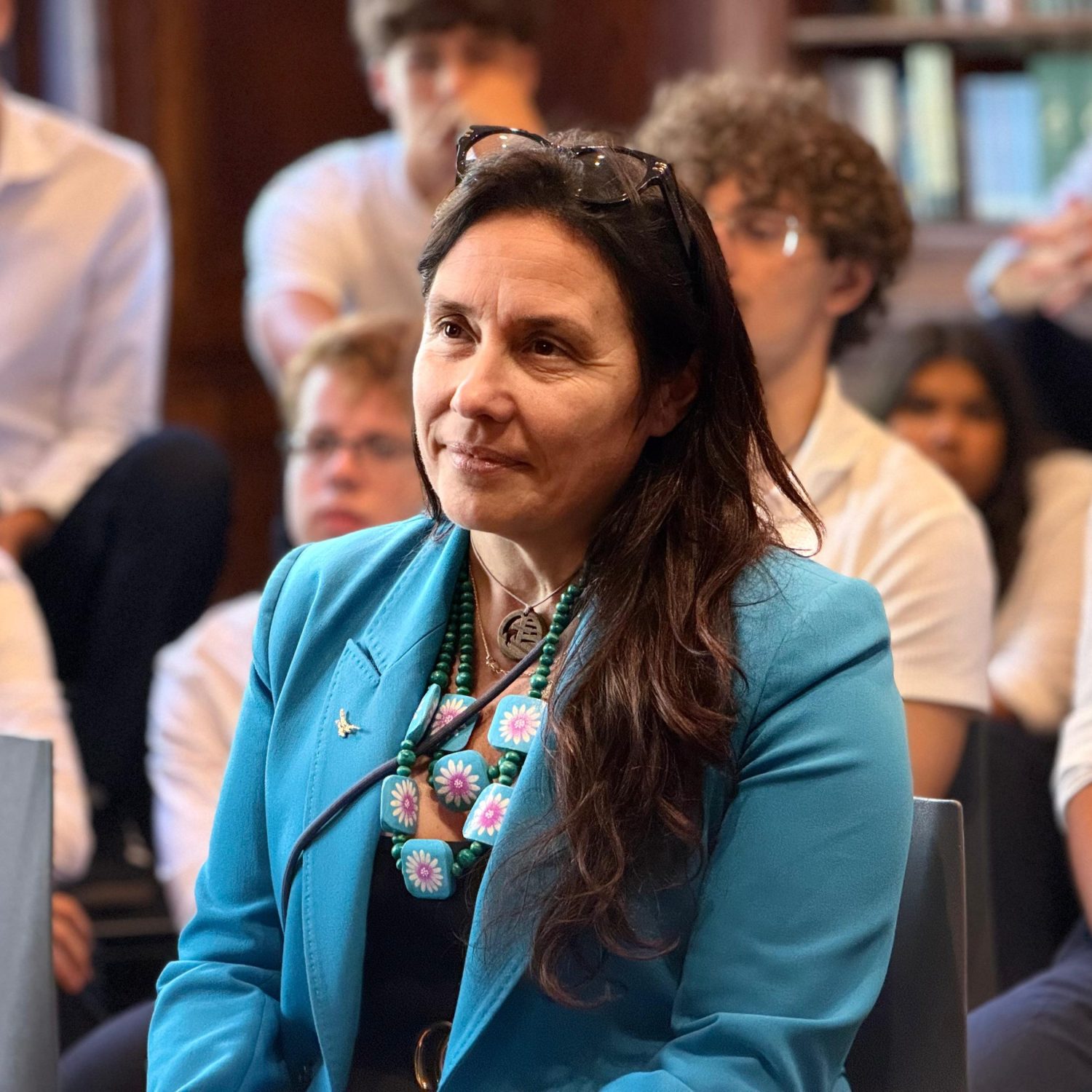
Alessandra Locatelli, Minister for Disability, visited the Italian School Guglielmo Marconi in New York on 9 September, meeting students, teaching staff and representatives of Italian institutions in the city. During the morning he visited some classes of the school, signed the guest book and participated in a short confrontation with the press, before an institutional briefing with the school management and the Italian representatives present. We met her on this occasion.
Minister, you have long been fighting for inclusiveness: do you think Italy is really an international inclusion model? Give us your point of view on a theme that definitely affects our readers.
Absolutely. I am convinced that Italy is an international point of reference on inclusion. I said this before to the boys, also to encourage them not only to study the Italian language but precisely our style, our approach to people. And in fact, when I have bilateral meetings both in Europe and in the rest of the world, my counterparts often ask me about our measures. In particular, the interest in school inclusion is very high because our children go to school together since the 1970s. There are very few countries in Europe and the world that have had the same path. This is an advantage, and everyone would like to understand how to do it.
What is the link between Italy and the United States, particularly in New York City? Why do you think this is an important city, and why do you think it is right to talk about these issues in a city like New York?
Meanwhile, New York is a metropolis from which experts and professionals travel in all sectors, research, social and medical, which give an important boost and progress to our policies and activities. I think it is essential that an exchange such as what will be on autism these days, but also on all other topics of interest.
On the subject of the separate classes proposed in other European countries for students with disabilities, she said that it is an approach that she does not like, reitering the value of the Italian model born in the 1970s. How important is it, according to you, that Italy continues to focus on these issues even when different visions emerge in Europe?
Italy has had this policy for many years, since the 1970s, I said before, and it is always destined to improve from this point of view. Because over the years we have maintained, in addition to the theme of school inclusion, also a special focus on support, education, support for children with disabilities, with special needs at all stages of school. And we are trying to do even more because the world has changed. People have changed, needs have changed. So we are projected in this direction, and we will not stop.
During today’s visit he spoke about the importance of looking at the potential of people more than to their limits, and stressed how much the family and territorial networks of support, not only institutions. How can we tell, even to an American public, this Italian model founded on the community and not only on public intervention?
The further we go, the more people risk being alone. Sun because they are elderly, sun because they are no longer familiar, only for so many other reasons. So we need to create ever more human relationships around families and the territory, so that there are no more individuals indifferent to each other, but that there is a feeling at least of familiarity in the context in which you live, that you attend. This is something that is spontaneous to us in Italy, even if it is difficult, because of these times, with the increasingly frequent use of social media, with a life that becomes almost more virtual than real, you may not succeed. We are born with this vision, propensity, and we really notice that there is a welcome, a way of dialogue with others that is characteristic of Italy. I think this would also be important in many other contexts, like in a big city like New York, where I think so many people can feel more and more sunshine.
L’articolo For Minister Locatelli, Italy is an international reference point on inclusion proviene da IlNewyorkese.