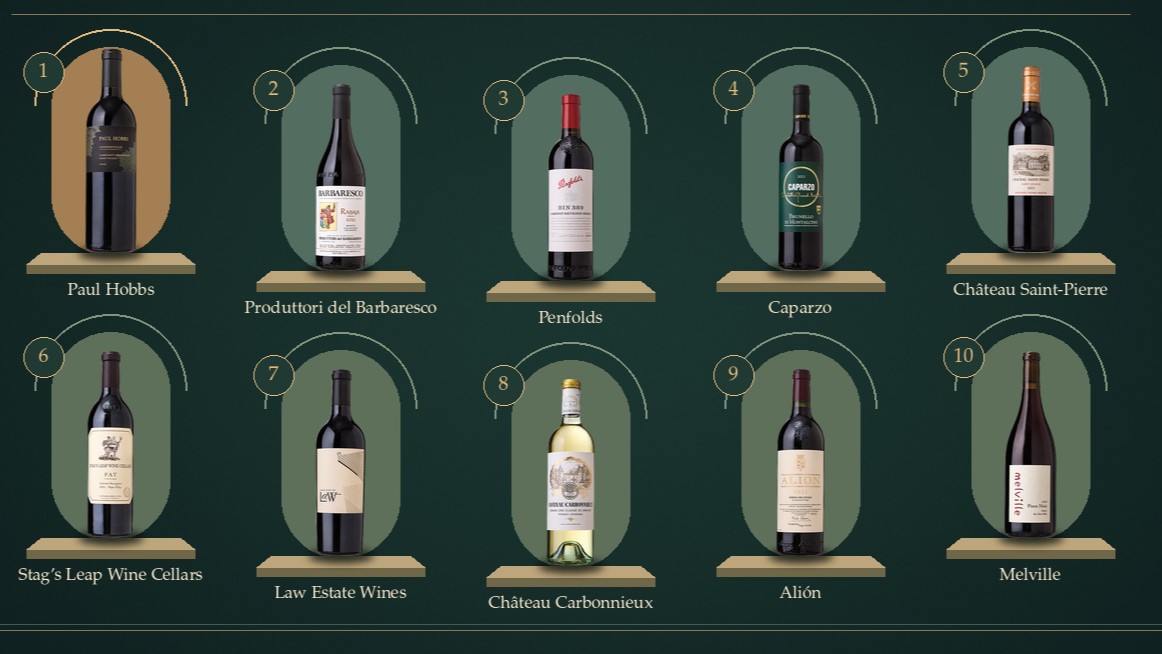
November is the month of Thanksgiving, the boards and the first preparations for the holidays. For those who work in wine is also the month of the Top 100. Wine Spectator, for example, unveils its annual classification in recent weeks, which has been published since 1988. For importers, distributors, wine shops and restaurants, the search for award-winning labels begins in the most intense period of the year for sales. Behind those lists there is an evaluation system with a precise history.
It all began in 1978, when an American lawyer, Robert Parker, founded a newsletter called The Wine Advocate. Each wine is judged on a scale of fifty to one hundred points, on the model of American school grades. It is an immediate number, understandable to anyone, and in a few years it becomes the international standard. Parker’s palate had recognizable preferences: wines rich in fruit, robust, ready to drink. Many producers looked carefully at that style.
In Italy that season is linked to the Langhe and the so-called Barolo Boys. Between the eighties and nineties a group of young producers introduced techniques in much of French origin. Barolo was born with shorter refinements, more color and a taste close to the international standards of those years, which obtained very high scores from Parker and Wine Spectator. Other producers remained faithful to the traditional method, and the comparison between the two schools animated the debate. With time some innovations, such as the thinning of the bunches, have also been adopted by the traditionalists, and several producers have returned to barrels of greater size.
Parker retired in 2019, and that same year the Michelin group became the only owner of The Wine Advocate, who maintained the choice of origins not to accept advertising. The system of the hundred points has survived, but the panorama has expanded. Each test follows its own method today.
Wine Spectator tastes blindly, comparing each wine with other of the same type. Sending samples is free, but foreign wines must already be imported to the United States. Wine Enthusiast also tastes blind. Decanter relies on a panel of three experts, who taste blind, compare at the end of each battery and produce a final score equal to the average of the three votes. James Suckling, who launched JamesSuckling.com in 2010, tastes with his team without covering the bottles when visiting the producers, and blindly in the widest tastings in the office.
From The Wine Advocate school two independent publications were born. Antonio Galloni left the magazine in 2013 to found Vinous. In the same year Parker called Jeb Dunnuck, who launched JebDunnuck in 2017. com: a publication funded by subscribers, without advertising, mainly dedicated to Rhone, Bordeaux, California and Washington.
Being reviewed, however, does not mean entering the ranking. Wine Spectator, for example, chooses its Top 100 wines evaluated in the year according to four criteria: the quality, expressed by the score; the value, linked to the price; the availability, measured by the speakers produced or imported in the United States; and what the magazine calls “X-factor”, the interest aroused by the wine.
For those who work in distribution, the value of a score is concrete. For the importer is a tool with which to present the portfolio, for the distributor a topic in the dialogue with restaurants and wine shops, for the consumer who does not know the manufacturer a reassurance before the purchase. The result depends also on the price, availability and ability of those who sell to tell the wine. Some publications also offer services to commercially value scores, such as promotional spaces where wineries can highlight their ratings. There remain services distinct from the tasting.
While the end-of-year charts circulate between shelves, wine cards and commercial presentations, it should be remembered that each score is a photograph. It tells the judgment of someone, at a certain time and according to a precise method. It is a useful tool for orienting, but the relationship with a bottle remains personal. And you, when you choose a wine, look for the review or do you prefer to let yourself be surprised?
L’articolo Wines also have their championships proviene da IlNewyorkese.