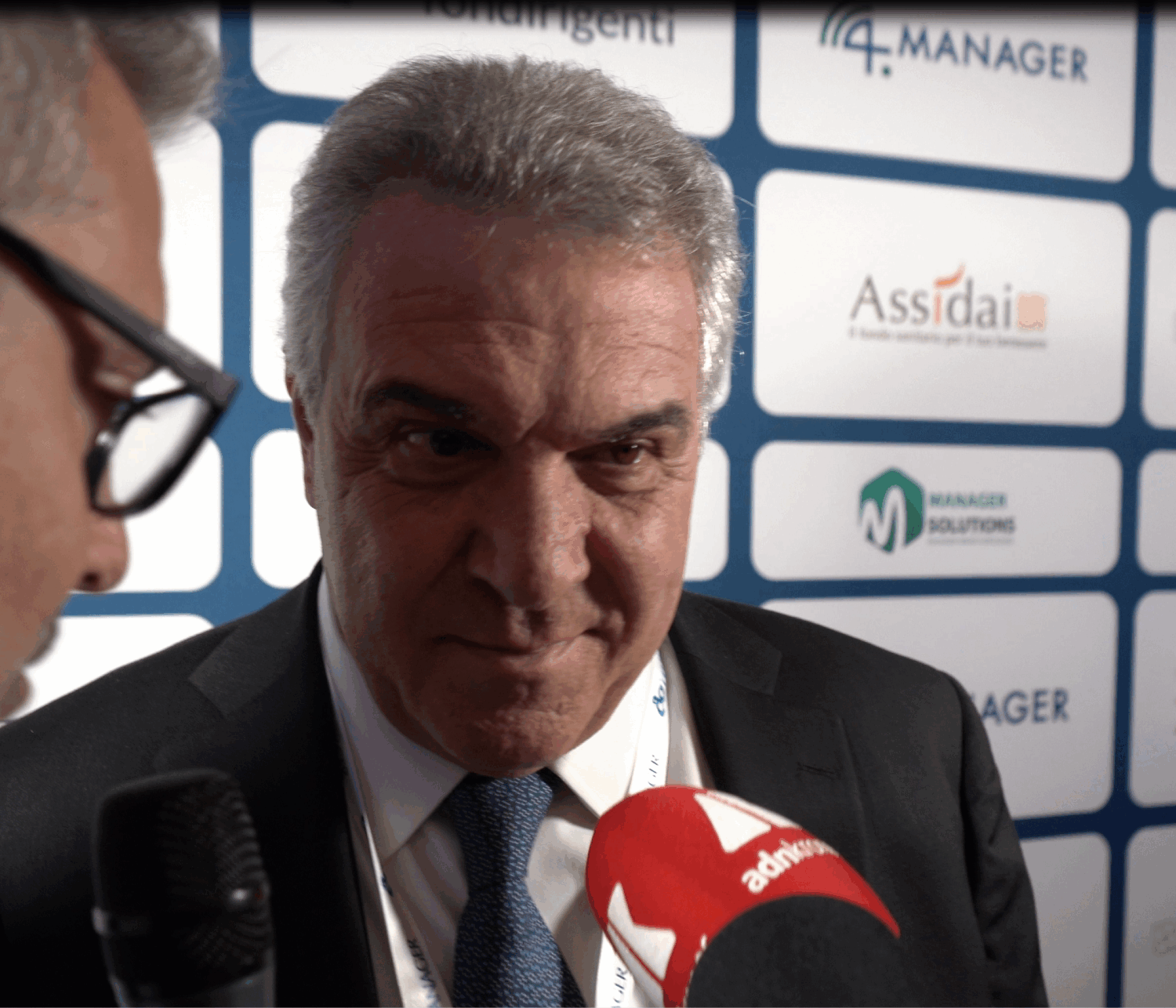

Lucio Miranda was born in Monza, Italy. He graduated from Bocconi University in Milan where he started his professional career in 1989, working in marketing and sales. During his career he held several international roles in France, Korea, Japan, Brazil and the United States. Since 1993 he has lived in the United States, where in 1995 I received a Master in Marketing and Finance at the Stern School of Business of New York University. In 2003 he founded ExportUSA.
President Miranda, the new measures entered into force on 6 April mark a paradigm shift in the calculation of duties: what is, in summary, the most significant difference in the previous system?
The main difference is the calculation base. First the duties were applied on the value of the metal contained in the products; now, instead, they are calculated on the total value of the good. This significantly changes the final impact. Moreover, the system has been reorganized in several silos: one to 50% for primary products, one to 25% for secondary ones, one to 15% valid until 31 December 2027 and another category of exempt products. As a result, many companies must review the classification of their products to understand which range they are.
What sectors of Made in Italy are now more exposed to this change?
Primary steel, aluminium and copper products affect the Italian export. Some segments of industrial machinery are more exposed. However, these are high value added goods and technological content: they cost more, but they improve the productivity of those who use them. In part, this compensates for increased duties.
Speaking of concrete impact: how much can these new rates affect the margins of Italian exporting companies, especially for processed goods?
The impact is distributed along the supply chain: a part falls on the final customer, a part on the importer or distributor and a part on the Italian manufacturer. The subdivision depends on the contractual force and type of product. In general, however, a significant share of the increase is transferred to the final consumer.
Can the exemptions envisaged, however, in particular the limit of 15% of the metallic content, become a competitive lever?
Not at the moment. The rules are uniform for all countries, so they do not generate specific competitive advantages for Italy. In the past some measures created differences between countries, but today the system is more homogeneous. The effect is a flattening of conditions.
Can you give us some concrete examples of sectors or types of companies that could benefit from this system?
There are no sectors that can benefit immediately. However, the situation is changing: The 10% duty provided by Section 122 will expire on 24 July and the possibility that it can be renewed for another 150 days is almost null. It is probable that the new customs structure which will undergo reintroduces the tariff differences already seen with the so-called reciprocal duties issued on 2 April 2025, a situation which saw Europe benefited from compared to other countries. International negotiations are also underway which could lead to a bilateral EU-USA agreement and further change the scenario. That is why it is still a transitional phase.
Since its privileged observatory, are Italian companies prepared to address this revision of the tariff system?
Companies are reacting, although change has been sudden. Compared to the past, the current system is less extensive and more limited, so the impact is more manageable. Many companies are already adapting and looking for alternative solutions, without interrupting export.
How complex will it be for companies to adapt production processes or supply chain to reduce the impact of duties?
In the Italian case less than you might think. The production remains largely localized in Italy and the foreign content is not such as to change the origin of the product. The problem is not as much the reconfiguration of the supply chain as the management of uncertainty and new classification rules.
Are there concrete strategies, for example relocation of some productive phases or revision of thesourcing, that enterprises should already consider?
Yes, but randomly evaluated. Some companies are already analyzing the possibility of producing or assembling in the United States to reduce the impact of duties. However, it is a choice that requires precise economic analysis: on the one hand customs and transport are spared, on the other, production and management costs increase. Also aspects such as staff, training and organization should be considered.
Let’s talk about a changing context, what further changes or regulatory updates should we expect in the coming months?
The picture is still open. New decisions relating to international treaties and deadlines already set are expected, which could redefine the current system. It is therefore a transitional period in which the scenario can change rapidly.
How can these measures redesign trade flows between Italy and the United States?
It will depend on the evolution of international agreements. If the framework is more favourable, Italy could maintain or strengthen its position. But the global system remains uneven: some countries may be in less favourable conditions, with significant effects on trade.
What is the main advice you feel to give today to an Italian entrepreneur who exports to the United States and has to face this new scenario?
Quickly adapt to the American context. Success depends on the ability to understand and accept game rules other than European ones. Moreover, flexibility is needed: the faster we adapt, the greater the possibility of maintaining competitiveness and presence on the US market.
L’articolo Dazi e export, Lucio Miranda: “It is a transitional but decisive phase” comes from IlNewyorkese.