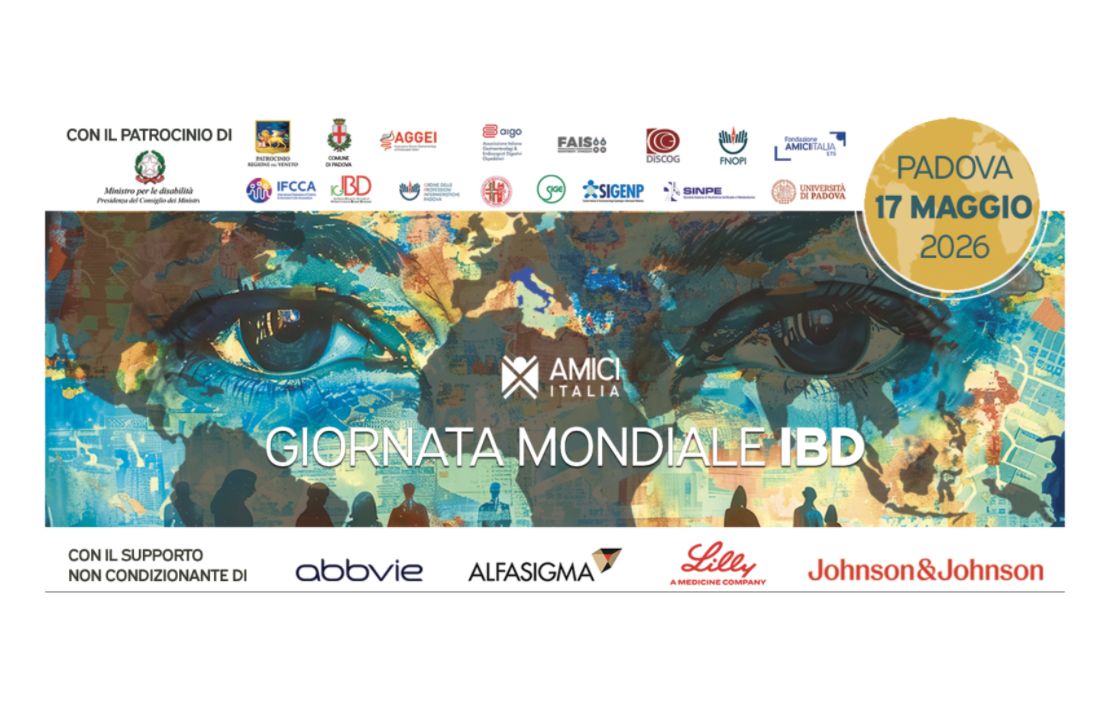
PADOVA (ITALPRESS) – It is not enough to turn off inflammation. It’s not enough to prescribe therapy. It’s not enough to check an exam. For those who live with Crohn’s Disease or with the Ulcerosa Colite, care must also mean being able to study, work, travel, build relationships, design the future and not feel alone in a chronic, complex and often invisible disease. This is the strong message that emerged from the IBD 2026 World Day, promoted by AMICI Italia in Padua with the title “Together for IBDs. Science, care and well-being in support of patient life.” An entire day of confrontation between patients, family, doctors, nurses, nutritionists, psychologists, rheumatologists, physiologists, institutions and associations, with the aim of bringing back not only the disease, but the person who lives it every day. The program dealt with all the fundamental steps of the treatment path: knowledge and diagnosis, transition from pediatric to adulthood, medical-patient communication, extraintestinal symptoms, nutrition, therapeutic innovation, surgery, gender differences, social protections and psychophysical well-being. Chronic Inflammation Diseases, which include Crohn Disease and Ulcerosa Colite, are chronic pathologies that can have a profound impact on the quality of life. They affect the intestine, but do not stop in the intestine: they can condition energy, nutrition, school and work life, mental health, affective relationships, family planning and social participation. For this reason, from Padua a clear appeal has arrived: the taking into charge of the IBD must be multidisciplinary, continuous, personalized and really accessible. “Three patients still feel alone in a life-changing disease,” says Mara Pellizzari, President of AMICI Italia. “World IBD Day reminds us that behind every diagnosis there are people, families, fears, hopes and everyday paths often very tiring. As an association we ask that the patient is not left to direct itself between visits, exams, therapies, bureaucracy, school, work and psychological needs. The cure must be built around the person, not only around the disease. This is why we need multidisciplinary teams, correct information, support continuity and a true dialogue between patients, clinicians and institutions.” One of the central themes of the day was the transition from a medicine focused exclusively on clinical control of pathology to a broader vision, able to consider the real life of people. Diagnosis and new technologies sessions showed how research is changing the ability to recognize and monitor IBDs. At the same time, the comparison with patients has evidenced that innovation has value only if it really arrives in welfare paths, reduces inequalities and effectively improves the quality of life. Particular attention was paid to children and teenagers with IBD. The transition from pediatrician to adult gastroenterologist was indicated as one of the most delicate moments of the treatment path. It cannot be an administrative passage or a sudden change of referent, but it must become a structured process, accompanied, prepared over time and shared with the young patient and his family. An ungoverned transition is likely to generate discontinuity, loss of trust, less adherence to therapies and greater fragility. Ample space has also been reserved for the most concrete aspects of everyday life: physical movement, conscious breathing, the relationship between doctor and patient, teamwork among professionals, joint pain, personalized rehabilitation and nutrition. In particular, the nutrition session recalled the importance of distinguishing scientific evidence fromfalse myths, avoiding unnecessary restrictions and malicious messages. For many patients, in fact, the relationship with food becomes one of the most difficult areas to manage and requires personalized, understandable and sustainable directions. “IBDs are complex diseases and require complex but coordinated responses,” says Prof. Edoardo Savarino, Secretary General of IG-IBD and Scientific Manager of the event. “Today we have increasingly advanced diagnostic and therapeutic tools, but the real challenge is to transform scientific knowledge into concrete, accessible and patient-friendly care paths. Collaboration with AMICI Italia is fundamental because it allows us to compare the clinical perspective with the real experience of those who live the disease every day. Only then can we build a more effective, more personalized and more human medicine.” The day of Padua also highlighted the decisive role of communication. An informed patient, listened to and involved is a patient who can participate more consciously in therapeutic decisions, recognize alarm signals first, adhere better to the treatment paths and address chronicity with greater confidence. On the contrary, a fragmented or insufficient communication can increase anxiety, loneliness, use of invalid information and difficulty in the relationship with the healthcare system. Not less important was the call to the contrast of the stigma. Crohn and Ulcerosa Colite are still difficult to tell, often associated with intimate symptoms, embarrassment and misunderstanding. Many patients choose not to talk about it at school, at work or in social relationships for fear of being judged or not included. For this reason, according to AMICI Italia, public awareness also means helping to build more inclusive, informed and respectful environments. The event confirmed the value of collaboration between scientific communities, patient associations and institutions. Global takeover cannot depend on the good will of the individual center or individual professional, but must become a recognized, sustained and measurable organizational model. We need territorial networks, updated diagnostic-therapeutic paths, fair access to innovative therapies, integration between hospital and territory, psychological support, nutritional education and attention to social protection. “The word “together” is not a slogan”, concludes Mara Pellizzari. “It’s the way we imagine the future of care. Together with doctors, nurses, researchers, institutions and caregivers, but especially with patients. No person with IBD should feel alone on their path. Our responsibility is to ensure that scientific innovation becomes quality of life, rights, listening and concrete possibilities for all.” The IBD 2026 World Day leaves a clear message: to cure Crohn and Colite Ulcerosa means to cure the entire life experience of the person. It means ensuring timely diagnosis, appropriate therapies, multidisciplinary paths, psychological support, reliable information and adequate overalls. It means recognizing that the quality of care is not only measured in clinical indicators, but also in the ability to return to patients autonomy, confidence and future.(ITALPRESS).