ROMA (ITALPRESS) – Breast cancer today represents the most frequent neoplasia in the female population in Italy and the world. In Italy, according to Aiom and Aertum, every year there are about 55 thousand-60 thousand new diagnosis of breast cancer: the incidence increases with age, but in reality this tumor also affects a significant share of younger women; about one case out of four is in fact diagnosed before fifty years. Globally, the World Health Organization and the International Agency for Research on Cancer report more than 2.3 million new cases each year: the incidence is higher in high-income countries but faster growth is observed in medium and low-income areas, where changes in lifestyles, from nutrition to birth reduction, are changing the risk profile. If the incidence remains high, progress on the survival front is very encouraging: in Italy, five-year survival from the diagnosis has reached today among the highest levels in Europe, attesting around 87-90%; a result made possible by a combination of factors, screening programs, increased awareness, increasingly timely diagnosis and increasingly effective therapies, from conservative surgery to targeted system care.
“The breast cancer is a universe, but we can still narrow the field to four major subtypes. The most frequent is the homonosensitive tumor, which represents the two-thirds or even the three-quarters of breast cancers and occurs especially after menopause: these in turn are divided into hormonal tumors with low or high proliferation”, explained Paolo Veronesi, director of the agency of Senological Surgery and Breast Unit of the European Institute of Oncology of Milan and president of the Fondazione Umberto Veronesi.
The types of treatment, emphasizes Veronesi, are different: “Normally hormonal tumors require surgery or radiotherapy, in case something more conservative is necessary, and a hormonal treatment. The latter will depend on the menopausal state of the patient: younger women can give tamoxifen, if the tumor is very small or with negative lymph nodes, or you can do a more complex therapy that plans to block the cycle and induce menopause with drugs; in this case the prospects for healing are excellent, but also depends on the initial stage. When proliferation is a bit more lively, sometimes a chemotherapy treatment can also be added, both pre and post-operative.”.
On the breast cancer, he continues, “we can do excellent prevention, also because growth is usually not so fast and it is therefore difficult to escape periodic controls: unfortunately there are also very aggressive tumors that manifest between one control and the other and escape prevention, while hormonal tumors are easily identified when they are small because they have a fairly long sharpness in growth time. The advantage of a multicentric study is of course to be able to enlist a greater number of patients in a shorter time: the goal is to anticipate a genomic study, which is normally offered to patients after surgery in cases of tumors with lively proliferation to understand whether there may be an advantage or not in a chemotherapy treatment; this study allows to do the test before surgery, in order to understand if the patient can be applied before surgery.
Paolo Veronesi then dwells on the legacy left by his father Umberto, pointing out that “it was not only my father but in a certain sense of all Italian senologists and surgeons and not dealing with this pathology: he taught respect for femininity and the appearance of the woman, he introduced conservative surgery, conducted research on the conservation of mom’s lymph nodes and the possibility to avoid radiotherapy after surgery. Another message from Dad was never to stop: I remember that every time we finished a scientific study he encouraged us to continue. He was always ready to innovate: even in the last years of his life, when he knew that maybe his study would not be completed, he proposed it equally and then we ended them. Today’s doctors are masters of a technology that my dad didn’t have because he wasn’t there: they have the opportunity to access more information than once. But I think that the human aspect is equally fundamental, especially in empathy with patients and understanding what their desires are, life programs, ideas about the future so as to meet them with the therapies we propose: our proposals are always adapted to the desires of patients, of course in compliance with the limits of scientific correctness. Then there is the appearance of the clinical examination: today often you look at the exams but you neglect to visit the patient and create a personal relationship. Equally important is to look at diagnostic tests: today everyone reads the reports and maybe no one gets the trouble to look at the mammographs, while Dad and I didn’t have the digital mammographs and we watched with the lens the printed sheet.”.
The last reflection is dedicated to the work done by the Umberto Veronesi Foundation, with which “we try to do so much in terms of prevention: we miss a lot on the primary prevention, for example on the styles of life, but also on the secondary one we tried to understand why many women especially in the center-south do not want to do these exams, while being invited to do them for free; sometimes we have been answered that these exams were not done for fear of finding a disease and wrong so it is to do a surgery.
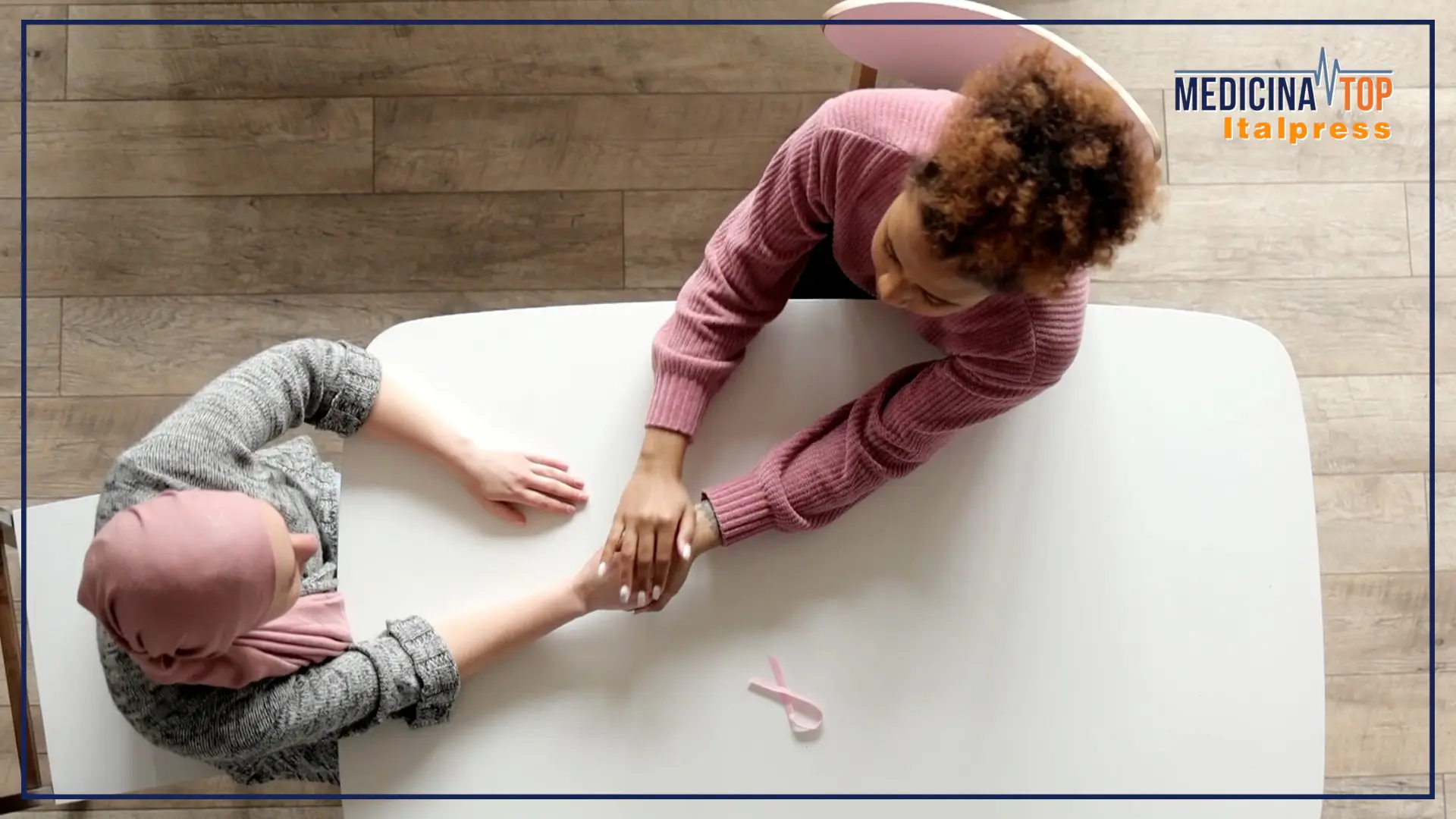
– photos taken from video Medicine Top –
(ITALPRESS).