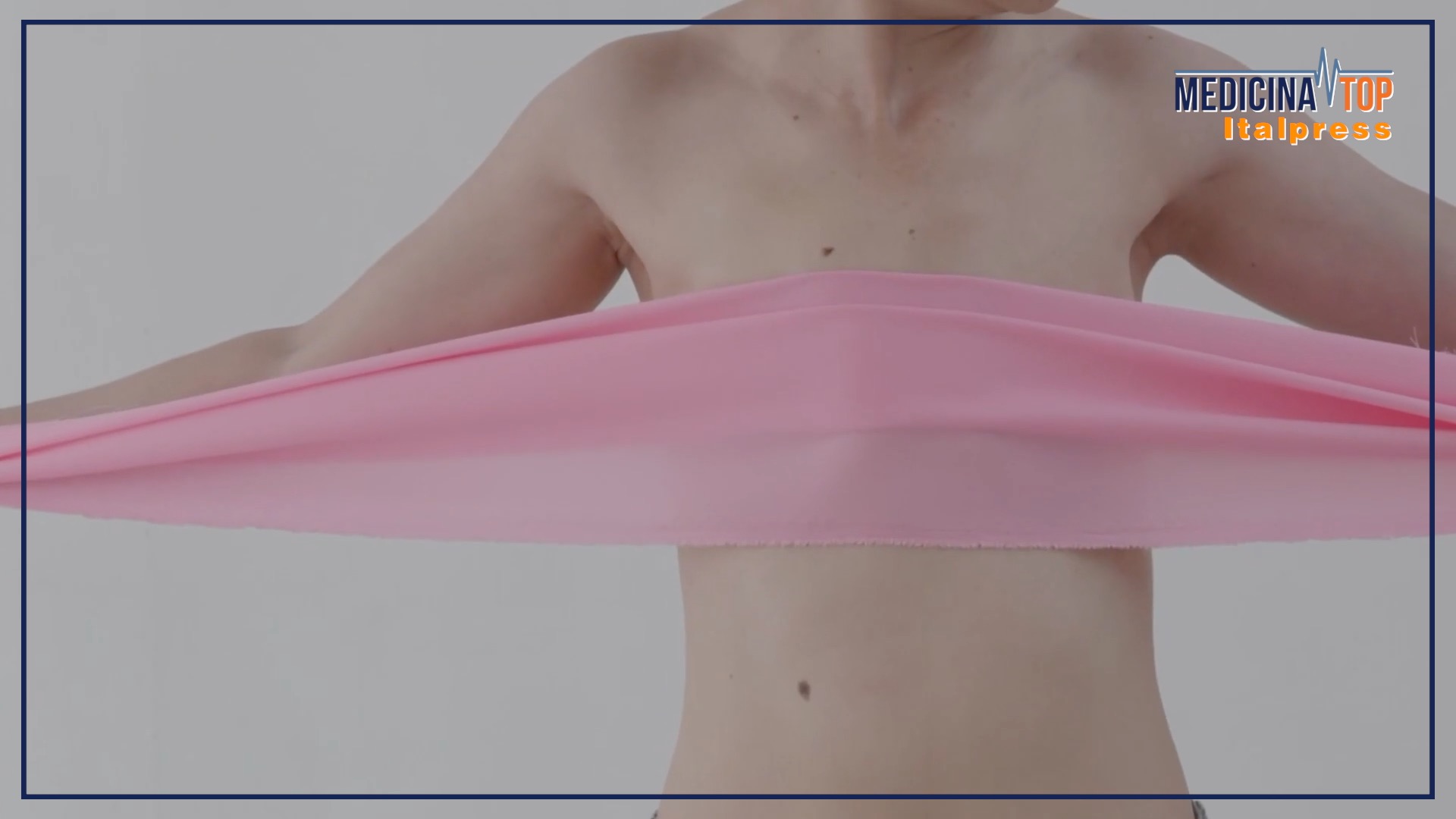
ROMA (ITALPRESS) – The breast cancer is the most frequent in women in Italy: according to the report ‘The numbers of cancer in Italy 2025’, published by the Italian Association of Medical Oncology together with the Italian Association of Tumour Registries, the new cases are over 53 thousand a year; net survival five years after diagnosis is 88%, thanks also to early diagnosis and therapeutic progress.
Treatments are tailored according to the stage and biological characteristics of the tumor and can include conservative surgery or mastectomy, radiotherapy, chemotherapy, hormonal therapy and molecular target drugs: in selected cases, immunotherapy and new mininvasive techniques can also be used as part of appropriate clinical indications.
“Crioablation uses cold, with temperatures below -160°, to destroy biological tissues: the concept is to bring the cold where the tumor is, create an ice bubble and, maintaining the infrastructure of the intact tissue, kill the cells. With small probes we cross the skin and reach the tumor: there is no cut or engraving, nor is the tissue taken away, but the tumor is killed there where it is. This is done without the need for a general anesthesia: it is a typical procedure that Anglo-Saxons call walk-in/walk-out, that is, the patient enters and goes away after a couple of hours. There is no general anesthesia and there are no scars, so cosmetics is preserved precisely because no surgical access is made: the advantages are absolutely obvious”. Thus Franco Orsi, director of the division of Interventional Radiology at the European Institute of Oncology (Ieo), interviewed for Top Medicine, TV format of the news agency Italpress.
The tumors, Orsi explains, “we do not classify them any longer according to the size or the histology, but to the biological behavior of the same: we can classify them in very aggressive, medium aggressive and little aggressive tumors. The idea is to make a de-escalation, that is to reduce the aggressiveness of the therapeutic offer based on these characteristics: we dedicate ourselves to those poorly aggressive tumors for which surgery is probably an overtreatment, that is an exaggeration compared to aggressiveness. Every year in Italy there are 53 thousand cases of breast cancer: about 7 thousand of these present the biological characteristics we call Luminal A, that is, tumors with recetture. The selection is fundamental: according to it we can reduce the aggressiveness of the treatment with this cryoablation. Currently we do not have data for more aggressive tumors, but only for these: the result five years from the cryoablation is absolutely in line with the result of surgery. The rate of relapse is in line with the five-year percentage of surgery, we talk about a fork from 3.6 to 4.5%: an adequate diagnostic is essential to intercept the possible persistence or recovery of the disease”.
The next reflection focuses on Precise, that is the study conducted by the Ieo which “is not intended to identify whether the treatment works or not, we already know that. No one has ever worked to define how to study these patients, so we are introducing more tests to define exactly how to do it: we are focusing a lot on magnetic resonance, which currently seems to be the most accurate methodology. Historically there is a fork, in terms of local relapse, on patients who are only operated or on those who are operated and also do radiotherapy: at the moment what we indicate in these selected patients is to replace surgery with cryoablation, without avoiding radiotherapy or hormonal treatments. We expect a recurrence rate below 1%: the attainment of the 100th patient is important to us, because our study involves the enrollment of 234 patients and we are almost halfway through. We would like to achieve a statistically adequate number, to define that the control of these patients made of magnetic resonance can safely replace the so-called anatomical piece removed from the surgeon: we have a series of diagnostic tools that allow us to be equally accurate”.
For oncological intervention, Orsi emphasizes, crioablation represents the last frontier, as it “is growing much together with surgery. Now we have comforting data on the liver, the kidney, the lung, the thyroid: the idea is to make a real de-escalation, that is to begin to identify all those tumors that for aggressiveness, size and early diagnostics deserve a less aggressive treatment, which obviously gives a great advantage from a clinical but also economic point of view; the impact on society of a treatment like the tumor of the breast made in the clinic or the surgery.
An increasingly refined diagnostic, he concludes, “intercepts tumors to a greater extent, although not all: in fact we take care of that slice of patients that is intercepted early with a very small tumor. On the other hand, surgery will never disappear, there are a series of situations in which there is no alternative: moreover, the cryoablation of the breast is not a treatment of interventionist radiologist, but a transversal clinical practice”.
– Photos from Top Medicine –
(ITALPRESS).