November, in the United States, can be summed up in one word: Thanksgiving. But together with the turkey and parades that color the cities, this is also more and more the month when America stops to remember the native peoples who first inhabited this land. Moreover, the traditional story of the festival dates back to 1621, at a shared harvest lunch between English settlers and Wampanoag, and for more than thirty years November is also, officially, the month dedicated to the history and culture of Native Americans.
For this stage of the World Tour in New York, then, we do not need to go so far into space, but we will rather go back in time, on the traces of the culture that inhabited these lands before even the city existed: that of the Lenape. I can’t talk about the Lenape without at least referring to a novel I’ve already mentioned in this book, still one of my favorite books on New York, and that starts right in the waters north of Manhattan, on board a canoe headed towards the island we live today. The book is titled “New York”, written by Edward Rutherfurd and is a great saga that crosses four centuries of history of the city through the events of some interconnected families. I remember the surprise of discovering that this New York novel did not begin among the skyscrapers, but with the woods, rivers and paths of an island that the Lenape called Manahatta. One of those paths, which crossed the island from north to south by wandering swamps and rocks, still exists. We walk it every day, often without knowing it, and today it’s called Broadway.
But who were the Lenape among the native peoples of the United States? Their name simply means “people”, and their land, which they called Lenapehoking, stretched over a vast territory that embraced the current New Jersey, Delaware, the southern part of New York State, eastern Pennsylvania and a piece of Connecticut. New York, I mean, it was just a little corner! The Lenape have inhabited these lands for thousands of years before, in 1609, the ship of Henry Hudson climbed up the river that today bears his name. They did not form a single compact people, but many groups linked by language and culture: the Canarsie in Brooklyn, the Rockaway in Queens, the Wickquasgeck in northern Manhattan. They lived in villages of houses covered with bark, alternating hunting, fishing and agriculture following the rhythm of the seasons. Even if we don’t mind anymore, their language is still everywhere on the map of the city: Manhattan comes from Manahatta, which usually translates “island of the hills”; Rockaway would mean “silky place”; Canarsie bears the name of one of the groups living in Brooklyn, and the Gowanus one of their leaders. Today the Lenape communities live mainly in Oklahoma, Wisconsin and Ontario, Canada, but among them there are those who continue to come back here, in the land of origin, to tell their story through art and culture.
Before becoming the street of theatres, lights and parades, Broadway was a native path called Wickquasgeck Trail and named after one of the Lenape groups we just met. It ran from one point to the other in Manhattan following the shape of the ground, bending where there was a swamp and turning around the rocky outcrops. The first to name it in writing was the Dutch explorer David de Vries, who in his diary of 1642 noted the presence of a road that locals traveled every day. The Dutch widened the southern part of it, which led to their fort, and the British, who arrived a few decades later, called it Broadway, probably from the Dutchman Brede weg, “wide road”. Even today, south of the 23rd Street, Broadway almost faithfully follows the original route, and the same happens further north, between Washington Heights and Inwood. Not infrequently, when I happen to walk a stretch of this road (which I have always admired for never adapting to the boring grid of the streets of Midtown), I imagine it as it was: a path in the wood that went down to the tip of the island, just where today opens Bowling Green. And it is right there, at the beginning of Broadway, which begins our tour to discover the New York of the natives.
At the southern end of Broadway, overlooking the gardens of Bowling Green and near the landing of ferries to Staten Isalnd, rises the old customs of New York, the Alexander Hamilton U.S. Custom House, a Beaux-Arts palace completed in 1907 and built to collect duties on goods arriving at the port. Since 1994, this building has been home to the New York headquarters of the Smithsonian National Museum of the American Indian, and is perhaps the best place to start learning about New York. The entrance is free, every day from 10.00 to 17.00 (except December 25), it only takes a little patience to pass security checks. The exhibition not to be missed (at the time of writing this article) is “Native New York”, which accompanies the visitor to twelve places of the state to tell how the native peoples lived and helped build the New York arrived to us and also deserves attention “Infinity Nations”, the permanent collection with about seven hundred works of native art of North, Central and South America. The perfect opportunity to visit the museum is the day after Thanksgiving, when the Native American Heritage Day is celebrated. Turning between the halls of this imposing palace is a real leap back in time: a useful journey to understand who we are today, and how quickly this city we love has changed, often without looking too much at its past. A past without which, however, New York would not be what it is.
From Bowling Green, Broadway goes all over the island to almost its northern end, where there is one of the most amazing places in Manhattan: Inwood Hill Park. Unlike other city parks, here nature was not designed by an architect but the hills are wooded, the soil is irregular, and next to the park opens one of the last brackish marshes of the island. The rocks of the park served the Lenape as seasonal shelters, and here were found shells, ceramics and stone tools. Not far from the football field, a plaque on a boulder bears the name of Shorakkopoch, the settlement that stood in this area and whose name, depending on the sources, would mean “place where you sit” or “place in the hills”. The plate, placed in 1954, tells that, according to the legend, right here, in 1626, Peter Minuit bought Manhattan in exchange for goods of the value of about sixty florins. Historians are rather skeptical on the place, but the plate also recalls another story: at that point a huge tulip was growing, born when the Lenape still lived in these woods and died in 1938, at the age of 280 years. For many it was precisely this breed the last living witness of that world. Who wants to discover the park in the company can take advantage of the free walks of the Urban Park Rangers, which during the month dedicated to the Native Americans tell the story of the Lenape between these paths.
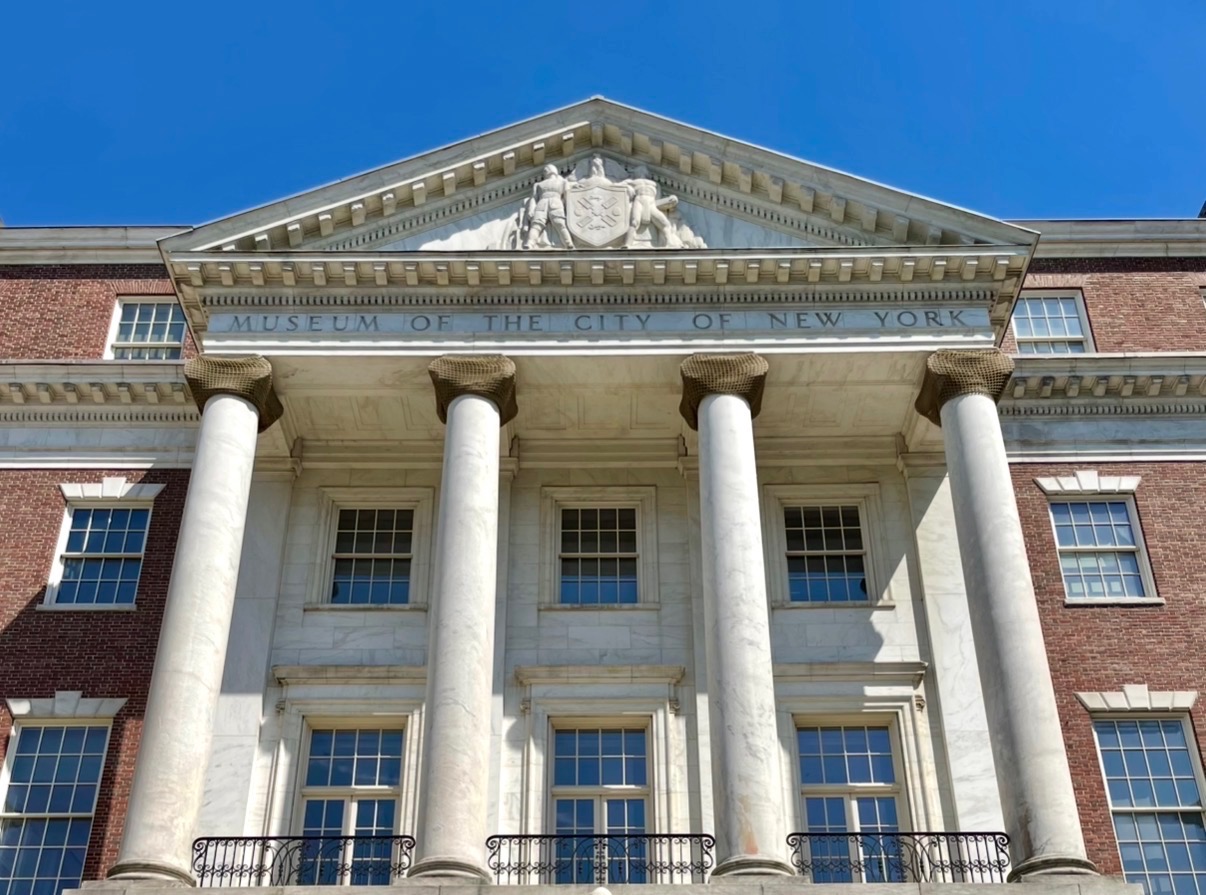
If Inwood tells the past, at the Museum of the City of New York, on Fifth Avenue at 103rd Street, the Lenape speak to the present. Until 18 April 2027 the museum hosts “Halumii Ktapihna: Lenape Legacies and Futures”, an exhibition created together with a collective of Lenape leaders from the United States and Canada, which brings together the work of over thirty contemporary artists alongside objects, archive documents, videos and listening posts. The route is divided into three sections: the Lenape today, the lands of origin, the creation of the future. Unlike the Smithsonian, that of this museum is not an exhibition on a missing people, but on a living culture that continues to tell itself as the title itself says, taken from a phrase in Lenape language: Íiyach ktapihna, “we are still here”; Halumii ktapihna, “we are here forever”.
And if we were interested in today’s New York native, there is a last stop worth exploring. We go to East Village, 367 East 10th Street. Here, in May 2023, Korina Emmerich, stylist of the Puyallup population, and Liana Shewey, Mvskoke educator, opened Relative Arts: a shop, a community space and an artist workshop together. On the shelves are exposed clothes, jewellery, home objects and works of more than fifty indigenous artists from all over the American continent, and in the evening often organize readings, concerts and meetings for the spread of these cultures. The two founders describe it as a place that must make people feel “at home of relatives”, and the name comes from there. Relative Arts says something that few people know: New York has one of the largest urban native populations in the United States, estimated at over 180,000 people, families and artists from different nations who have found a community here.
And the food, which in this column never misses? This time is the most difficult stage: in New York City with tens of thousands of restaurants, there is no way, that I know – but I look forward to being contradicted! – a permanent native restaurant, and the cuisine of the peoples living in these lands meets only in some occasional event. And yet, something is growing, literally. Since 2019, the Lenape Center, the cultural organization founded in New York in 2009 to keep alive the presence of lumber in the land of origin, collaborates with a farm of the Hudson Valley to replant semi ancestral holm oaks in their original soil. And then, when on November 26th we will sit at the table for Thanksgiving, in front of corn, pumpkin and other products of the earth that have always grown from here, perhaps it is worth remembering that the World Tour in New York does not begin with who arrived, but with whom there was already. And who, as the exhibition says, is still here. Happy Thanksgiving and good National Native American Heritage Month at all and appointment as always at the next stage!
L’articolo Back in time: a Thanksgiving on the tracks of Lenape proviene da IlNewyorkese.