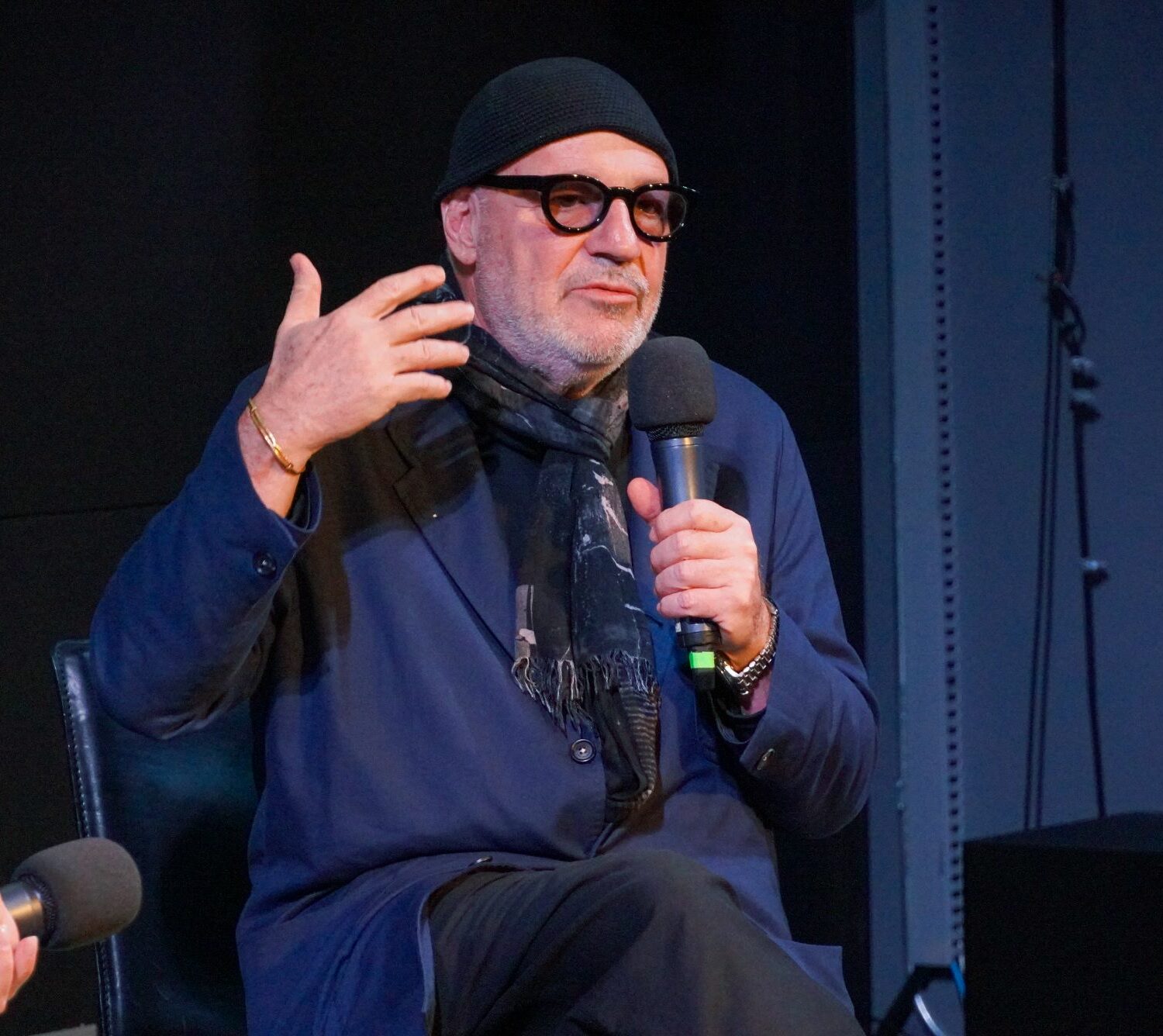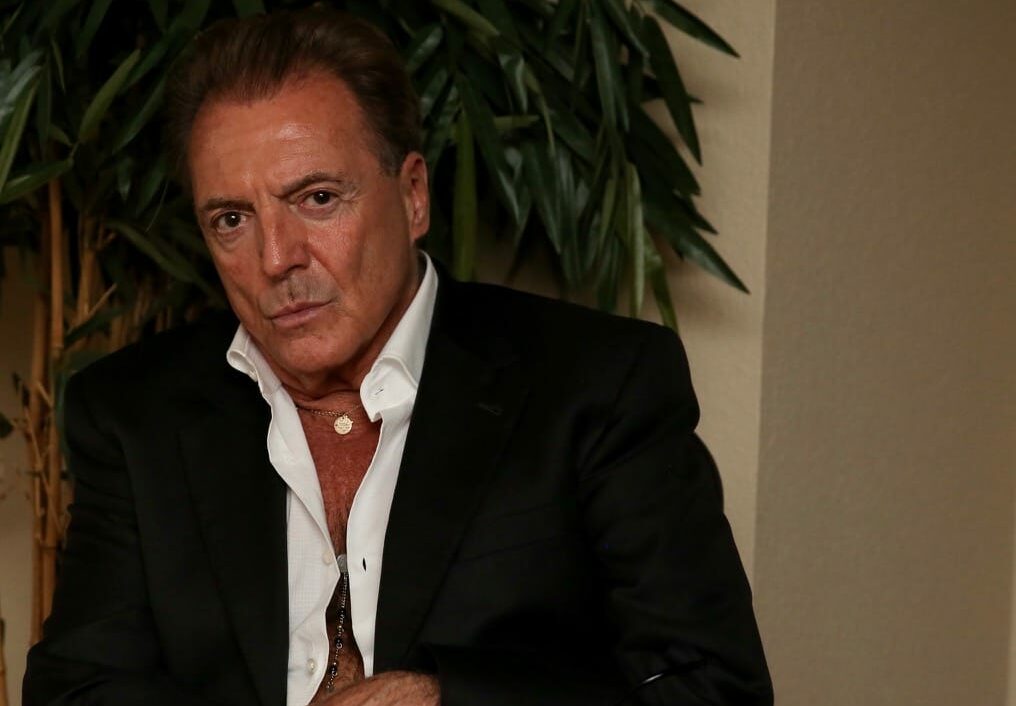
Armand Assante is an actor whose career, five decades long, has been defined by independence and versatility. He often chose roles far from a conventional Hollywood route, from early American films to European and international productions. He won an Emmy Award for his performance as John Gotti and received four Golden Globe nominations for Gotti, The Odyssey, Q&A and Jack the Ripper. His work goes through films like 1492: Conquest of Paradise, American Gangster, Judge Dredd and The Mambo Kings, is marked by a strong physical presence and an approach to acting very interior.
Over the years, how has your way of building a character changed?
The thing that changed the most is that I became a much more critical thinker than 20 years ago. My method is deeply rooted in research: not only on the character or script, but also on the author. I try to understand where the writer comes from: his experiences, his motivations. If I can connect with this, I learn a lot more about the characters he created.
In the end, my job is to take that understanding and bring the character into my DNA. If you have to live on a stage or in front of a camera, it must become part of you. This is the basis of my way of working.
When you are on the set, how much do you rely on improvisation?
Not suddenly in an indulgent way. I am very disciplined in respecting the text: the words are there for a reason. That said, behavior can be improvised. You can explore how a character moves, reacts, exists within a moment.
When I was a younger actor, I was trained to be very obedient to the author and director, so I never allowed myself to improvise. I’m sorry I didn’t study it separately, because it’s a very powerful tool. I’m a very intuitive, instinctive actor, and I could use more.
Improvisation can help you discover subtexts and behaviors, and with the right actors and director you can get to something magical. But, as a person who writes, I respect the intention of the author. So for me improvisation is a tool, not a substitute. I always go back to the text.
Is there an interpretation that defines you as an actor?
I am often told that some interpretations have left the deepest impression. Surely Gotti is at the top of the list. It has become a global film, popular in Europe, Russia, even in Asia. Such a flow was unexpected. He also incasellated me in certain ways, because people began to associate me with that authoritarian presence. Then there is The Mambo Kings, who had a remarkable international life despite a very limited initial exit. You never really know how a movie will sound over time.
When you prepare for a role, start with instinct or research?
It becomes a combination of the two things, but they are very strict in research. If I do not understand why a story is told — its relevance, its origin — I do not feel I am doing my job.
The process should never be rushed. Real creative work takes time. If you don’t do basic work, you risk superficiality.
And there is another aspect that people underestimate: the work of the writer. A script may take years to be distilled. Acting is not just about the actor: it also means honoring a collective process.
Was there a role that brought you to a personally uncomfortable territory?
Yes. Recently, in a film I just made, Revival, directed by Armenian director Jivan Avetisyan, and earlier in On the Beach, directed by Russell Mulcahy, who also created Highlander. Both roles were very close to what they are, and this made them more difficult.
When a role touches something deeply personal, you expose parts of yourself to which you usually do not access.
Both characters faced catastrophic circumstances, and I had to wonder how I would react in that situation. This requires digging into emotional reserves that are not easy to achieve. Those roles left me a strong impression.
You played real figures like John Gotti. How do you make a real person authentic without falling into imitation?
With Gotti I’ve been very committed to transcripts. It was one of the most recorded figures of his time, so I studied everything: what he said, as he said, to whom he addressed. Transcripts revealed behavior.
I also understood the environment from which it came. I’m a New Yorker. I knew those neighborhoods. I met his original lawyers, Albert Krieger and Bruce Cutler, and I talked to people who knew him.
The key, for me, was to understand that he did not seek any redemption. When you understand this, everything else is affected.
The goal is not imitation. It is to understand the inner logic of the person: his world vision, his impulses.
What do you still like about acting after so many years?
Tell stories. This is the nucleus. But in addition to this, I am fascinated by behavior: because people do what they do.
What I’m looking for is the subtext under a scene. What makes her alive? What gives you electricity? That’s what I always follow.
I’ve always been instinctive, even when I played music as a young man. If you can access the impulses that make you feel something alive, that’s where the performance becomes electrifying.
What advice would you give to yourself younger?
Don’t compromise and go through fear. That’s the same thing I’ve been telling me since I was very young.
Fear is always there, but it is often an illusion. You have to go through it.
The other thing is the will. Your will is part of your talent. There are talented people everywhere, but not everyone has the will to bring the job to the bottom.
This is what the greats do: they chase something until it is fully realized. If I could go back, I’d say to myself, take everything to the bottom.
L’articolo Armand Assante: method, instinct and discipline proviene da IlNewyorkese.