MILAN (ITALPRESS) – Managing the 5 million phone calls that every year reach 112, the only number of emergencies in Lombardy, also with the help of artificial intelligence and invest more on helicopters equipped with a “secondary rescue”. These are, according to Massimo Lombardo, general manager of Areu, the Regional Agency of Emergency Urgence, the aspects that could further increase of level a health care system already avant-garde in Italy and Europe like that of Lombardy. Interviewed by the Italpress Press Agency, Lombardo clarified that, with regard to the help of the Ia, “the operators could use advanced tools of artificial intelligence to enhance their competence, for example to automatically write what is reported or even to manage decision-making algorithms.” As for helicopters, for Lombardi “we have different in our region, but are equipped especially for a type of rescue ‘primariò, able to intervene on any terrain. The story of Crans-Montana, however, has highlighted how the helicopter can be competitive even for some clinical situations regarding the transport on rubber. So probably a reasoning on helicopters other than those we use now, suitable for the ‘secondary transport of patients from point to point, from hospital-hospital, I would. There are large hospitals in the Lombardy area that can have a wider user basin if you have a technology that allows you quickly and quickly to transport patients.” About the New Year’s massacre of Crans-Montana, the dg of Areu, tells Italpress the role played by the Lombard emergency-emergency: “We were immediately involved, just in the early hours of the morning of the first of January, after receiving a phone call from the Councillor to the Welfare of the Lombardy Region, Guido Bertolaso, who in turn was in contact with Minister Tajani and the Farnesina. We immediately prepared our operational capabilities and immediately made available our helicopters, carrying out three flights to evacuate three boys who were admitted to the Sion hospital, a valley hospital, not big, in which they had arrived in a few hours tens and dozens of serious, burnt patients, many very young people. We left immediately and brought to the center great burns of Niguarda the first three wounded. At the end of the surgery we managed 12. They are patients who alas, in addition to burns, which is already an aggravation compared to a normal patient of intensive therapy, had also inhaled toxic fumes of a fire that was dramatic. I think this story has touched us not only from a professional point of view, but also from a human point of view. Those who work with us, many are parents, many have maybe children of the same age as those who had been injured. I have seen in our men a technical capacity of great value, but also an enviable human aspect.” Another fact of record that recently interested Areu was the tragedy of the derailed tram in Milan. “In this case we immediately activated our joint of Milan, we activated our ‘console of maxi emergencies, and we managed in a very short time to recruit a considerable number of ambulances, because the number of wounded, alas, was very high and everyone needed a ride to the hospital. We transported 45, some even in severe conditions, using the entire Milan hospital network. It was a theme of activation in very fast times of extra-hospital resources, ambulances, means of rescue. We have activated three of our means of coordination on the field, we have also used fleas that made available to us the Civil Protection because the goal was to act with extreme promptness and with great effectiveness su any type of wounded. This is a bit of a feature we have been working on for over 15 years: increasing our ability to give a structured and standardized response to each event,” says Massimo Lombardo. Areu was also engaged in the first row for the recent Winter Olympics in Milan-Cortina. “The Olympics are an extraordinary event, and they are also from the health point of view, in the sense that the International Olympic Committee has its own very particular requirements, sometimes different from those of the individual sports federations. AREU worked in an organizational structure led by Niguarda and ASST Valtellina. We have worked in particular, in addition to the aid on the territory that we obviously reinforced in the axis that from Milan has arrived to Livigno, also of the technical aid on the track, therefore both on the ski slopes of Valtellina (Bormio, Livigno), both on the three buildings of the ice that were active on Milan. They are very special works, very specialized. We have a certain experience because we have been following for a few years the Ski World Championships of Bormio, the Ski World Cup, we follow the Monza autodrome, we have followed the world of rugby youth. It is an emergency emergency assistance on a particular situation, since they are young people, athletes. We have learned a lot in this international comparison with the doctors of the International Olympic Committee” concluded Lombardo.(ITALPRESS).
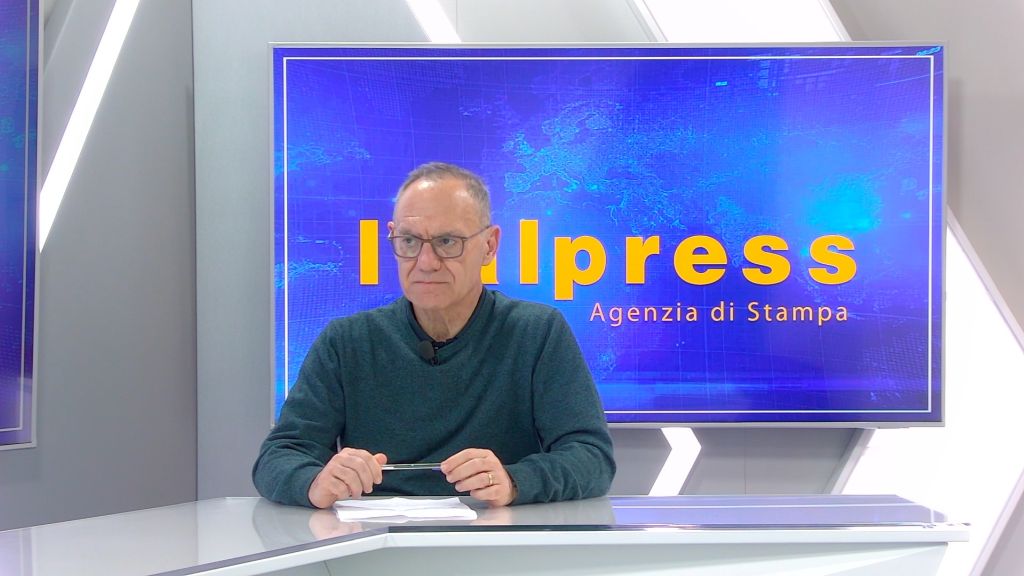
Photo: Italpress Agency