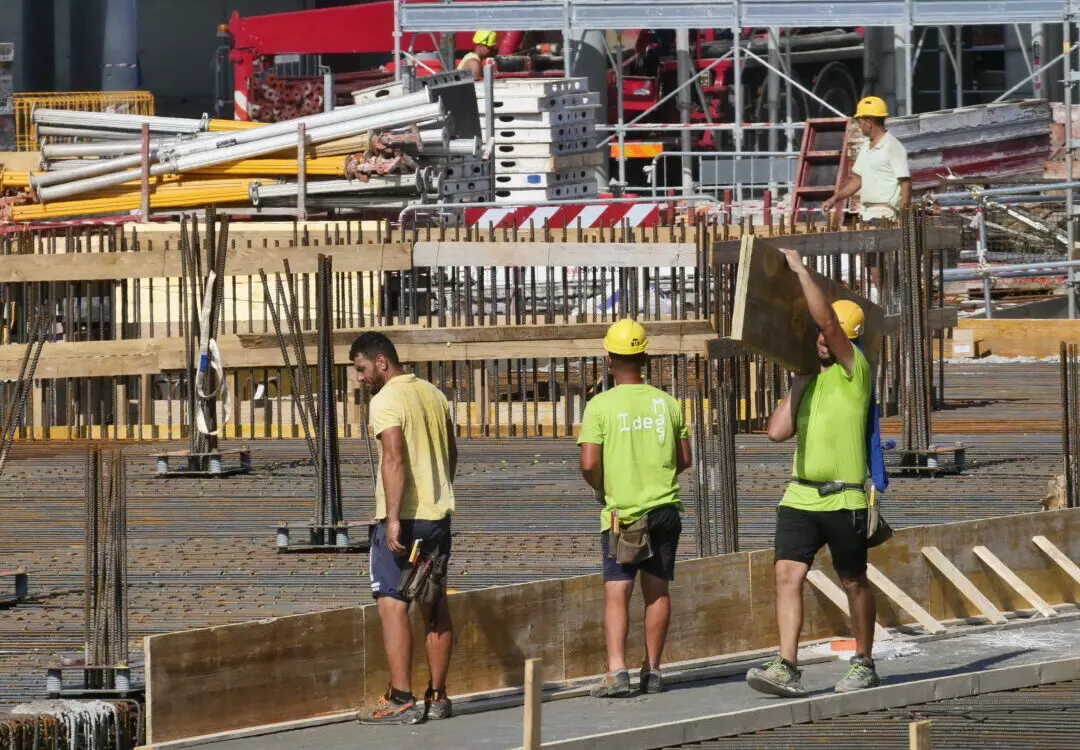
ROMA (ITALPRESS) – More and more regions make measures to protect the sectors most exposed to high temperatures, which now also touch spring and autumn. A study in the Journal of Exposure Science & Environmental Epidemiology has demonstrated for the first time in Europe the effectiveness of the Cnr-Inail prediction platform: where risk prediction-based ordinances intervene, accidents at work are reduced from 20 to 40%. Also this year many Italian regions have issued orders to protect the health of workers from the effects of extreme temperatures, which provide temporary suspension of outdoor activities from 12:30 to 16:00 on days and in places where Worklimate signals a high risk level for workers exposed to the sun and engaged in intense physical activity.
The Cnr and Inail forward-looking platform has just been renewed with the new Worklimate 3.0 project “Business health and corporate resilience in the era of extreme temperatures” (Bric Inail 2025). The project aims to develop innovative tools and solutions for the protection of health and safety of workers exposed to extreme temperatures and for the strengthening of resilience of business contexts. It adopts an integrated and multidisciplinary approach, involving a broad network of companies from different business sectors and competent doctors engaged in a health surveillance program. Activities also include monitoring of non-climate indoor working environments and managing individual warm susceptibility.
The project also expands attention to the effects of cold on workers. Among the expected results there is also the development of a prototype alert system to predict the effects of cold. In 2024 the orders had been adopted by 15 Italian regions, affecting more than 1.5 million workers; in 2025 the number rose to 18 regions and over 2.3 million employees. For 2026, even before the beginning of the astronomical summer, they have issued these measures already 16 regions, starting from Lazio, to which they have added more recently also Campania and the Marche, involving therefore almost all of the Italian regions (18 regions, with the exclusion of Val d’Aosta and Trentino-Alto Adige).
The evolution testifies to the increasing attention to the risks associated with extreme heat,” comments Marco Morabito, researcher Cnr-Ibe. “In addition to traditional agricultural and building sectors, many regions have extended the protection to sectors such as florovisation, personnel engaged in greenhouses and agricultural tunnels, extractive activities, plant logistics, urban deliveries, road and rail maintenance, environmental hygiene and forest sector. Calabria and Puglia have expanded the scope of application to confined environments without adequate ventilation or cooling systems. Another novelty concerns timing: Lazio, Umbria, Tuscany, Liguria, Puglia and Piedmont have anticipated the vigence of the measures already in the last decade of May and until September (Lazio, Umbria, Puglia, Emila Romagna, Lombardy, Calabria, Basilicata, Friuli-Venezia Giulia and Molise), adapting itself to a climate reality that frequently indicates high risk conditions for the workers already in spring and until early autumn”.
The effectiveness of these preventive measures was assessed in a study carried out in Worklimate by researchers from Cnr and Inail, published in the Journal of Exposure Science & Environmental Epidemiology. “In the summer of 2024, the hottest year recorded globally, the rates of accidents at work in the regions that had or not adopted the ordinances show a significant reduction in the first, despite being more exposed to intense heat”, continues Morabito. “In the construction sector, the accident rate is less than 21.9% compared to regions without orders, in the agricultural sector of about 25% and in the days classified at greater risk by the platform, the reduction of accidents in the construction sector exceeded 40%”.
The study is the first evidence at European level of the effectiveness of a public policy aimed at preventing the effects of heat on work and confirms how weather and biometeorological forecasts can act as operational instruments and contribute concretely to the reduction of accidents and safety of the most exposed workers. The increase in frequency, intensity and duration of heat waves requires an important scientific support to adapt and protect health strategies.
– Photo Ipa Agency –
(ITALPRESS)