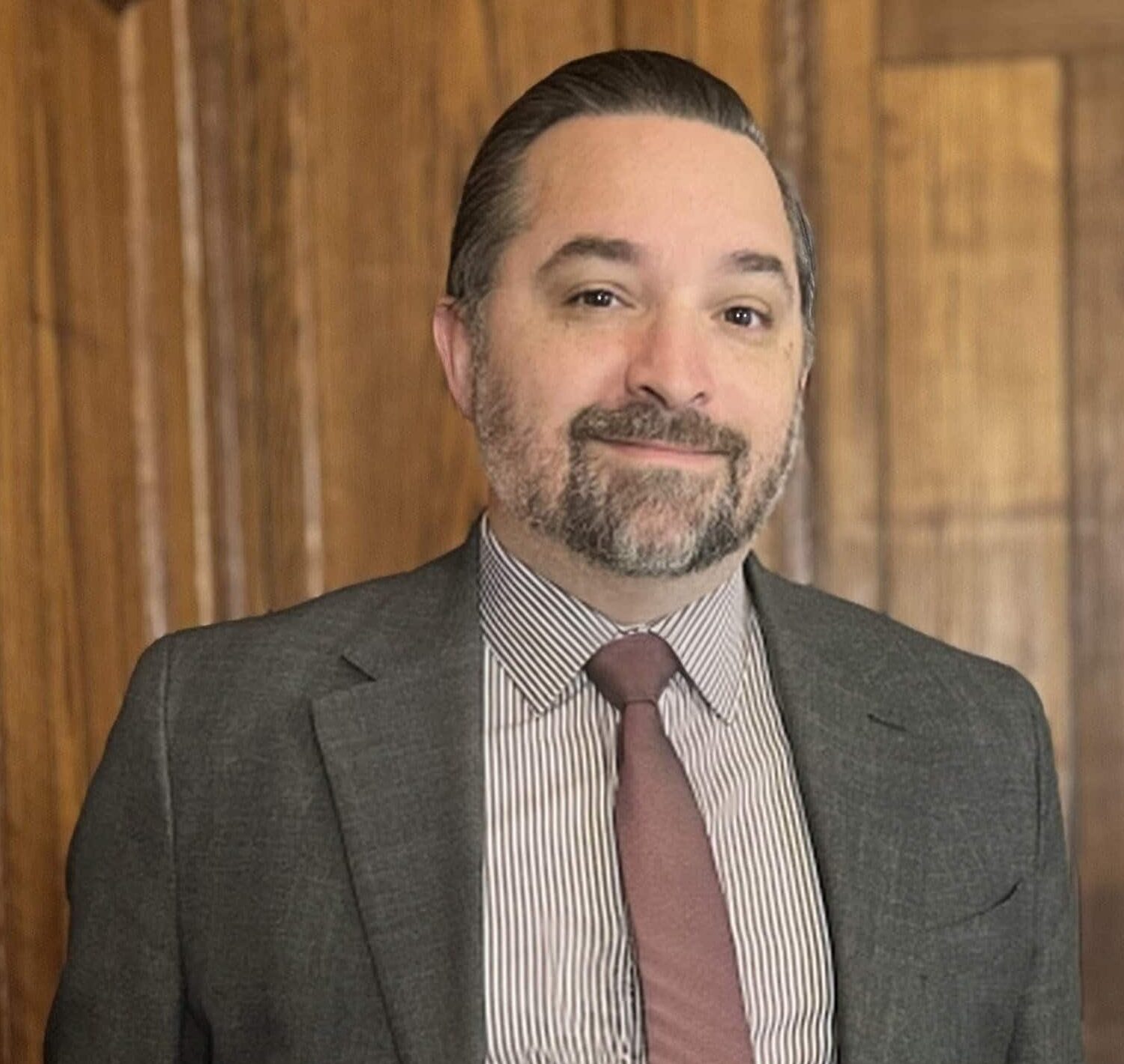
Anthony Martire is the new Head of School, interim of La Scuola d’Italia Guglielmo Marconi in New York, where he brings a profoundly international and interdisciplinary educational vision. Before guiding the institute, he worked for many years in the United States as a researcher in the field of human learning and as a teacher at both school and university level, teaching Italian Studies, composition in English, Western history and culinary art. His academic and professional journey, rich and transversal, allows him today to orientate the school with an innovative approach, attentive to teaching quality and the cultural growth of students. We interviewed him for IlNewyorkese.
What is your vision for the Italian School and how does it intend to combine Italian tradition and educational innovation in your path as a new principal?
My vision for school comes from my personal and professional experience riding between two worlds. As a scholar of Italian language and culture who lived long in Italy, but who was born and raised in the United States, and who worked in the American educational system, I see the Italian School as a privileged bridge: a place where Italian intellectual traditions, rigour, depth of study, can meet the practical approach, design, and oriented to the experience that characterizes the best American schools. I think our community has an extraordinary potential: with a shared vision, The School of Italy can become one of the leading international institutions in New York and the East Coast. I particularly care about the value of multilingualism, not only as linguistic competence, but as a way to see the world from more perspectives. It is an experience that opens students to critical thinking, to more effective communication and, above all, to the possibility to discover the most authentic parts of itself through encounter with each other.
How can the school strengthen the sense of Italian-American identity in children while preparing them for global citizenship?
This school occupies a unique position, helping our students understand and strengthen their Italian-American identity, but at the same time preparing them for global citizenship. It is important, however, to remember that “American-style” is a broad and multifaceted term: includes the Italian-American culture of New York and the great contribution of Italian-Americans to the development of the United States, but also includes the live and contemporary link between Italy and the United States. The Italian School is part of a network of organizations that feed this dialogue — from the Consulate General of Italy, the Italian Cultural Institute, the Casa Italiana Zerilli-Marimò, the Calandra Italian American Institute, the NIAF, the Columbus Citizens Foundation, in newspapers like the New York City — with which we collaborate regularly. For this reason, I consider as an integral part of our mission the offer of concrete opportunities to our students, so that they can explore these interconnections: through educational outputs, participation in exhibitions and festivals in the city, meetings with prominent figures, from both the United States and Italy, and interdisciplinary projects that combine the two traditions. In this way children discover not only what it means to be Italian-American today, but also how to move with awareness and curiosity in an increasingly interconnected world.
What digital tools or innovative methodologies do you think is more strategic to make learning more engaging and up to date?
The educational strategy of the Italian School aims to maintain a solid balance between tradition and innovation. We want to enhance the depth of the Italian educational heritage, integrating it with tools and methodologies that make learning more immersive, inclusive, and in line with the rapidly changing world in which our students live. The updating of the Triennial Plan of the Educational Offer, approved by the College of Teachers and developed in collaboration with the School Office of the Consulate, reflects exactly this vision: to combine the academic rigour of the Italian system with the skills of the Diploma Programme of the International Baccalaureate, which focuses on the responsibility of the student and his ability to become an active agent of his training path. In this framework we have invested in the renewal of the technology laboratory and in the formation of the teaching body, which recently participated in sessions dedicated to artificial intelligence tools made available by the school for teachers and students. Our teachers are doing an important job to integrate these resources into their daily practices: platforms for creating videos, podcasts and presentations, but also AI tools used responsibly and consciously. We are entering a phase of unprecedented pedagogical and professional transformation, and our task will be to guide our students through this change, keeping firm the link between the Italian cultural tradition and at the same time opening them to the skills required by the future.
How do you plan to build an effective dialogue with families and the Italian and American community that revolves around the school?
For me to build an effective dialogue with families means, first of all, recognizing that education is a three-way pact: school, students and families. When these three components communicate openly and respectfully, an environment is created where students can truly develop all their skills. At the same time it is important to remember that this dialogue is based on trust: families choose this school because they recognize the quality of our pedagogical approach and the professionalism of our teachers. Listening to their observations and responding to their possible concerns is essential, because it is equally essential that they feel quiet in knowing that the educational direction is indicated by competent and experienced professionals, with a clear view of the path of their children. To strengthen this exchange I have already begun to meet families of each class, as well as representatives elected by parents. We also revived the presence of students and parents in class councils (which in truth does not exist in other schools in New York), and our Parent Association plays a valuable role in supporting pedagogical work and maintaining a collaborative climate. In addition to the internal community, the Italian School dialogues with a broader network of stakeholders: cultural and professional partners that contribute to the orientation paths, realities that support us in school-work experiences, professionals who share with our students their careers through projects such as those with the Bank of Italy, EssilorLuxottica, Boston Consulting Group, and Columbia University Irving Medical Center. In addition, we are part of a large community of former pupils, former parents and former teachers who continue to feel alive in the school. It is this ecosystem that allows our students to grow in a rich, safe environment, and deeply connected to the world that awaits them.
What are the main challenges he has encountered so far in his new role and what opportunities do you see for the growth of the school?
As in any school, we also face some challenges, but many of them at the same time represent important growth opportunities. One of this year’s priorities and strengthening relations with other schools in New York and with communities that can direct new students to us. Throughout the city there is a strong interest in bilingual and international programs, and whenever I present La Scuola d’Italia at fairs, meetings, or open houses, I respond to a significant enthusiasm from families who look for exactly what we offer: academic rigour, solid cultural identity, and truly international training. We are aware that some families look carefully at the size of the classes, and we are working to further increase the enrollment. The first results are already evident and we have already recorded a clear increase in applications for admission for the next year, the result of the joint engagement between administrators, coordinators, teachers and parents in promoting the quality of our educational project.
Looking at the future, what skills and values do you think essential to prepare students to face the world of tomorrow?
Looking at the future, I believe that the school should form individuals capable of thinking, dialogue, and collaborate for the good of their society. I like to recall the words of Luigi Einaudi, “know, discuss, deliberate”, because they perfectly express the idea of education as a critical, open and responsible exercise. For me this is the foundation of the integral formation of the person, which concerns all the size of the student: intellectual, social, cultural and emotional. In this context, I consider the awareness of the profoundly social character of human learning essential. You really learn with others: through collaboration, comparison, dialogue between different knowledge. The school must therefore create spaces and opportunities where students can explore, co-construct knowledge and experience rich in meaningful interactions. In addition to this, I believe the value of interculturality is indispensable: not as simple competence, but as a way of living the world with openness, curiosity, and respect. At a time when the technologies, although fundamental, risk isolating young people and reducing their analytical capacity, we have the responsibility to ensure that each student feels seen, including, and able to realize himself fully. Finally, preparing for global citizenship also means educating to responsibility, critical thinking, effective communication and the ability to understand the complexity of the world. These are the values and skills that, in my opinion, will make our students ready to face with confidence and awareness tomorrow.
L’articolo Anthony Martire: guiding the Italian School in New York between Italian tradition and educational innovation proviene da IlNewyorkese.