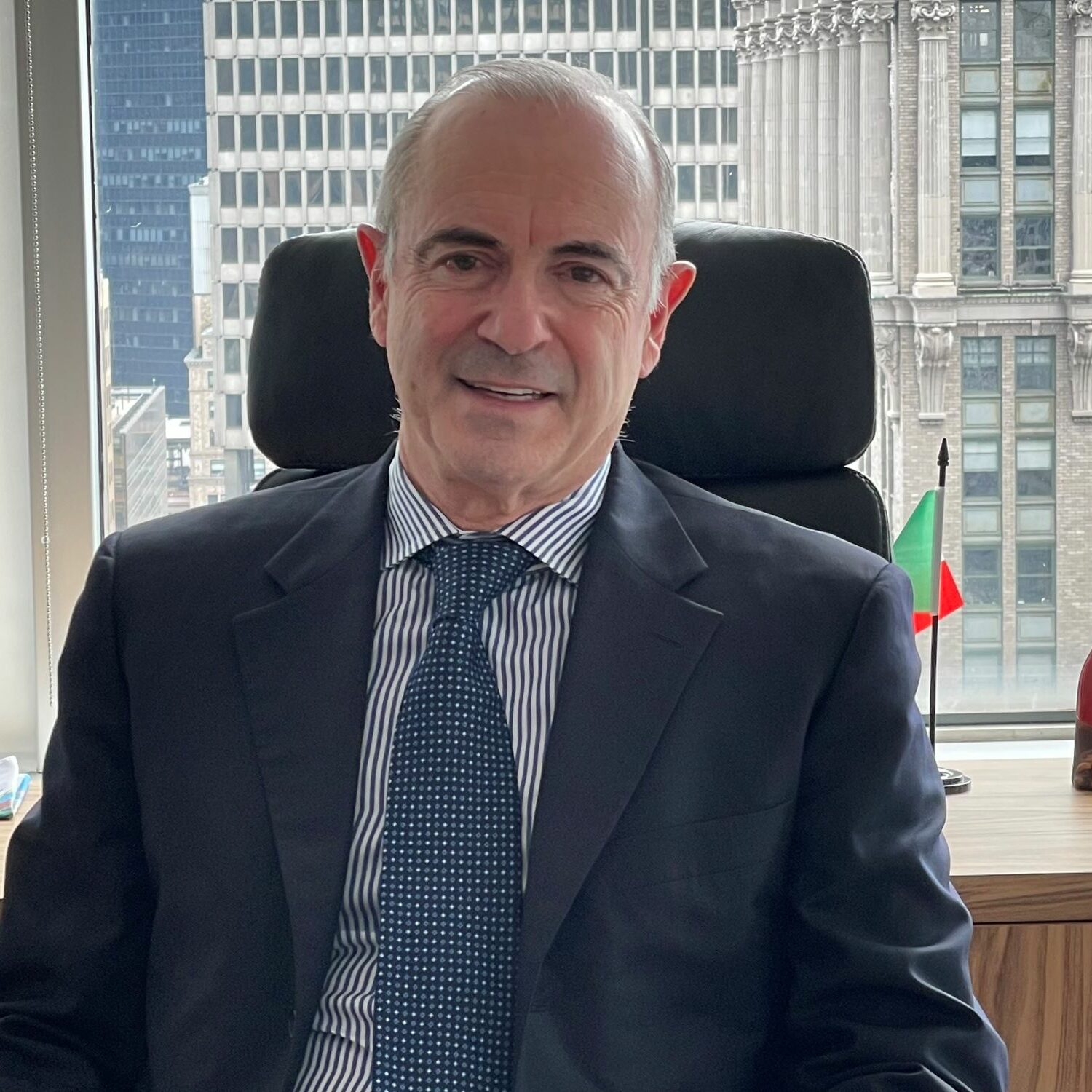
Alessandro Gajano, Neapolitan of origin, is a banking manager with over forty years of experience in the international financial sector. He currently plays as Treasurer and Vice Director at Banco do Brasil in New York, where he has been operating since 2006, mainly dealing with treasury management and financial activities on global markets. During his career he worked in several international banking institutions, including Banco di Napoli and Norddeutsche Landesbank, developing a specific expertise in monetary markets and risk management. Formed in the United States, he graduated in economics at St. Peter’s University in parallel with his career in the financial world.
She has been working for over forty years in the international banking sector: how has this route started and what has it taken from Naples to New York?
I was born and raised in Naples, where I attended scientific high school. After the military service, my father, who worked at the Banco di Roma, was transferred to the United States, New York. I met him in 1978.
I started university, but after a semester I decided to reconcile work and study. I didn’t know if I would stay in the United States or back in Italy, but I was sure I wanted to experience it. I started working during the day and studying in the evening, until graduation in 1982. When my father returned to Italy, he advised me to stay in New York because there were more opportunities here. I had already started working in the financial sector and from there my path began. However, I continue to go to Naples two or three times a year: it is a city that I bring in my heart. Besides being great fan of Naples.
Was there a precise moment when you realized that you would build your career abroad?
Yes, in a way. I was thinking about going back to Italy and looking for work there, but then I met my wife here in New York. I had already lost my mother and, in the meantime, my father. At that point the link that would bring me back to Italy had weakened. The work was fine, I got married and the decision to stay became definitive between 1984 and 1985.
What are the main challenges in managing financial assets in a complex market like the American one?
Over the years I realized that the most important thing is to be always prepared for the next crisis and adversity. Experience teaches you to stay calm, to understand markets and above all to manage risk. Markets react a lot to perception: if you can interpret it, you can better manage and take advantage of the volatility that arises.
How much does the ability to adapt to so different international contexts count today?
It’s fundamental. With experience you learn how to adapt to any situation. During Covid, for example, we had to learn how to manage everything remotely. At other times, as in the financial crisis, I had to adapt to new market conditions, and seize the opportunity. Adapting and identifying opportunities always go together.
How much has the banking sector changed with new technologies?
He’s changed a lot. In a few months we saw a technological acceleration that would take years. Today we can work remotely, something unthinkable until recently, especially in a sector like ours which is based on complex tools of analytical, control and management. Now artificial intelligence is added, which represents a new challenge. We must look forward, adapt and at the same time maintain a fundamental element: personal business relationships.
Was it difficult to enter the world of finance from Italian abroad?
I’d say yes and no. We Italians, and especially the Neapolitans, have an extra march: creativity, ability to adapt, intuition. It is also important to have a clear objective. Mine was working in foreign banks in the United States, and I built my path in that direction.
What does it mean to work for decades in a high-pressure context like the international financial one?
Pressure decreases with experience. At first it is higher, because you have to learn everything. I remember my first major crisis in 1987: there the pressure was very high. Short reaction times. With time you learn to better understand and manage situations, keep calm and make decisions with greater awareness and clarity.
What advice would it give to a young man who today would like to pursue a career in global banking?
First of all, knowing yourself. The financial sector is very broad: you have to understand what role it adapts to your personality: risk management, trading, analysis, wealth management, etc. Then it serves a clear goal and a short, medium and long-term plan. Without these it is difficult to achieve goals. We must also look at the future, considering the impact of new technologies, such as artificial intelligence. Finally, seizing opportunities and taking risks without fear, especially from young people: it is important to always try and not have regrets.
What is your next goal today?
I’m almost at the end of my career, so I think I’ve achieved many of my professional goals. Today what matters most to me is to convey my experience, the lessons I learned and the principles I still follow: to give advice to colleagues and to teach students. If I managed to leave a mark or change the path of someone better, then I can say that I have really achieved my goals.
L’articolo Alessandro Gajano, from Naples to New York: a career in international finance proviene da IlNewyorkese.