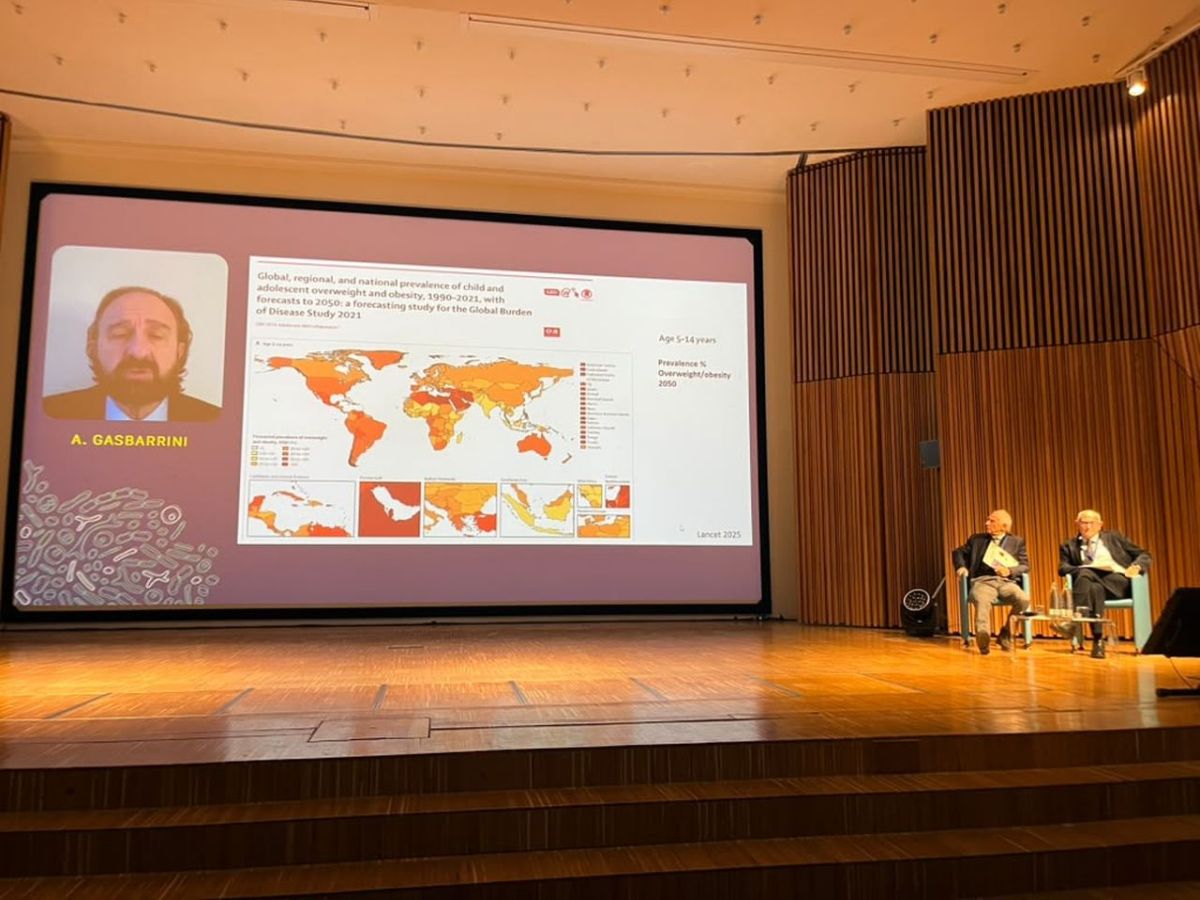
MILAN (ITALPRESS) – From biological curiosity to a central element of human physiology, with possible applications in early diagnosis and in the care of numerous diseases: the intestinal microbiota was at the center of a new paradigm of medicine, which looked increasingly at the person as an integrated system. It was the theme of Microbiota Revolution 2026 – From Basic Science to Clinical Practice, the international conference hosted in the Aula Magna della Cà Granda of the University of Milan, with the non-conditional support of Alfasigma. “Today we consider microbiota to all effects an organ: a dynamic ecosystem that dialogues with the immune system, metabolism, liver, brain and even bone”, explained Antonio Gasbarrini, of the Catholic University of the Sacred Heart of Rome, among the scientific directors of the initiative. The alterations of its balance, defined as dysbiosis, were involved not only in gastrointestinal diseases, but also in obesity, diabetes, metabolic hepatic steatosis, cardiovascular and neurodegenerative diseases, as well as in response to oncological therapies. For Gasbarrini the change has concerned the way of understanding medicine: “We can no longer think of the individual as an isolated organism, but as an integrated system in which our genome lives with a much wider microbial heritage, influenced by nutrition, environment, medicines and lifestyle.” A perspective that has opened the way to precision medicine and, above all, to anticipation. The microbiota could in fact become an early risk biomarker, a treatment response predictor and a therapeutic target, allowing to intercept certain diseases before their clinical manifestation. The initiative involved 23 Italian and international speakers and moderators, with the participation of 160 Italian doctors. The scientific management was entrusted, in addition to Gasbarrini, to professors Giovanni Barbara of the University of Bologna and Carmelo Scarpignato, professor of Medicine and Clinical Pharmacology at the United Campus of Malta. The program developed in two days. The course dedicated to clinical practice has dealt with the relationship between microbiota and gastrointestinal pathologies, including irritable bowel syndrome, diverticular disease and SIBO, as well as connections with obesity and diabetes, with space also to evidence on the use of microbiota tests and pharmacomicrobiomica, which has studied the interactions between drugs and intestinal microbial communities. The international meeting has expanded its comparison with the role of microbiota in oncology and in response to immunotherapy, intestinal-brain axis and its implications in gastrointestinal disorders. Among the topics are also the interactions between microbiota and drugs in the treatment of gastroesophageal reflux, Helicobacter pylori infection and chronic intestinal inflammatory diseases. The focus of the debate is also the next generation probiotics and innovative strategies for microbiome modulation. “The interaction between drugs and microbiota is definitely bidirectional – said Scarpignato –. At first it was thought that only antibiotics could have an effect on the microbiota, but slowly it was understood that any class of drugs, sooner or later and with different mechanisms, is able to modify it. We are therefore faced with a series of dysbiosis that we can define iatrogen.” These reports have been so important because, if the drugs can change the microbiota, it is equally true that “the microbiota, consisting of microorganisms with an important genetic and enzymatic patrimony, almost superior to that of our liver, is in turn able to change the pharmacokinetics and pharmacodynamics”, said Scarpignato. The report was therefore “absolutely bidirectional” and to bewas influenced mainly by the individual response to drugs. “Today we begin to understand why two patients with the same pathology, treated with the same drug, respond differently – he continued -. First it was thought exclusively of a genetic predisposition, today we know that another important factor is microbiota. The future of personalized medicine therefore certainly passes for the evaluation of the genetic patrimony of the patient, but also of its microbiota: it is not enough to know which bacteria there are, you have to understand what they do. It is important to know the metabolic functions of the bacteria we find and how they change during the disease and therapy.” For Barbara, the relationship between intestinal microbiota and irritable bowel syndrome, as well as with other disorders of intestinal-brain interaction, “is extremely important, both to understand the mechanisms at the base of these pathologies and to explain the origin of symptoms. Today – he explained – we know that the alterations of the composition and functions of the intestinal microbiota, defined altogether as dysbiosis, can be the consequence of a series of modifications that occur in the intestines of patients, but also of their eating habits. For example, patients with irritable bowel syndrome often tend to reduce the consumption of food fibers, thus helping to accentuate dysbiosis and establish a kind of vicious circle.” The alterations of the microbiota have been accompanied by modifications in the production of certain substances, such as short-chain fatty acids, “which play a fundamental role in maintaining the integrity of the intestinal barrier. A compromise of this barrier, also through the reduction of the thickness of the mucus layer that protects the intestinal surface, can favor the passage of bacteria or their components through the epithelium, triggering phenomena of low degree inflammation”. This inflammation has resulted in the release of substances that have interacted with the nervous structures used to control motility, secretion and intestinal sensitivity, contributing to the appearance of symptoms such as abdominal pain, swelling and alteration of the alve. “We can therefore consider alterations of the intestinal microbiota as one of the central mechanisms in the genesis of the symptoms of irritable bowel syndrome and, more generally, disorders of the intestinal-brain interaction.” This year the new criteria of Rome V were published, which updated the clinical picture of irritable bowel syndrome (IBS) and disorders of the intestinal-brain interaction (DGBI). As for IBS, “one of the main innovations regarding epidemiology – Barbara continued – as diagnostic criteria became less restrictive than the previous edition of Rome IV. In fact, the concept of comfort was reintroduced, that is, of abdominal discomfort, which had been eliminated in the previous version. In addition, the minimum frequency of the abdominal symptoms required to formulate the diagnosis was reduced, from at least one day a week to at least three days a month.” These modifications have expanded the population of patients who returned to the definition of irritable bowel syndrome, bringing the estimated prevalence in the general population from about 4.1% to 9%. This did not mean that “the pathology has become more frequent, but that some patients previously framed in other categories of disorders of the intestinal-brain interaction can today receive a diagnosis of irritable bowel syndrome”, Barbara pointed out. Important innovations also covered “the understanding of the mechanisms underlying these pathologies. The new criteria of Rome devote ample space to the central role of the intestina microbiotai, the activation of the immune system and their interactions with the mechanisms that regulate digestive functions and the perception of stimuli from the intestine. In this context the role of nutrition is further enhanced, which is one of the main factors that can influence the composition and functions of the intestinal microbiota and, consequently, contribute to the genesis of gastrointestinal symptoms.” However, the challenge of transferring scientific knowledge into clinical practice has remained open. “We have accumulated a great deal of data, but we must distinguish associations from mechanisms through functional studies and controlled, multicentric and adequate clinical trials,” said Gasbarrini. Another fundamental step was the standardization of tests, from sample collection to sequencing methods and bioinformatic analysis to ensure reliable and comparable results. The professor also recalled the need for a shared regulatory framework for new microbiota-based therapies. Fecal microbiota transplantation, he recalled, has already demonstrated a high effectiveness in recurring infections by Clostridioides difficult. New generation probiotics, defined bacterial consortia and postbiotics have represented further research frontiers. To support this evolution will also contribute artificial intelligence, integrating microbiota data with clinical, genetic and metabolic ones. “The real revolution will be accomplished when the microbiota will enter permanently in diagnostic-therapeutic paths, with performance validated and recognized by the Health Service,” concluded Gasbarrini.
– Photo f50/Italpress –
(ITALPRESS).