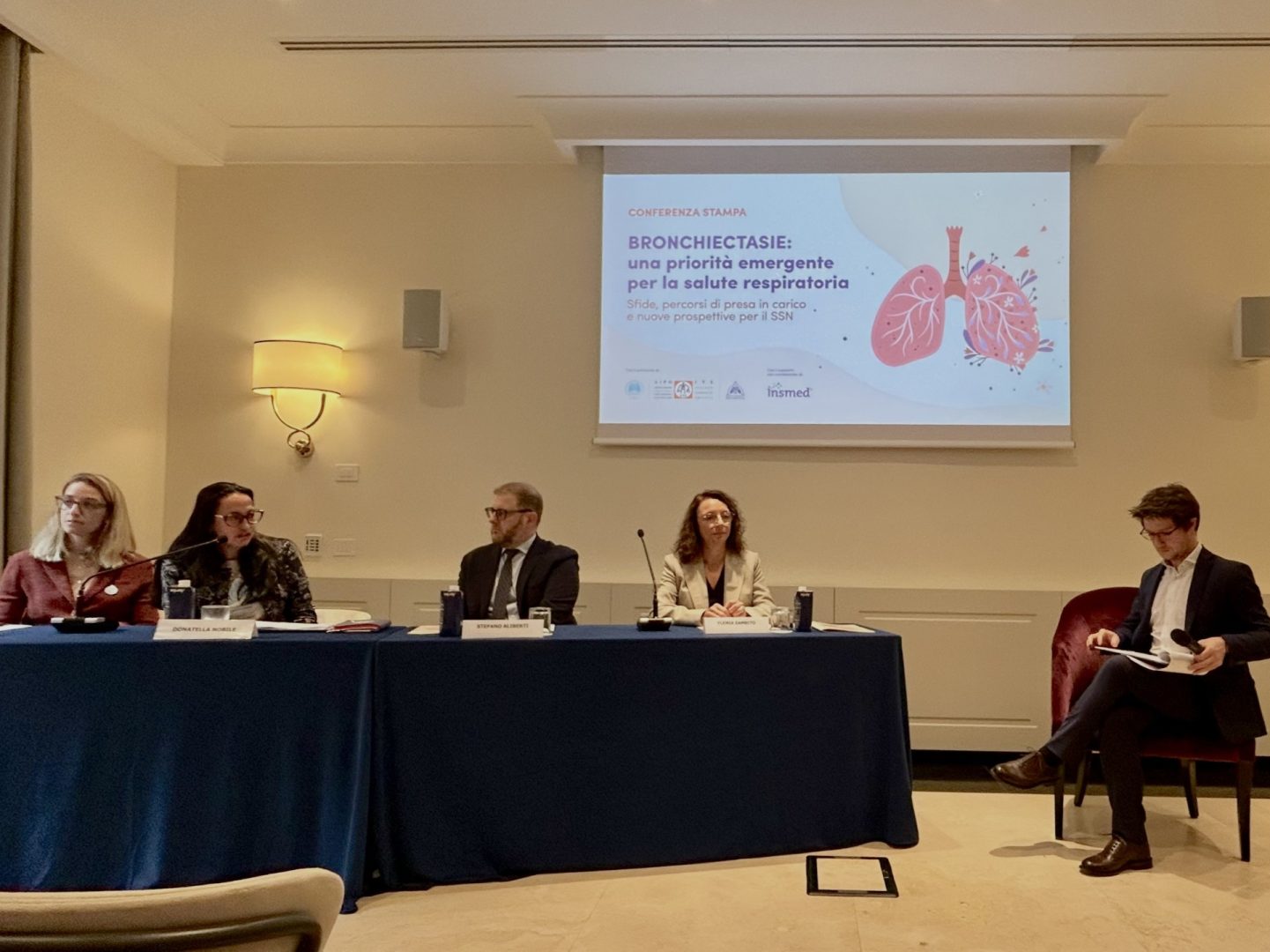
ROMA (ITALPRESS) – The press conference “Bronchiectasie was held in Rome: an emerging priority for respiratory health. Challenges, gripping paths and new prospects for the SSN”. The meeting brought together clinics, patient associations and institutional representatives to deepen the main challenges related to bronchiectasia, a chronic respiratory pathology still unrecognised and often underdiagnosed, and to confront the strategies aimed at improving its diagnosis, grip and access to specialist paths. At the heart of the event, the presentation of the policy paper “Bronchiectasie: virtuous models of taking into account the chronicity”, elaborated by a multidisciplinary working group composed of clinicians and experts, patient associations and institutional representatives. The document analyzes the main criticalities that characterize the diagnostic and welfare path of people with bronchiectasia and formulates a series of recommendations aimed at promoting a more timely, equitable and homogeneous grip on a national level. The policy paper, made with the unconditional contribution of Insmed, is sponsored by AIB – Associazione Italiana Bronchiettasie APS, AIPO-ITS/ETS and SIP – Società Italiana di Pneumologia. “Cropochhiectasias are a rarely understood disease, because invisible. As with many patients, even for me the diagnosis has arrived late: for years I have lived with cough and recurring bronchitis, until in 2013 the first TAC has revealed the disease. A diagnosis changes the life not only of those who receive it, but also of those who stand next to it – says Donatella Nobile, President AIB – Italian Association Bronchiettasie APS -. Conviving with an unrecognized chronic pathology means paying a price in terms of time and costs, between visits and treatment almost always at the patient’s expense, absences from work and shifts to specialized centers away from home. For this reason the policy paper represents a historical passage for a disease already known since 1889, but remained too long orphan of attention, recognition and adequate welfare responses.” bronchiectasia are a chronic inflammatory pulmonary disease, considered the third chronic pathology of the most common airways after asthma and BPCO, characterized by an abnormal and irreversible dilation of bronchi that causes recurrent respiratory infections and reacutizations. In Italy it is estimated to affect approximately 130 people every 100,000 inhabitants, with an incidence exceeding 1,200 cases each 100,000 between over 70 and a clear female prevalence (60-80% of patients). In particular, riacutizations are one of the main causes of hospitalization and contribute significantly to the economic impact of pathology: the average annual cost per patient is estimated to be 1.9 times higher than that of patients with asthma and admissions account for 44% of total expenditure. The data collected shows significant delays in diagnosis and access to specialist care: the first TAC of the chest is performed on average after 885 days from the onset of symptoms, to obtain a definitive diagnosis are necessary about 3.5 years, while access to a specialized center takes about 9 years on average. In addition, 58.7% of patients report a clinical worsening linked to the critical care. To these difficulties are added the lack of inclusion of pathology in the essential levels of assistance (LEA), the absence of a specific code of exemption, the limited availability of dedicated paths and the non-homogeneous distribution of reference centers on the national territory. A framework that requires a coordinated response on the clinical and organizational level. “Broaches are an emerging challenge for respiratory health and require more clinical, organizational and institutional attention. The needs still dissatisfied areor clear: the timely recognition of the disease, the identification of the underlying causes, access to microbiological diagnostics and respiratory physiotherapy, prevention of reacutizations and continuity of taking into account – says Stefano Aliberti, Head of the Operational Unit of Pneumology at IRCCS Humanitas Clinical Institute and Professor of Diseases of the Respiratory Apparate at Humanitas University -. We must overcome the fragmentation of the paths and territorial unevenness, building shared diagnostic-therapeutic paths and integrated networks between reference centers, with the involvement of multidisciplinary professionals and patient associations.” Comparison has also deepened the role of early diagnosis, personalized and continuous treatment paths and clinical research. As policy paper emphasizes, the arrival of new therapies makes it even more important to have clear and shared diagnostic paths, while more solid national data can help guide choices and investments in the field of research. “Although awareness of bronchiectasia, historically considered a rare disease, is growing throughout the country, as evidenced by the numerous participation of specialists in dedicated training events, there is still much to be done on the organizational and political level. We need load-taking paths dedicated to this equitable pathology on the national territory, which can also reduce the costs that today weigh on the patient affected by this pathology”, says Paola Faverio, Pneumologa at SC Pneumologia, Fondazione IRCCS San Gerardo dei Tintori di Monza e Associate Professor of Diseases of the respiratory system at the University of Milan-Bicocca. To translate scientific evidence and patient needs into more effective and homogeneous treatment paths on the national territory, the commitment of institutions is also fundamental. “Who lives with bronchiectasia can wait years for a diagnosis and meet further obstacles to access a specialized center. The right to early diagnosis and continuity of care must be guaranteed in each region. The document presented in Rome, the result of the joint work of clinicians, patient associations and institutions, offers a concrete basis for defining shared care paths and strengthening the link between territorial services and specialist centres. It is also necessary to give answers to the issue of the recognition of pathology in essential levels of assistance and a specific exemption, to reduce the costs that today burden on people and their families”, says Senator Ylenia Z scope, Secretary X Commission Social Affairs, Health, Public and Private Work, Senate Social Welfare. The meeting confirmed, therefore, the urgency to strengthen attention to bronchiectasia and to promote a more structured and uniform approach to their management on the national territory. The recommendations contained in the policy paper outline a concrete path to improving diagnosis, taking into account and access to care, with the aim of reducing territorial inequalities and ensuring patients with timely and appropriate responses throughout the care path.
– photos mec/Italpress – (ITALPRESS).