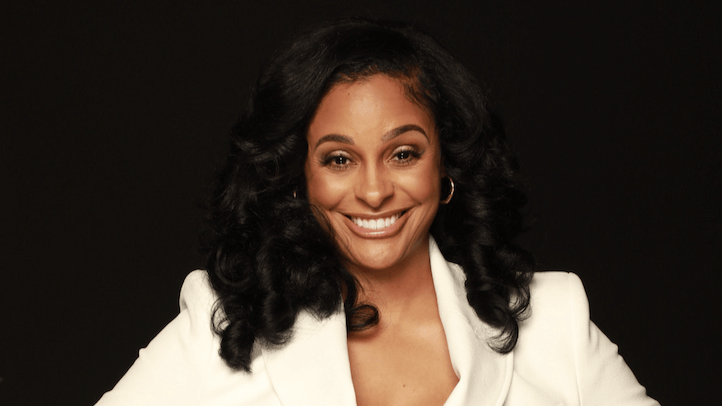
Kimberly Weeks spent almost fourteen years in a marriage that recounts being marked by psychological and physical abuse. Today she is a co-founder of the Global Trauma Institute, where she deals with training and support for people who have been abused. In this interview, he tells us how to build a control relationship, because it is so complicated to subtract and what responsibility men have in contrasting violence on women.
Giada Joys: Who is Kimberly Weeks, and who was Kimberly Weeks before entering that relationship?
Kimberly Weeks: I’m Kimberly Weeks. I take care of the recovery from narcissistic abuse and am co-founder of the Global Trauma Institute, which forms people on the impact of trauma and prepares those who want to accompany the survivors in their healing path. As a mother of four children, I also pledge to support the young men raised in families marked by abuse, so that they can break the schemes they have witnessed as children. Before the wedding, I was an ambitious young woman with a career in the company. I married a little more than twenty years, with the desire to have a family and to grow professionally in marketing and sales. For me a successful life was the classic one: marriage, two or three children, a beautiful house, a church community. Then I lived 13 or 14 years in a marriage marked by narcissistic abuse. After I left, I developed brain injury and spinal cord, and I was diagnosed with multiple sclerosis. For a time I lost the ability to walk and speak consistently: I couldn’t literally put two sentences together. I lost my purpose, my identity and the sense of who I was. It was like I was overwhelmed by an accident of huge proportions. So I tried to figure out how it could happen and how I could heal. In addition to physical rehabilitation, drugs and specialists, that path led me to form on trauma, and I became a coach for other survivors. Spiritual abuse was part of my history: the church and religious language were used to keep me in a sort of prison. As a woman, I was told to remain silent, to be compliant and to please my husband. I also suffered violence in the couple and coercive control. Today my goal is to support and inform the survivors and help to change the laws, so that the judicial system can protect them while away from those who mistreat them and begin to heal.
Giada Joys: There is widespread prejudice that abuse does not affect educated, strong and independent women. You were exactly like that. How did that relationship start?
Kimberly Weeks: I met my ex-husband in church. It was a very young church, full of ambitious boys just out of college, saying: “We will conquer the world, and we will do it by building healthy families. ” Our relationship went very fast. After four months we were engaged, and at the end of that year we were married. It is the typical pattern of every abuse dynamic: you don’t have time to really understand who the other person is before taking with her important commitments. There was a lot of love bombing. I do not love this term, because it makes it look like something positive, but it is part of the abuse cycle. I was the most wonderful person in the world. We would have conquered the world together, like Bonnie and Clyde, united in good and bad luck. At the time I had a four-year-old son, born of a relationship in college, and I wanted him to have a father and a full family. So we got married, and literally at our wedding reception I saw something change in him. He danced and said something that I was still impressed today: “It’s mine. It’s mine. It is mine.” She was talking about me. It was like he won something, conquered something. From that day it was like going home with another person. I was the one who kept the family, and I took charge of all the house management and bills. He convinced me that my salary would guarantee our home while he bought and sold property, but he was actually using me to finance his lifestyle and give a certain image of himself. I got pregnant by the first year, and when you have a son with someone, it’s very hard to leave. Then came the carrot hanging in front of the nose: “If we earn more, if we have other children, if we take a bigger house, then I will be happy. ” I was trying to please him, so that the good person I said “yes”.
Giada Joys: You said you first saw the real person at your wedding reception. If you feel like telling him, what did you try at that time?
Kimberly Weeks: It was confusing. I didn’t know what it was at the time. With those who abuse in a narcissistic way, we talk about “falling mask”: the moment when the false self collapses and you see the real person and his true intentions. He was talking about me as if I was an object, a toy, not a human being. It was the beginning of dehumanization. We just said “yes”, and it was incredibly confused. But I recorded it. I remember that moment as if it was yesterday, because it was like a passage from Dr. Jekyll to Mr. Hyde. It was the first of many times when I would have seen that change: in public he behaved in a way, and in closed doors he became a completely different person.
Giada Joys: For the outside world he was such a good boy. How did this condition you, and why does this dynamic make it so difficult to leave?
Kimberly Weeks: There is an expression I had started using when I was still married: “crazy-making”, that is, a dynamic that drives you crazy. These people present themselves to the world in a way, as if they acted a character in a movie, and at home the mask falls. Then come the tactics to make you doubt the reality: gaslighting, denial and what is called DARVO, from English “deny, attack, reverse victim and offender”, i.e. deny, attack, reverse victim and executioner. They do something, and then they say you did it, and the victim is them. Every time you try to defend yourself and ask: “Why do you shut up in silence? Why don’t you help me?”, they turn the situation and make you feel guilty. Little by little, your ability to read reality is eroded, until you can no longer distinguish what is real. The other person keeps telling you: “You are the crazy one. You don’t remember. ” All this will show you mentally, emotionally and psychologically, and also physically: health worsens and immune defenses lower. In my history there was also the use of sex as a weapon. The body releases oxytocin that, along with cortisol and adrenaline, creates a chemical cocktail that increases disorientation. That environment allows them to start a defamatory campaign and give you crazy. They build your “follia” and then they blame you. They use your love as a weapon and manipulate your nervous system, so you live constantly in alert. And in the eyes of the world what they say seems true, because they appear calm, controlled and masters of themselves. So they can say that they are keeping everything up, taking care of a sick wife who is going to pieces.
Giada Joys: There was a time when you said: “Is that enough now?”?
Kimberly Weeks: Part of this process, returning to the chemical cocktail, is that it develops a traumatic bond with that person: it becomes dependent on the relief and comfort that gives you who is hurting you. You become almost dependent on the ups and downs of the relationship. So, until the end, I wanted it to work. We had four children, and the youngest was four. I kept thinking: “How will I take care of all of them? My body is failing. ” In the middle of the marriage I had a nervous breakdown and had to stop working. He kept telling me that I had no talent or ability, and I, who had come ready to conquer the world, I was convinced that I could not do it without him. My community of faith told me that God could change my marriage. The traumatic bond, the dream of a family, and, actually, the fact that I don’t want to end the wedding held me there. In the end he did what is called “reverse discard”, i.e. a provocative abandonment: the person becomes so cruel and destructive, sometimes with sexual violence, which is part of my story, that comes to think: “We are all in danger. I have to leave. ” He told me: “I don’t want to be married to you anymore.” It was full of rage, and I was afraid. I felt dying. I thought either I’d take my life, or my body would give up and I couldn’t take care of my children anymore. The next day I was already in a lawyer’s office. After I asked for a divorce, he told everyone I was the one who destroyed the wedding. When the divorce became definitive, I ended up in the hospital, I was diagnosed with multiple sclerosis and stopped walking. Yet I continued to hope until the last. There is a term for this: “hopium”, the dependence on the hope of being able to change that person with his own love. But no amount of love or compromise can change a predator. Dr. Karen Mitchell, in her book Human Predators, defines the human predator as a person who actively violates social norms and harms and disadvantages others by conscious choice. After the divorce, from people who had met him in high school and college, I discovered I was not the first, and since then he has done so with another wife. It was not a broken separation: it is a serial abuser. In most American states, coercive control is not yet a crime. Survivors must know that they are not crazy, that what they have lived is real and wrong and that they are not alone. Who hurt you is the least reliable source that can exist on who you are. And you can’t just leave. The most dangerous moment is when you try to escape. As in In bed with the enemy, you have to plan with strategy and build a network of support to leave as safe as possible.
Giada Joys: Let’s talk about your kids. In your opinion, how did this relationship mark them, and what did it mean to them to see their mom cross all this?
Kimberly Weeks: I can’t talk to my children, but I can tell you what I wanted for them. Towards the end, he was deliberately training them, children even four years old, to see me as he saw me. He was talking about me with them as if I was stupid, even in front of other families. He was teaching them to dishonor me, to disrespect me, and eventually to mistreat me. At that point I wasn’t strong enough to fight for myself, but I wanted to fight for them. That’s what gave me the strength to get to that lawyer’s office. For most of the time I had the main custody, but since then they saw it do the same thing, at small doses, with another wife. They love their father, so there is a certain tension as they manage to process it, and I imagine that as adults they will make their path. But one thing I can say: all four of my children still have their hearts intact. They still have that affectionate and kind instinct of protection, especially towards me. That’s why I know I made the right decision.
Giada Joys: You’re raising four male children while helping women get out of violent relationships. How do you teach them respect for women, why does this new generation of men behave differently?
Kimberly Weeks: I think my children have learned more about teaching me to others than anything I could tell them directly. What I find extraordinary is that while I as a girl knew nothing about gaslighting, my children know all the terms. They tell me I’m proud of me, because they saw me finish in the hospital, stop walking and lose the ability to talk. That’s why I think part of their education was seeing a woman recover herself and her life. I have no direct contact with their father, even if I don’t stop the kids from seeing him. At graduation ceremonies or sports events I continue to respect myself and what is safe for me. And I think that part of the education of young men is just this: if you do not treat women with respect and consideration, you will lose them. I had to give them this example with their own father.
Giada Joys: No woman starts a relationship thinking she will be abused, and yet the survivors continue to ask: “Why didn’t you just leave? ” What would you say?
Kimberly Weeks: What I want people to understand is that when you are in survival mode, you are not using logical and rational brain. When you try to survive a daily danger and your body is negotiating for its own safety, you have no access to logic and reasoning. So it’s not as simple as “You should have more respect for yourself and leave. ” The most dangerous moment for a woman is when she’s leaving, and women know that. They know that the partner will seek revenge and try to destroy what remains of their lives, especially if it risks being exposed. Who is still in there and asks what to do I say: what you feel is normal, and your instinct is right. If you think that person could hurt you fatally, you’re right. The next step is to find some form of security and support specialized in trauma that helps you reconnect with that logical part and plan your exit.
Giada Joys: One last question. What is your message to men about their role in ending violence against women?
Kimberly Weeks: I would say to men: when you see a mistreated woman and do not speak to defend her, you become part of abuse. When you intervene and denounce what you are witnessing, protect every woman who could cross the path of that man. And that woman now has a witness to what she lived in private. The abuser never does it alone. He needs an ecosystem: allies, spectators, people who remain looking in the name of “it’s none of my business”. If men understood that their silence makes abuse possible, perhaps it would change the way they see their responsibility. Some abusive men grew up assisting abuse and are repeating them. To them, you can change that pattern. You can help you heal the child who is within you, who felt impotent and who now exercises power to never feel like this again. Other men have witnessed child abuse and, when they see them today, they return to being that impotent child and remain silent. This is also a real wound. Whether you have become an abuser or you find yourself in the same position as you were as children, they are traumas for which you can receive support. And then you can express your strength of men and defend the safety of those around you, including yours.
L’articolo Why it is so difficult to get out of a violent relationship proviene da IlNewyorkese.