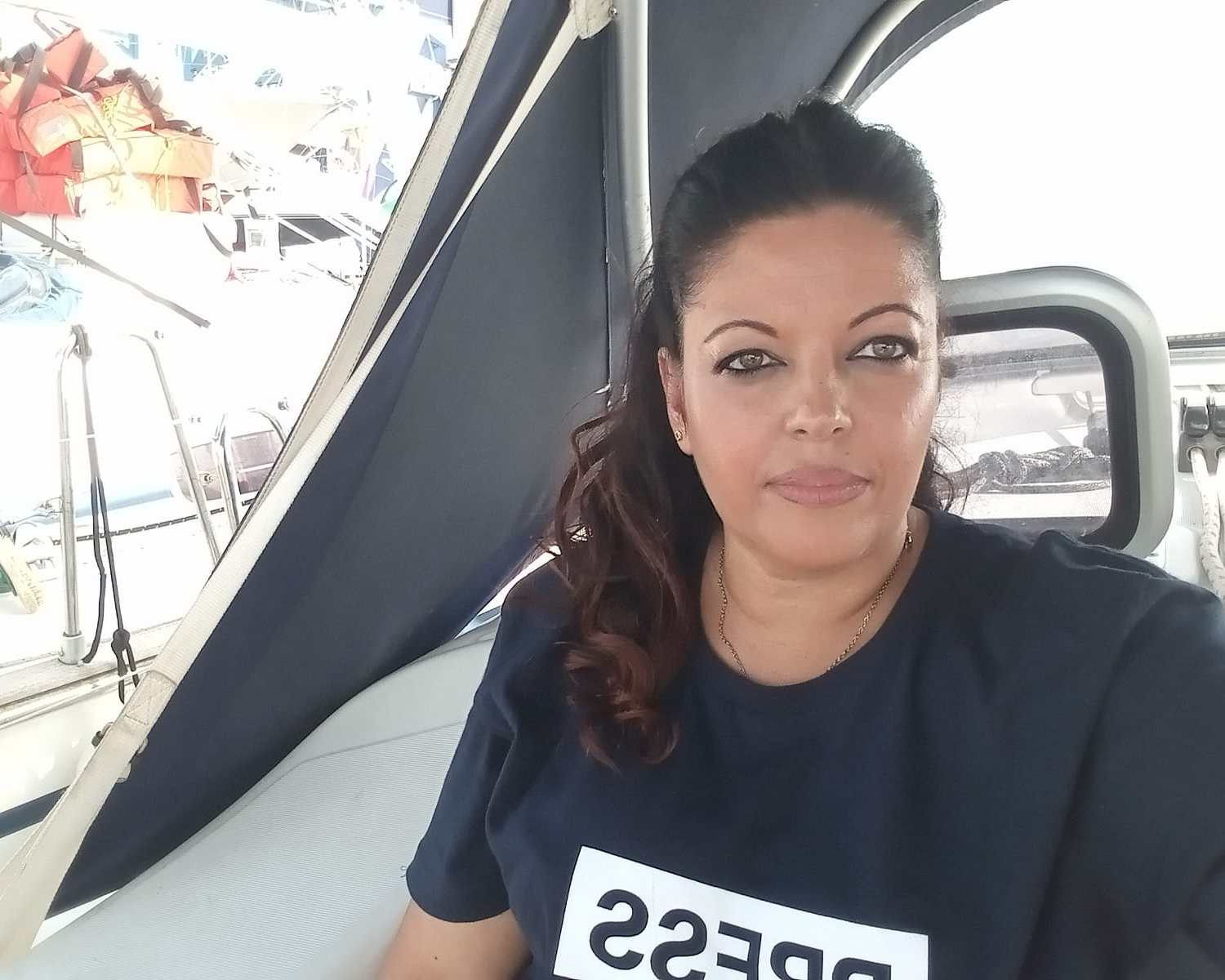
When we talk about violence against women, the gaze of those who have crossed for almost thirty years the first lines of the world helps to strip the theme from every rhetoric. Because there is a red thread that binds the domestic walls of our cities to the streets of Kabul and to the blockades of Jerusalem: the idea that a man or power can decide on the life of a woman, that she should adapt to it. For Barbara Schiavulli, sent of war and founder of the independent head of Radio Bullets, the most difficult violence to eradicate is precisely what is considered normal, which finds justification in the family, in tradition, in religion, even in love.
Author of Voragini and many other publications, Schiavulli has documented what happens when the cancellation of rights becomes system. It happens to Afghan girls, for example, to whom the Taliban confiscated time and adolescence. It happens to Farida, who as a child dreamed of being an astronaut and as an adult had to learn to want only to arrive the next day. It happens to Palestinian women forced to give birth in the street in front of a checkpoint.
In this interview, Schiavulli, reflects on the need to work on men to disassemble the mechanisms that punctuate the female emancipation, in the trade of journalism as an act of listening and responsibility, and on an urgency that applies to every latitude: to stop pretending that women are always extraordinarily brave, because they should be free without having to become heroin.
You dreamed of making a war trip as a child. At the time did you feel it as a “men’s house”? And today, on the other hand, the first line has become even?
As a kid, I thought I wanted to be there. I wanted to see, understand, tell the injustices. The problem of being a woman, if anything, would have made me notice the world. When you have such a strong desire, you don’t start wondering if someone planned a place for you. On equality, however, I would distinguish the possibility of getting to the front from the possibility of doing this job with the same tools and the same recognition. For me the measure is that: trust, compensation, protection, responsibility. Seeing a woman with an anti-projectile jacket is not enough to declare equality reached. And I wouldn’t even want it to be considered good to prove that we were harder than men. To tell a war they need preparation, ability to listen and lucidity. The hardness, alone, serves little. War sent women have the merit of opening a new narrative, that of civilians and women in war theatres. First, men’s colleagues rarely told what a war meant.
Barbara Schiavulli in Afghanistan
Who was your reference model in a sector historically dominated by male presence?
Martha Gellhorn. In his work I recognize journalism that I care about: go to see what happens to people when those who rule decide to make war. I am interested in that look that seeks life within destruction, which is not content with the version of the powerful. It’s also a matter of where you look. You can tell a war by following only those who fight it, or looking for someone to find something to eat, bury a daughter, cross a road without being killed. I always wanted to be close enough to see those people. And careful enough not to replace my voice to them.
A person who supported you and someone who discouraged you.
My parents supported me despite the concern: a mother of Trinidad and Tobago, raised in the United States, in the 1960s, a father son of an Istrian displaced person, probably had understood that I would become the fusion of their battles, although perhaps they would prefer a slightly less dangerous application of that interest. It is understandable: for me to leave it means working, for those who love me it also means waiting for me to come back. To discourage me were often the newspapers I wrote, in the face of excellent colleagues who helped me, there is a ruthless war in the mainstream, made of recommendations, ridiculous compensations, exploitation. Today only if you come to a rich family you can do this job, and it was never my case. One thing I often say is that I told the wars of others and fought one here in Italy to be able to write.
What do you remember about your first article from the front and what about the look you had then?
My first article was 30 years ago, an interview with a Senegalese friend who had arrived clandestinely in Italy, at the time I wrote for Il Gazzettino in Venice. He cried all the time and I with him. It was there that I discovered that if I had a gift, it was to be able to feel the pain of people and then be able to tell others. But my real school was the Israeli-Palestinian conflict when I moved to Jerusalem in 1997. When I was 24, I jumped with the notebook among the Israeli soldiers shooting at the Palestinian boys. I helped a Palestinian woman to give birth to the street because a 20-year-old soldier didn’t let her pass a blockade to go to the hospital. There I began to measure the distance between what you think you know about a war and what you find living in it. I think my gaze has formed above all in that distance: studies a conflict, you know the story, then you meet someone who compels you to ask other questions. It’s a lesson I still consider fundamental. The preparation allows you to understand; listening prevents you from believing you have already understood everything.
Between Iraq, Afghanistan, Syria and Palestine, what do you consider the most ruthless context for women?
I’m struggling to classify pain. Each context has a history, responsibility and forms of violence that must be accurately told. But if we talk about the systematic cancellation of women’s rights, I think of Afghanistan under the Taliban: exclusion from education, restrictions on work and freedom of movement restrict any possibility of choosing one’s life. The thing I find ruthless, besides Western betrayal, is also time. A girl cannot pause her teens waiting for someone to return her the right to study. Years really pass. And while we discuss diplomatic balances, you lose chance that no one will return them in full.
From the rape of war to the deprivation of basic rights, what is the most difficult gender violence to eradicate?
I think that’s what’s considered normal. That which finds a justification in the family, in tradition, in religion, even in love. The idea that a man can decide on the life of a woman and that she should adapt. It is difficult to fight violence when those who suffer it find no one willing to recognize it. When asking for help means risking another punishment. This is why I consider education, economic independence and access to justice fundamental. And the work on men: we cannot ask women to emancipate, leaving the system untouched that punishes them when they try.
Is there a story of a woman encountered in the field that has remained impressed in your memory more than others?
The story of the Afghan woman in my reportage called Farida to protect her. She was forced to marry at 12. After years of violence and torture he left his husband, who had killed his father and brother. He was convicted, but with the return of the Taliban he had left the prison and had again threatened her. She was trying to hide with her three children. It still affects me the dream she had as a child, become astronaut, and what she could afford as an adult: survive. How much do you have to take away from a person because his desire is only coming to the next day? At the end of 2022 she and her children managed to arrive in Italy thanks to the help of Nove Onlus, an Italian NGO and a humanitarian corridor. I also tend to this piece of history: knowing that someone intervened, that the fate of that family could change.
Barbara Schiavulli in Cisgiordania
They say you get used to everything. I believe that getting used to the injustices and pain of others, the weakest, is always difficult. Did you get used to it? How did you learn to protect yourself, protect yourself from so much suffering?
I don’t think I’m used to it. I don’t want to get used to it. Experience helps you work in difficult situations, understand what to do, recognize some dangers. But it doesn’t make the story that you’re in front of less painful. The way I know to cross that suffering is to tell it. Put order in the facts, verify, seek responsibilities, make sure that a person is heard. It does not solve what he has suffered, but it gives a direction to my work and also to the sense of impotence. I don’t want to pretend that there is perfect protection. I talk about it in my last book “Voragini”, tells Palestine but also me. Some stories stay. And I think it is necessary to remember that we often have a chance that the people you meet do not have: we can leave, come home. This privilege brings with it a responsibility. Continue to tell even after returning. With the genocide in Gaza I went into crisis. In addition to civilians, many dead colleagues I knew, the lack of international instruments to counter horror. The end of international law. It seemed that words were never enough, and perhaps that’s why I climbed on the flotilla, and then be imprisoned and tortured with 300 other people who found no other way than making their body available, to save others.
How and why was Radio Bullets born, and from whom is the team composed today?
Radio Bullets was born at the end of 2015 from the need to build a space for international journalism, independent, with the time and attention it requires. I didn’t want to accept that a story would stop being valuable because it didn’t find room in an Italian newspaper. If a country disappears from our news, the people who live in it still continue to live, to suffer, to seek a future. Today we deal with esters, human rights and many realities that are told little or without continuity. In the team there are, among others, Angela Gennaro, Elena Pasquini, Raffaella Quadri and Stefania Cingia, along with other collaborators and collaborators who contribute with different skills and looks. It’s no coincidence that the hard hoof is a woman. For me Radio Bullets also means this: to build a relationship with those who listen and support us. Let us understand why news is about us, without having to make it more comfortable or more spectacular. Independent journalism costs time, work and money. People’s support allows us to continue to be there.
What future do you see for women in the marathon countries you have crossed: total regression or redemption hope?
I see a future that depends on political choices, resources, the concrete possibility of defending rights. I don’t think progress is guaranteed. Afghanistan forces us to look at how deeply we can go back. But I don’t even want to tell women only through what is done to them. They have desires, abilities, political ideas, anger. They want to study, work, love, choose. And above all they resist with all the strength that they have in their body that is publicly or clandestinely. Our gaze must be able to contain all this, even when we tell violence. Hope for me is a commitment. To support those who defend rights, to give protection to those who are threatened, to listen to what women ask, to continue to tell when international attention moves. And stop waiting for us to always be extraordinarily brave. They should be free even without being heroin.
Article Barbara Schiavulli: “The most difficult violence to eradicate is that considered normal” comes from IlNewyorkese.