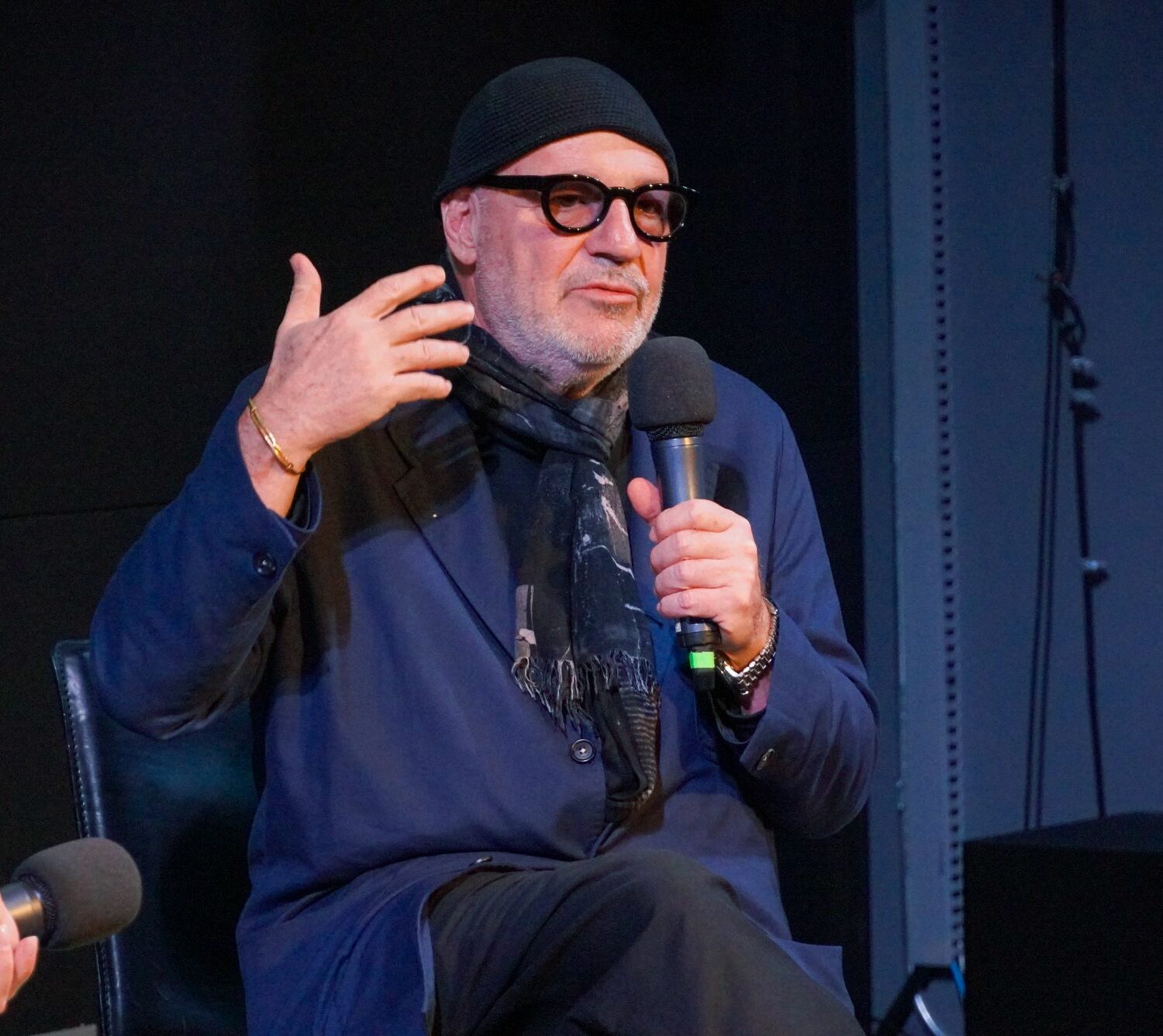
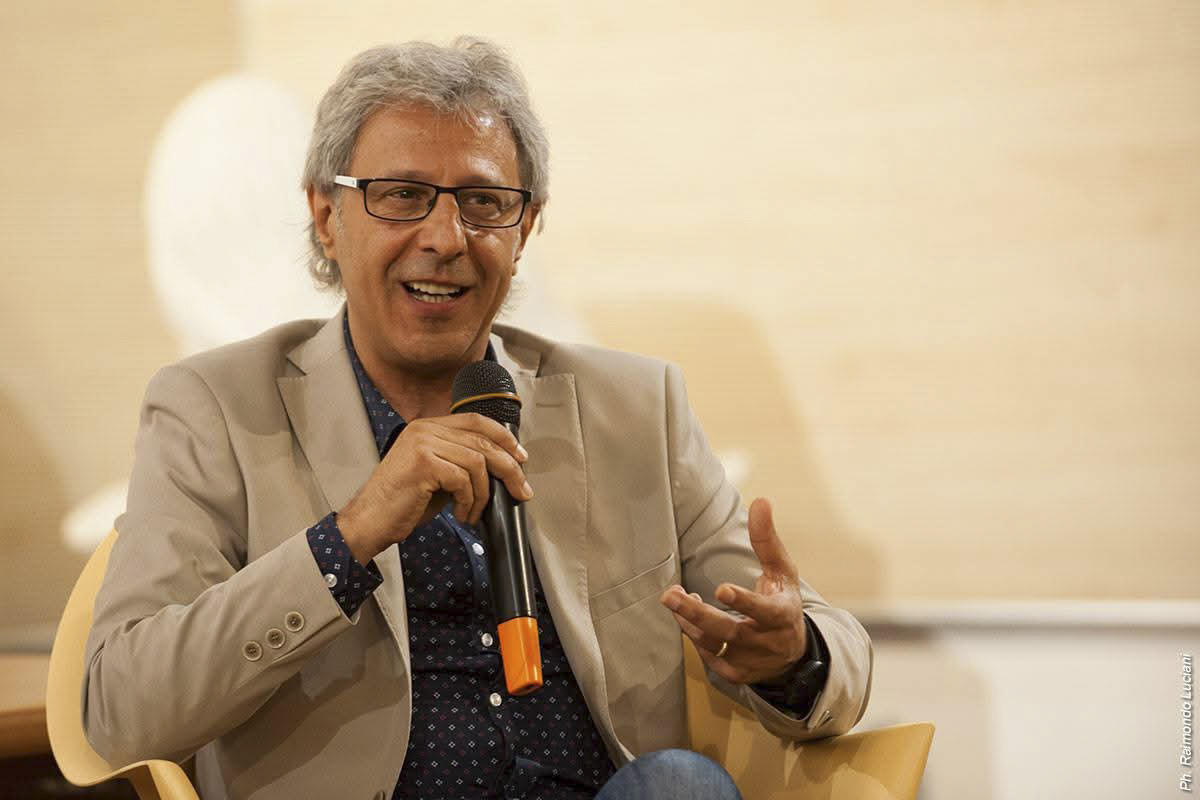
Violence against women does not necessarily begin with aggression, but may have roots in family models, gender stereotypes and how it grows. According to Duilio Loi, criminologist and pedagogist, it is not enough to intervene when a crime is committed: it is also necessary to take care of the behaviors that precede it and of the context that makes them possible. In this interview, Loi explains why giving violence to a pathology is likely to hide its social causes and what role men can play in fighting it.
Duilio, to begin with, tell us who you are, what do you do and what has led you to work on violence cases?
It was above all work. The conflict, even before violence, is part of my everyday life, in particular what concerns minors. Behind that conflict there are often families in which children assist violence. Not always and not in all, but there is a large submerged that creates suffering and leads to serious consequences: school abandonment, crimes, the risk of becoming in turn mistreated or mistreated. My work is above all intercepting the phenomenon from the beginning. In restorative justice I also encounter people who, from that conflict, have come to commit a crime. And then there is my experience at the Tribunal for Minors, both on the criminal front, which has committed me for a long time, both on the civil one, which concerns the family situations in which violence often dominates. A data on all: most of the civil records of the Tribunal for Minorities are about the decadence or limitation of parental responsibility. It means that in those families something does not work, and this is directly linked to what might happen later, to the crimes that those children could commit as great. They are often real family dramas, and intercepting them in court is an extra opportunity to prevent them from degenerating.
Violence on women not only affects women, but the whole family, and children are the first to suffer it: they grow in fear, and many of them as adults end up in prison. What is the connection between the violence lived in the house and what those children become?
The phenomenon must be tackled at all times, if you want to deal with it seriously. I leave from an axiom, now I call it more than a slogan: deviance, in the broad sense, is a side effect of a failed education. The educational aspects that should, and use conditional, be upstream often break, interrupt, distort. Each of us inherits something, and if a corrective educational process does not intervene, that model tends to reproduce, if nothing else by emulation, or because only that is known. If I only know that, I play that again. And so as a victim you risk becoming fleshly, unfortunately without a solution of continuity. There is a strong link between that world and the world of deviance. It should be contextualized, and generalize is not correct. But committing a crime is, however, a lack of respect for something or someone, and lack of respect inevitably belongs to the ABC of violence. It serves a whole vision, to give answers that, if not resolute, point at least to contain and reduce the phenomenon. In part it happens, but we never do enough.
Violence against women continues to be a widespread phenomenon despite increasing awareness. What do you think are the cultural and social roots that continue to feed it?
It is true that awareness is making progress, even with all the difficulties of the case. The steps ahead were, never enough, but there were. The point is that intervention on cultural and social models is much more difficult. The first is the idea of possession, a model that struggles to be overcome because it is rooted in the human being. For this reason, society and education must commit more: to move balance. In each of us they coexist Eros and Thanatos, the drive to life and destructive life, and the question is which of the two prevails. When Thanatos prevails, violence towards others becomes reality. Then there are stereotypes about consent, closely related to possession: if I consider the other person as something of mine, I have already given my consent myself, and she no longer has a voice in it. There is also an educational problem. In the Italian school, education for affection struggles to make its way, because it is immediately labeled as sexual education, provokes controversy and ends up being slowed down. Another obstacle is economic dependence. An economically autonomous woman is much more free to make different choices and leave those who mistreat her. There are so many stories of women left for a life in situations from which they would want to leave much earlier, but that for economic reasons they could not leave. It also weighs the dominant culture in certain contexts, where having children makes it even more difficult to leave. Once the abandonment of the marital roof was even persecutable by law. Today it is no longer so, but the idea of “resists at least for children remains”. Finally, the answers of the institutions are not always timely. When they are not, even a woman who would have all the reasons to change the road does not feel supported: sometimes it does not report, does not denounce, and remains trapped. The more rapid institutions would help to consolidate the steps ahead which, we must recognize, have been there.
How much do you think today, gender stereotypes, masculinity patterns and how men and women are educated since childhood in the perpetuation of violence?
To ask a pedagogist means that I throw water to my mill: when education lacks, violence finds the ideal ground. But even getting out of professional shoes I tell you that stereotypes affect a lot, and there are studies that quantify it. Gender stereotypes weigh a lot, and those on consent, as we said before, are still very strong. There is another element that I believe nourishes this model: these crimes are consumed for 90% within the home walls. The private sphere is still particularly difficult to navigate, both from the outside to the inside and, as was said before, from the inside out. If the woman does not feel sufficiently supported, maybe she tries one, two, three times, then she stops. And to convince her, you know better than me, it’s not a walk, because they are often taken by many guilt. All this feeds the stereotype and a certain model of masculinity. In fact, the offender does not find confirmation only in the woman who, despite her, continues to suffer, but also in a system that, in a certain sense, rewards him. Paradoxically, the inertia of institutions, stereotypes and cultural context end up becoming a form of reward for those who mistreat. The answer, therefore, is yes: inadequate educational models and a system of this type affect, and to a very relevant extent.
Today there are many awareness campaigns and many people working on this issue, trying to change a reality that for years has been accepted in silence. Yet, according to you, why is it still so difficult to recognize violence against women as a collective and not only private or family problem?
Precisely because the system itself acts as a ballast and does not open spaces that facilitate change. It must be acknowledged that the steps ahead have been taken, even through legislative reforms. But creating a law, making it operational and applying it takes time, and the times of the law do not coincide with those of culture. The law anticipates, culture struggles to follow. Just think that in Italy the repairing marriage was abolished only in 1981. Yet, in 2026, many people still suffer daily mistreatment, often for decades: in those contexts the law has not even arrived. The femicide crime has recently been introduced, and it is an important milestone. Yet a counter-tendence has already arisen that considers it a murder like all others. These are positions which, in my opinion, arise from propaganda and the search for consensus in that part of society that uses them as a mechanism of defence. This is why the community struggles to take charge of the problem, which remains confined to the home walls. Then there is the question of resources. We try to put tools in place, but the funds are poor: laws rarely follow adequate economic resources, and much of the work remains entrusted to the volunteering and commitment of the educational community. However, the intervention is not structural or lasting. The laws serve, and it is right to defend them from those who want to hinder their application or change their name. But they must be accompanied by resources, i.e. by professionals, projects and concrete actions. Volunteering is valuable as a complement, but cannot replace structural intervention. Put together, all these factors make it easier to leave the problem inside the home walls, instead of raising a collective awareness. On the one hand the school, on the other the lack of resources, and on the other still those who rhymes in the opposite direction.
Duilio, this time I ask you to answer not only as a professional but also as a man: do you think men are really aware of the role they can have in countering violence against women?
If I put aside the professional role, I would say that among men there is much adherence to words and much less in the facts. Beyond some provocative on social media, it is difficult to find someone who openly approves mistreatment: we are all, generically, contrary. But between what is declared and what is done there is still a great distance, and there remains a lot to do to translate that condemnation into concrete behaviour. There is another important element: almost everyone condemns violence, but they relegate it in pathology. Considering the offender a sick person is reassuring, because it creates a sort of collective immunity: “They are sick, I am not. So it’s not about me. ” For us men this mechanism is particularly comforting, because it protects us from a fear of identity: to see the entire male category put under charge.
That’s where I wanted to get here. I note that many men struggle to understand that when a woman speaks of violence, she is not accusing them personally. The problem, however, is that often, if to mistreat it is a brother or friend, it tends to think that she is lying. Why is this?
It happens because the mistreatment is granted a kind of generic attenuation: accusing him would mean, somehow, accusing ourselves. We lack objectivity, in addition to knowledge and tools. The original sin of the patriarchal male identity is precisely this: fear, in some cases obsession, to see questioned its identity. So the smile and the embellishment become forms of complicity, and create a normality that ends up looking tolerable. The real problem is to pass from words to facts: to be objective, to be truly impartial, which is far from obvious. And relegating the offender to the pathology remains the most comfortable alibi, because it makes us feel immune.
As a specialist, is it true that those who mistreat women always have a psychological pathology? Or, as you said, does education count much more?
Absolutely not. Pathology, however, makes audiences. We think about Garlasco’s case: he talks about it almost 20 years away, and he doesn’t spend the day without an article or a television service. Here we are in the province of Pavia, and locally the story has a particular weight, but it speaks of any transmission. Yet, in cases like this, it is not about sick people. Even in front of 112 beaten, one cannot speak of a crime of commitment: it is one of the strategies with which the defense tries to lighten the position of the defendant, because if mental infirmity is recognized, the process follows a different path. Most of the periciousnesses, however, go in a different direction: prediction emerges, lack of values, behaviors reiterated over time. And it’s just the tip of the iceberg. It is right to take care of the tip, but it is here that the pedagogy comes into play: as a criminologist I deal with the tip, as a pedagogist of the base, which is much wider. Pathology exists, but from the statistical point of view it is not significant or representative: it concerns a few cases.
It is important to emphasize it, because it tends to liquidate those who commit these gestures as “a monster”. The data, and the work of you professionals, tell another thing: in most cases there is no pathology.
Absolutely. Then, do you want to classify it as a new pathology? He can stay there, but that’s not the point. The important thing is that you do not pass the message that pathology justifies the action, because otherwise you end up granting collective immunity. And that would be a serious mistake. Often we try to make this idea pass, because it is easier, more reassuring and even cheaper: working on the educational aspects, instead, requires a huge commitment.
If I had to indicate a concrete change that men should begin to implement, individually or collectively, to contribute to a society in which women are more free and safe, what would it be?
It interrupts the accomplice silence, no doubt. The accomplice silence authorizes and legitimizes a normalization that instead has to be dismantled. It is a tiring work: it means reviewing your own pipelines and correcting them.
Change must pass by men. It also passes by women, of course, to which are given tools especially prevention. But in my opinion, the central point is that we men, as a genre, take the distance from the behaviors we have talked about here. Then we must activate, without getting tired, what I call the educational community: a collective commitment involving the school, places of aggregation, families, parents. This is what, gradually and with the necessary times, will bring real change. Immediate answers remain fundamental: protecting the woman, the red code, everything you are doing. But this is how it intervenes at the tip of the iceberg. I prefer to work on the base, because if you work well on the base, the tip is reduced.
It is true, and the image of the iceberg makes the idea well: violence is an escalation that starts from below and arrives to the top.
That’s right. Working well on the base does not only reduce numbers, but also damage and suffering. Everything under the surface, and that is usually not seen, continues to exist, and that is where we must intervene, in parallel to the immediate responses. The two things are not excluded. But there are professionals who dedicate themselves to the base, and I, when I dress up the pedagogist cloths, take care of this.
L’articolo Why violence on women is also a problem of education proviene da IlNewyorkese.