A New York often eats racing, with little time to cook and high costs. For Sara Roversi the Mediterranean Diet begins from the time you decide to devote to the table and to those who sit next to it, before even from the ingredients.
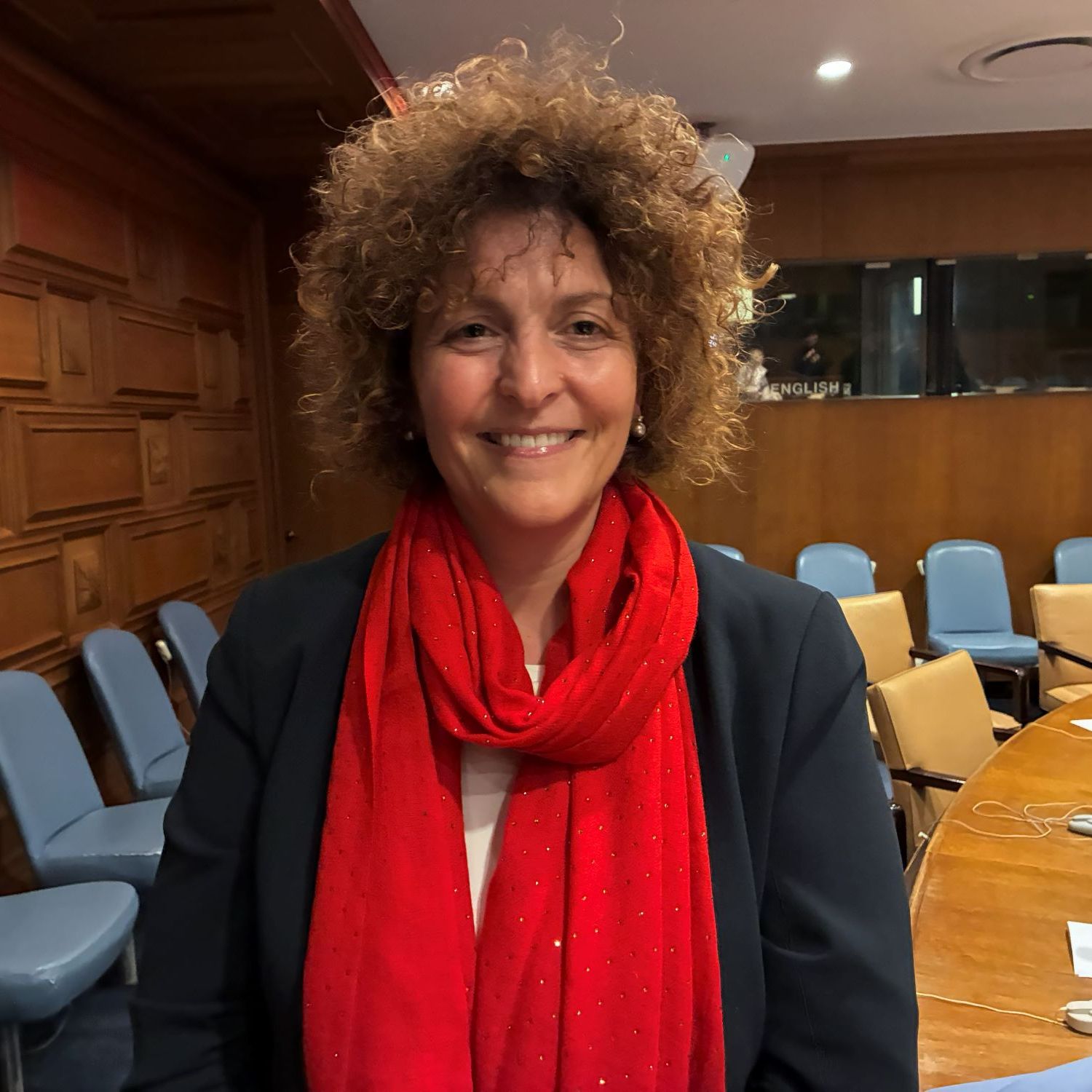
We interviewed her on the day when the United Nations celebrated the International Day of the Mediterranean Diet for the first time. Roversi, founder and president of the Future Food Institute, moderated the round table to the UN, coordinates the secretariat of the Centro Studi Diete Mediterranea “Angelo Vassallo” in Pollica and guides the delegation that remains in New York until 19 November. We talked about what should arise from the Day, the relationship with the United States of Ancel and Margaret Keys, the rhythms of a city like New York and schools.
Today the Mediterranean Diet arrives at the United Nations with its first International Day. What would it want to be born of this appointment, besides the celebration?
I would like a real commitment to transform into models what communities like Pollica have been carrying out for years: a school canteen designed as a moment of care and connection with the territory, a urban plan that has the priority to safeguard the ecosystem and include local food policies, measures that put priority in the right order.
So far, unfortunately, of the Mediterranean Diet has taken mainly the communicative aspect, marketing, what it sells. We realized that 90 percent of what was sold with this name did not have its values, it only had branding. Our battle in these years has been this. This is why the International Day, as FAO set it, talks about a “living system for a shared food future”, a living system for a shared future: a complex system, made up of policies, practices, rituals and traditions.
In Pioppi, in Cilento, Americans Ancel and Margaret Keys studied the relationship between these eating habits and health. What does it mean to bring the Mediterranean Diet to New York in their country today?
Actually, the Americans were better than us. Often we Italians need someone from outside to tell us who we are, and it has happened so many times in history. This is probably one of the most clear examples: the Americans have not only explained what we were already, they decided to study us. They were not based on sympathy for Italy and for Italians, but on scientific data, and they measured everything. For Pollica it was proof of how important it is to maintain the connection between the community and science.
That territory has remained an authentic community in everything and for everything. It’s its peculiarity, and that’s why I’ve done my mission since 2020. The Future Food Institute did not abandon foodtech, food security, water, oceans, biodiversity, soil. He realized that, through the Mediterranean Diet, that territory could tell all the other challenges. We started from there: we study, in the territory of the Mediterranean Diet, the themes related to the earth, the ground, its health and its ability to capture carbon, the impact of climate change, the vital importance of posidonia for human life, etc. There we find all 17 sustainable development goals, and it is a living system to all effects.
If you talk about food waste, talk to grandmothers, farmers, producers, and discover that nobody wastes anything: everything is transformed, fermented and valued with respect. You also see it in the performance of some municipalities in the management of wet waste, very high. The ecological consciousness of that population is rooted. They do not follow the Mediterranean Diet as a recipe or list of ingredients, follow a way of living that for them is natural, and you see in everything, even in the simplest choices.
A New York often eats racing, with little time to cook and high costs. How can we bring the principles of the Mediterranean Diet into everyday life, without making them a privilege for a few?
For me the first essential ingredient is time. It never appears in the list of recipes, but without time the Mediterranean Diet is not done. You may have it everywhere, in New York as in Pollica: it depends on you, and it means rethinking your life.
The second is sharing: eating together, cooking together, having time to go to choose what to eat. Research on psychological well-being indicates conviviality as one of the main parameters, because well-being is closely linked to the time we dedicate to being together. A few years ago, a nice book about centennial psychology came out. They don’t even know that mindfulness exists, but they practice it spontaneously: in the day they have various moments when the mind does that.
The third thing is to start from the earth, from what you buy and take home. I know it’s hard to choose to shop at farmers market, where you spend a lot more. Unfortunately, in everyday life, we eat too much, we eat badly, we eat what we find on the shelves, and all starts from the lifestyle. I can tell you the olive oil and all the other ingredients, but I’m discounted and it doesn’t serve anything if then in your life the others are missing, those you don’t talk about.
This is why the Mediterranean Diet exceeds the limit of a diet linked to a place: we do not do the International Day of Mediterranean cuisine, but a day that speaks of a living system for shared food future, a system that teaches us to live better together. It is a narrative that never felt, but it is reality. Very often we beat ourselves because the Mediterranean Diet goes beyond the book of recipes. The UNESCO World Heritage Site speaks of a cultural framework, not a list of recipes: it speaks of practices, protection of the territory, convivive, rituals. In these years it has been interpreted mainly by industries and sectors with more possibilities: those who could invest in marketing told only one piece.
What can we learn from the experience of the Green Bronx Machine on the relationship between school, food and families?
From the school of the Bronx we have re-enterned to put food, and how it is produced, in the center. His friend Stephen Ritz, with Bronx Machine, began to bring the garden to school and prepare food for the boys, and from there a change started that involved a whole neighborhood. The boys who started the program with him 15 years ago began to feel better, to live healthier, to improve significantly in levels of participation and in school performances and involved families. For this reason we always start with the boys, so we get to the families, they are our future and they are the good medicine of the present.
L’articolo Sara Roversi, the Mediterranean Diet to the United Nations goes beyond the cookbook proviene da IlNewyorkese.