
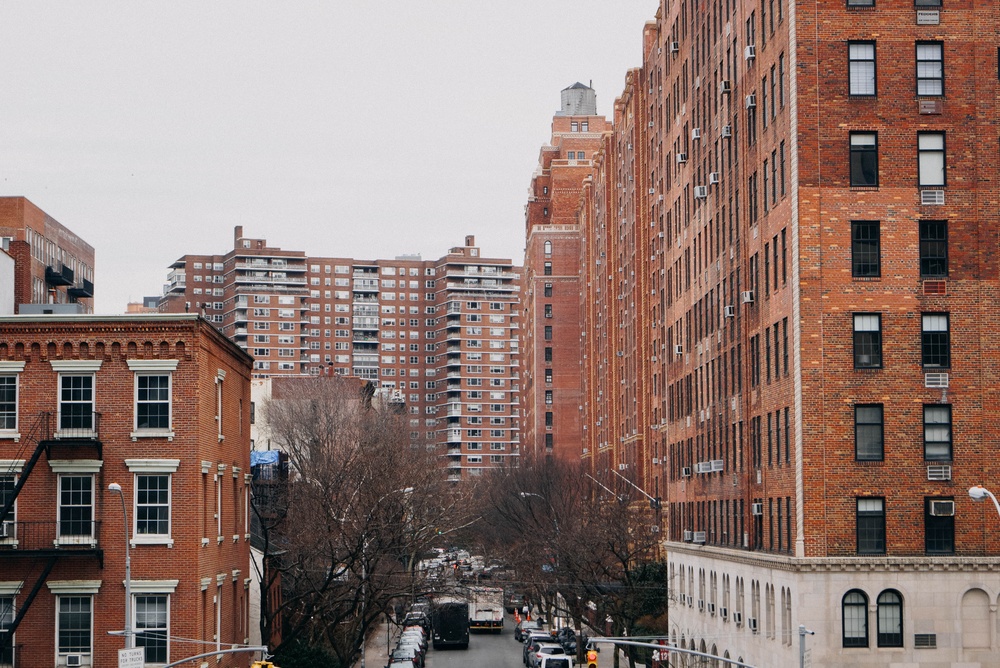
In New York there is a habit that continues to surprise those coming from Italy: see the windows open in the middle of winter, even when the temperature is below zero. It is not necessarily a strangeness of New Yorkers, but a consequence of the history of the city’s buildings.
Many buildings built before World War II, the famous prewars, still use steam heating systems, often difficult to regulate. The result? Apartments in which you turn in t-shirt in January, while in others, perhaps in the same building, you struggle to reach a comfortable temperature.
I personally managed to sell apartments in prewar buildings where, especially in the bathrooms, the old steam boilers had been removed because the heat sprinkled by the pipes that cross the room was already enough to heat it. A curious detail that tells a lot about these historic buildings and their heating systems, designed at a time when energy efficiency was certainly not a priority.
The explanation also dates back to the Spanish influence of 1918. In those years, when it was attributed great importance to air circulation to counter the spread of diseases, many heating systems were designed to maintain warm environments even with open windows.
A choice that today may seem an energy waste, but that at the time responded to precise health convictions. And that, over a century later, helps explain why some New York apartments are still overheated.
When should the calories be lit?
A New York the official heating season, called Heat Season, begins on 1 October and ends on 31 May. But be careful: this does not mean that radiators should always be lit.
The legislation stipulates that, from 6 am to 10 pm, when the external temperature drops below 55°F (about 13°C), the internal temperature must reach at least 68°F (20°C).
During the night, from 22 to 6, the minimum temperature is instead of 62°F (about 17°C), regardless of the external climate.
An important detail: the law protects the temperature of the apartment, not the fact that the heat is warm to the touch. If the house reaches the expected values, the radiator can also stay off.
If the heating does not work the first thing to do is measure the internal temperature with a thermometer and report the problem to the superintendent, our all-rounder, or to the management of the building.
If the problem is not resolved, tenants can contact 311, the municipal service that collects reports and can activate an inspection of the Department of Housing Preservation and Development (HPD).
The consequences for unfulfilled owners can be significant: sanctions start from $250-500 per day for a first violation and can reach $1,000 per day for subsequent ones, according to the regulations.
In case of prolonged disservices, tenants may also assess an action at the Housing Court and, in certain circumstances, require a reduction in rent.
Here the situation can be more articulated in the Condo and co-opNei condominium and cooperatives, much depends on the type of plant and the distribution of the responsibilities between owner of the apartment, board and management company.
A radiator that does not work could be an internal problem to the unit or depend on the centralized system. Before intervention, it is therefore important to understand who is responsible for maintenance.
For those who are buying house, especially in a prewar building, it is worth to inform themselves about the heating system, the possibility to independently adjust the temperature and on any planned modernization works.
A last detail not to be underestimated is that while heating follows seasonal rules, hot water must be guaranteed all year round, at a minimum temperature of 120°F, about 49°C.
In New York, in short, heat also tells the story of the city: from large prewar buildings to modern energy solutions, domestic comfort is the result of over a century of transformations.
And before complaining about a heat switched off, you should check the thermometer. It could be all right.
The New York article and the mystery of the calories: why do the windows open in winter? It’s from IlNewyorkese.