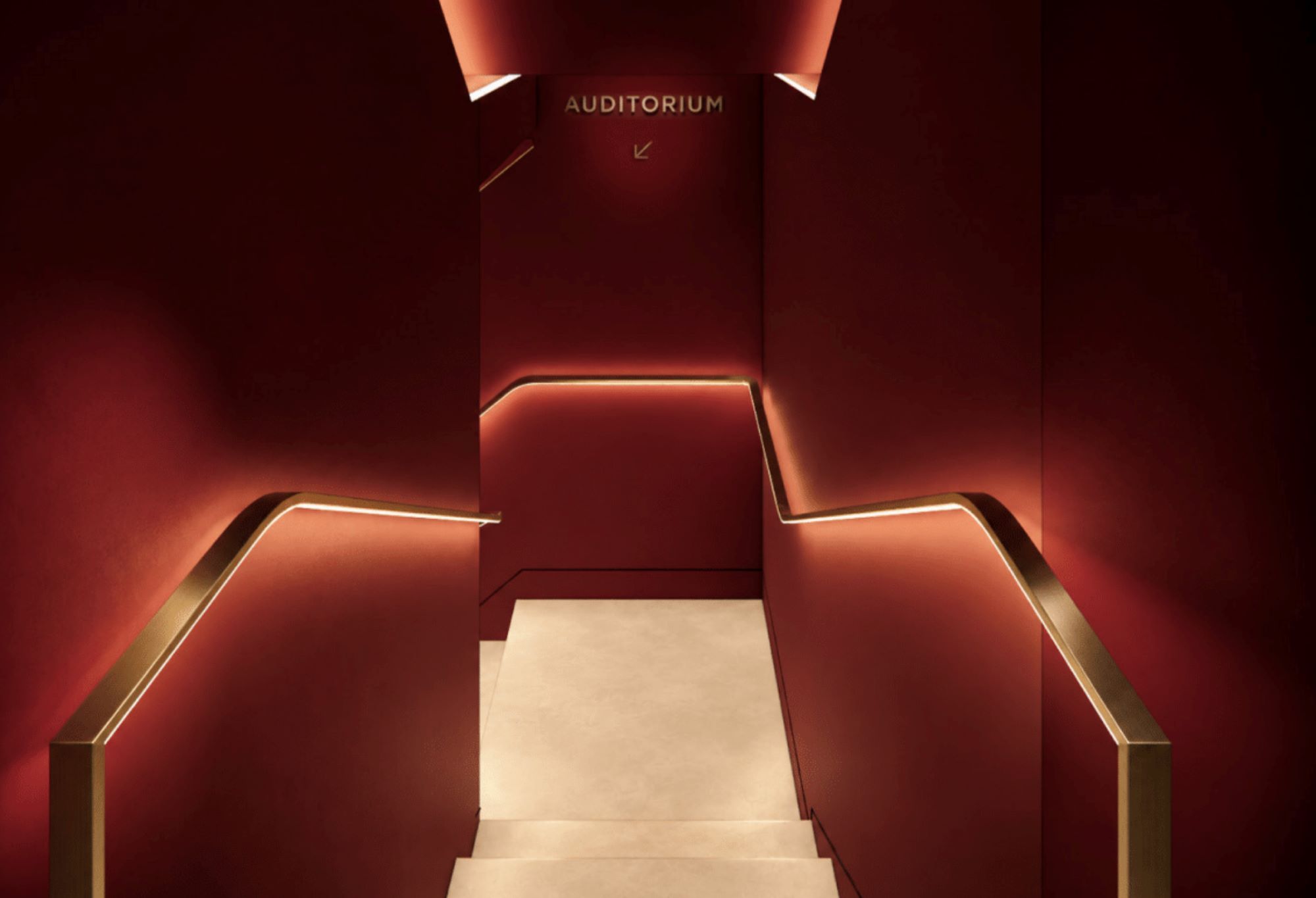
The places of culture also need to stop. Or, better, slow down to imagine your future. In the heart of Greenwich Village, Casa Italiana Zerilli-Marimò, a cultural centre of New York University opened in 1990, is preparing to renew its spaces. Auditorium and gallery will be temporarily unavailable, but the programming will continue between the library of the House and other city offices. We talked about it with director Stefano Albertini, with the contribution of Chiara Basso, media manager and communication of the House.
Casa Italiana Zerilli-Marimò is preparing for the first major renovation since its inauguration in 1990. After 36 years of history, why did you decide that this was the right time to start such an important intervention?
In over thirty years we have carefully guarded an extraordinary space, but it is also a building lived intensely: the lessons begin at 8 am and the activities continue until the evening events. Hundreds of people pass every day. It was natural that they began to see the signs of time, along with some practical and structural needs. From the comparison with our team, with the Baroness family and with the board president, Giorgio Spanu, has matured the decision to intervene. We want our mission of dialogue and building cultural bridges to continue to express itself in an environment that also reflects the sense of beauty that Italy has given to the world.
What will be the main interventions and, above all, how will the experience of those who attend Casa Italiana change concretely?
I hope you don’t change the most important feeling: to feel at home. This is what emerges from the audience’s reconnaissance: there is no number here, but part of a community. Some aspects of the environment will change. The new palette will be built around a dark red, near the burgundy of the Zerilli-Marimò coat of arms. The transformation will already be perceived from the stairs, which will become part of a unique architectural design; the lobby will preserve its Italian marble floors, with especially technical improvements. The most obvious intervention will probably concern the auditorium, which must serve lessons, conferences, theater and cinema: we will improve both aesthetics and the enjoyment of the shows. In the gallery, however, the intervention will be limited, but we will renew the lighting with solutions adapted to the quality of the exhibitions we host.
Casa Italiana was born from the vision of Baroness Mariuccia Zerilli-Marimò. How can you renew a place so rich in history without losing its identity and original spirit?
I met the baroness and worked with her, elbowd, for many years. She was a woman linked to tradition, but also curious: I remember her progressive approach to contemporary art, initially far from her tastes. For this reason I have no doubt that renewal is in the groove of tradition: there must be that idea of elegance, beauty and harmony, but also great innovation. We are perfectly in line with what she was like.
During the work, auditorium and gallery will be temporarily unavailable, but the activities will not stop. How did you rethink programming and what opportunities can this new traveling dimension offer?
Some meetings will continue in our library, a space of about thirty or forty people we already use. It is a more intimate environment, where there are no stage or podium and dialogue with the public becomes more direct. Film screenings will move to the Cantor Film Center in NYU, which offers beautiful rooms and, in some cases, a capacity higher than ours. Children’s workshops will also continue: thanks to the collaboration with Stefania Clementi, they will be held at the So Cultural Centre in Brooklyn. It is an opportunity to reach families that so far, for reasons of distance, could not participate. So what seemed to be a limitation can open up new possibilities.
A key part of the project is community participation. How important will be donors and new members to realize the new House and what message would you like to address to those who are planning to contribute?
In the United States fundraising is not simply asking for a contribution: it is involve people in a mission. At first I was not attracted to this part of the work; then I realized that it is an important way to get to know our audience and build confidence, which is conquered in years of activity. We were surprised people we didn’t know personally and they contacted us spontaneously to ask how to help us. Those who support the House also participate in its future, with ideas and suggestions.
On November 16, you organized a Meet & Greet with Beatrice Grannò and members of the Zerilli-Marimò family. What does this date mean at such an important time for the future of the institution?
First of all it is a way to say thanks to those who are supporting us, including those who chose to dedicate one of the new armchairs of the auditorium to a loved one. And of course to the Baroness family, which continues to demonstrate generosity accompanied by great sensitivity and listening skills. The presence of Beatrice Grannò, also known in the United States for The White Lotus, is linked to the projection of Anna, the film dedicated to Anna Magnani. It is a tribute to two great women, Magnani and Baroness, but also an invitation to feel part of this new phase of the House.
Looking at 2027, when is the reopening of renewed spaces planned?
I prefer to be careful about time: with architects, suppliers and works of this magnitude it is difficult to indicate a definitive date. The goal is to return at full pace with the academic year 2027-2028, from September 2027, with all ready environments. If the works proceeded particularly well, we could evaluate some theater or cinema appointments already around June.
After so many years driving Casa Italiana, what does this new chapter represent for you personally? Is there a memory or a particular moment of his history that he would like to take with him to the new House?
I’ve been here for thirty-three years. It’s been my whole professional life. As a boy I said I wanted to work to promote Italian culture in the world, without knowing well what it meant; then I was lucky to do so. I’ve never been bored. If I have to choose a memory, I think about the House’s token phone during September 11th. While many communications were interrupted, that phone continued to work and was used by people arriving from the World Trade Center area. Today it does not work anymore, but it is still there and will remain: remember that Casa Italiana, even at such a dramatic time for New York, was a place of encounter and mutual help.
The Meet & Greet of 16 November is scheduled by Piadi by La Piadineria, at 18 East 23rd Street; will follow the screening of Anna – The Untold Story at the Cantor Film Center of NYU.
L’articolo Casa Italiana Zerilli-Marimò, a new season comes from IlNewyorkese.