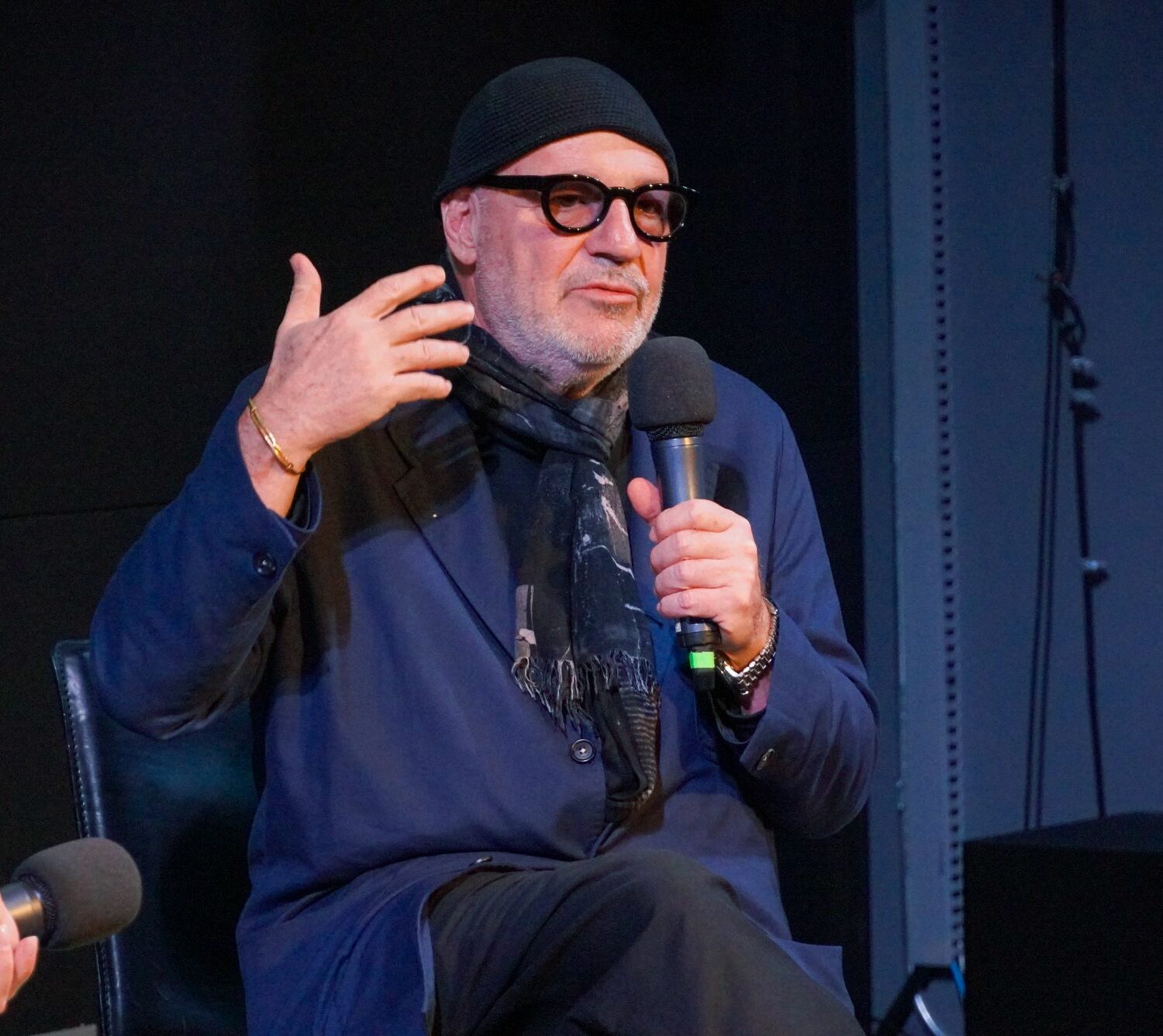
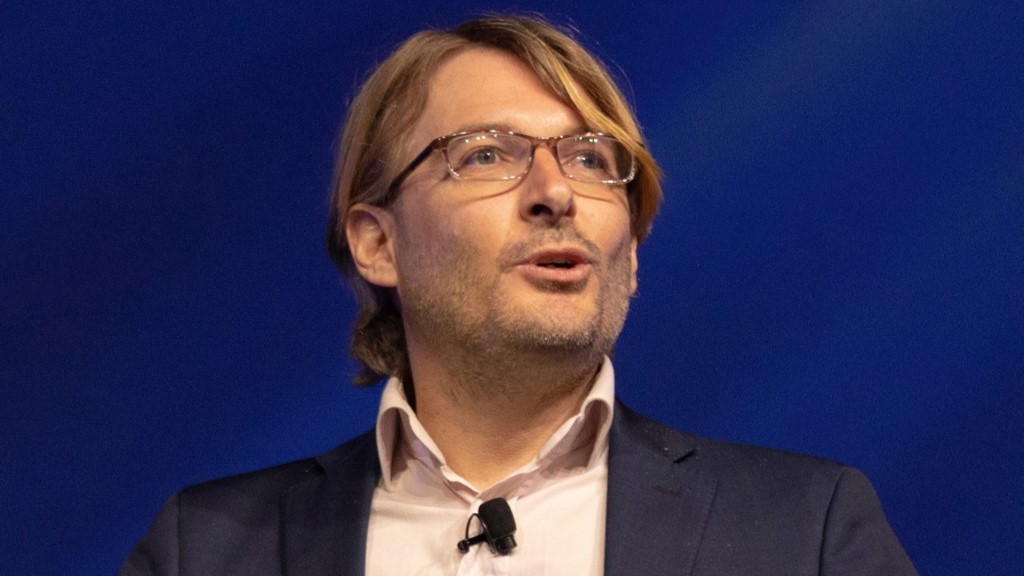
From Rome Tre to New York, Andrea Alù has built a scientific path dedicated to the study of waves and materials capable of changing their behavior. Today he is Distinguished Professor and Einstein Professor of Physics at CUNY Graduate Center and heads the CUNY Advanced Science Research Center Photonics Initiative in Harlem. Here he leads a research group that studies metamaterials and their possible applications, from wireless communication to optics and acoustics. Alù is also Chair of the Scientific Council of ISSNAF, the foundation of Italian scientists and scholars in North America born in 2007 under the patronage of the Italian Embassy.
We interviewed him on the reasons that led him to New York, on ongoing research, from wireless communications to acoustics, on the role of Italian scientists abroad and also on his most famous study to the general public, the cloak of invisibility, which today considers a lesser part of a much wider range of work.
His training starts from Roma Tre and continues in the United States, between UPenn and Austin, to the guide of the research pole in New York. What scientific opportunities and research perspectives have led you to choose New York for this scale jump?
I studied in Rome and then moved to the United States. I’ve been working with the University of Pennsylvania in Philadelphia a few years before I moved in. Then I did a postdoc in Philadelphia and became professor in Austin. In Texas I found myself very well: the school is one of the best in engineering and there I grew a lot, developing skills and experience.
Then a rather unique position was created: open, with complete white paper, this research center, which is based in Harlem. The idea was stimulating but also risky, because it is a university that in this field does not have a tradition, so a completely new center. It was a leap in the dark to leave a high-level department, in one of the largest public engineering schools in the United States, to found something almost from scratch. But there were many opportunities: the possibility of developing new lines of research and a very high budget, both to buy equipment and to hire other professors and to open new directions of research in a field, the photonic, which today is very active, with investments from companies and the government.
Even the possibility of moving from Texas to New York weighed positively. Austin is a beautiful city, but New York is unique: closer to Europe and more cosmopolitan. I see the advantage of this in people I can take from Europe: bringing good scientists from Europe here is much easier than in Texas.
The media have often labeled your studies as the birth of the “invisible mantle”. Beyond science fiction, it explains in simple words what metamaterials are and how can they improve the technologies of common use?
I work in a very broad field, light control with engineered nanoscale materials. These metamaterials change the way we interact with light or other electromagnetic waves. The center where I work gives me the opportunity to work at the highest levels in this field because we have exceptional equipment, a laboratory specialized on these issues that is the best in this geographical area. For example, our clean room to manufacture these materials is used by all universities around here, from Columbia to New York University. We need hundreds of millions of dollars to put it together at these levels. In comparison, in Austin we had a clean room more dated and nine miles away from my labs, which slowed down the process. Here we have everything in house, in a very cutting-edge building. It is the ideal laboratory for the type of research I conduct.
The initial studies on the cloak of invisibleness are among my first scientific work, which has been dated to more than 20 years ago. It is much quoted because it was the first in which it was theoretically demonstrated that, by structuring a material, it can create an optical effect that makes an object transparent inside it. It is an idea that is inspired by science fiction books: in the Invisible Man of Wells the way in which the effect of transparency occurs is very similar to what we have accomplished experimentally over the years.
Harry Potter e il mantello dell’invisibilità
This research line, however, is not my current focus. As often happens, at first there is great enthusiasm and theoretical papers are very visionary; then, with experiments, fundamental limitations are discovered. We have shown that there are limits to how transparent an object can be, depending on its size, the wavelength with which it is observed and the level of transparency desired. This means that the mantle works very well for radar systems and longer wavelength structures, such as radio frequency, with many technological applications. But the most scientific idea of creating a macroscopic object invisible to the human eye has fundamental limits, and it is very difficult to achieve.
Moreover research has become much more applied, even with important implications in the defence sector, and this has led us to other issues, easier to develop in an academic environment like ours, in which many foreigners work.
She runs the CUNY Photonics Initiative and also works on acoustic waves and telecommunications. What concrete applications could these research in the technologies we use every day?
I have a very large group of researchers, among PhD students, postdoc and research scientists. We work on three main frontiers: optics, radio frequencies and acoustics. On radio frequency we build new structures that improve communications, for example antennas that allow to transmit more data. Also there invisibility was important, to realize antennas that do not disturb each other, transparent to each other. In acoustics we have a couple of very large projects with the American government, to develop new technologies that change the way acoustic waves propagate in materials, important for thermal effects and for technologies that end up in mobile phones.
We also recently obtained an important project funded by the European Union, to reconnect to Italy, to future generations of telecommunications. The classic problem is a very crowded environment, such as a stadium or concert, where it is difficult to connect mobile phones to the network: antennas have a limited band and can serve a limited number of people. What we are developing allows us to go far beyond these limits.
A part that perhaps characterizes my work is that we work on very fundamental concepts, but we can apply them: we are funded by government agencies that finance the most exploratory research and we also work with companies.
An example of this type, linked to wireless communications, is our recent demonstration of electromagnetic waves reflected over time. We are accustomed to reflections in space, as when we look in the mirror: whenever there is an interface between two materials, electromagnetic waves, including light, are reflected. Maxwell’s equations are dual between space and time, so you can expect a similar reflection when a wave experiences a sudden change of material over time: a so-called temporal interface is created.
An echo or our face in the mirror restores the frontal part of the signal; temporal reflection makes the reverse, a temporal inversion of all the signal that propagates. This idea had been proposed theoretically more than 60 years ago, but it had never been demonstrated experimentally, because it is not trivial to make such an experiment. We have measured these temporal reflections, which have had much media and scientific attention.
One of the biggest implications is in communications. In complex systems there are distortions, because electromagnetic waves bounce on various objects and arrive on the mobile phone after so many different paths, accidentally interfering. With temporal reflections you can delete these interferences, because you can take the signal and make it go back exactly as it came from the origin. It is a good example of the type of research we do: very fundamental things, but with a history of impact on practical technologies.
He is Chair of the ISSNAF Scientific Council. What role can Italian scientists play abroad in the relationship between Italy and the United States?
It is a very interesting initiative. I like to serve the community in this field: it is an association with a very important presence in North America, which tries to bring together the Italian scientists and scholars who work here. It has a very large membership in all the United States and Canada. I like it because it is also a way to maintain a bond with Italy and return something to the scientific community.
I started interacting with ISSNAF many years ago, when I had just started in Austin and I received the Strazzabosco Award, an engineering award for young researchers: it was the first edition of the award. I met ISSNAF there and went to the embassy. Today, as Chair of the Scientific Council, my work is also assigning awards for young scientists: every year we ban four or five in different fields, and ‘nice to see Italian talent in North America, with many impressive nominations. The next event will be at the embassy in Washington on November 12. For each award there is a jury of high-quality Italian scientists working in North America, and the awards are announced at the embassy, in the presence of the ambassador and of high Italian and American authorities.
What practical advice would a young Italian researcher wish to build a scientific path in the United States? What basics of Italian training really make the difference overseas?
The basis of education is excellent in Italy. I think the reason is the fact that since high school Italian preparation is very rich and profound. In America, college preparation is a little more generic. To make science, the basic level that Italy offers both in mathematics and physics is great, often higher than what is found in educated people in other countries.
Sometimes I am inspired by students suggested by collaborators in Italy, for six months or a year. Even those who do not necessarily have a particularly rich curriculum of publications can immediately contribute to research at the highest levels: it has an intuition and a way of understanding the science that is excellent. Despite many young researchers being forced to go abroad for lack of resources, the training base, undergraduate or PhD level, in Italian universities is very good, probably higher than that of many other nations, perhaps even in the United States. It allows you to do great research, if you find the right environment.
I hope that the American government will realize how important the trades of this kind are: these exchanges have contributed to the scientific leadership of the United States. Most scientists here in the USA are foreigners: my group hosts a large number of young scientists, almost all foreigners. Institutions such as ISSNAF help so much from this point of view, because they create the infrastructure, an initial support, for when people come from abroad.
L’articolo Italian in New York studying invisibilities and cell phones of the future proviene da IlNewyorkese.