If you want to understand where the world is going – or at least, where the giant cultural lifeboat called New York is going – you don’t have to watch political talk shows or fashion catwalks. You just have to put yourself in the queue to go to the bathroom in any Manhattan place.
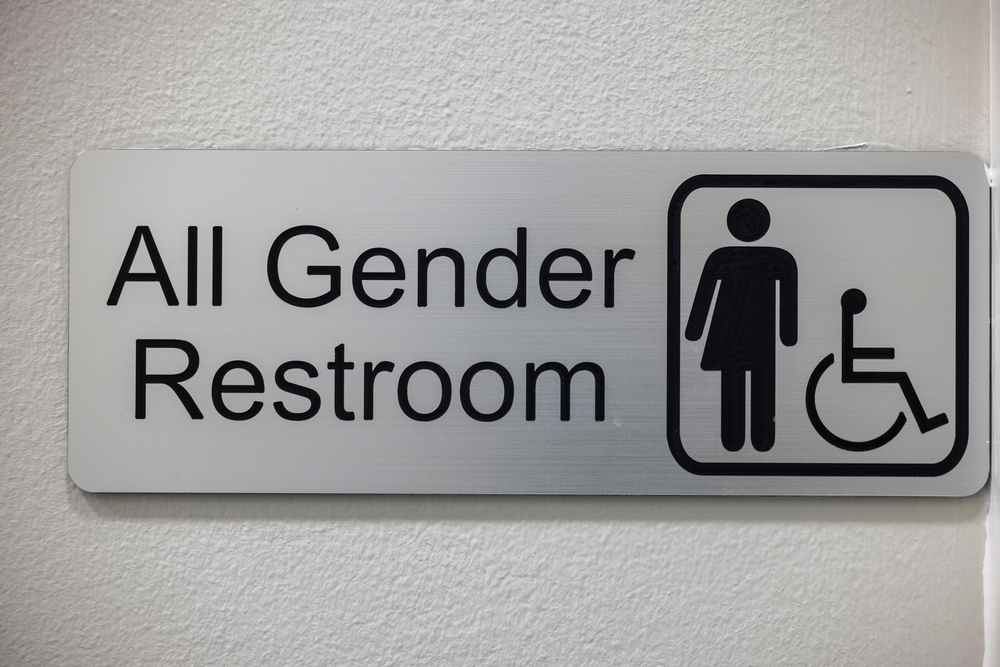
For some time, the intimate geography of restaurants, cafes and clubs of the Big Apple has undergone a radical change. The old skirt signs and trousers, or Men and Women shortcuts, were almost everywhere delivered to history. Today to dominate is the word “All-Gender Restroom” or “Gender Neutral”. A single space, a single tail, shared sinks. The genus, in New York, is clear in front of the most human of needs.
For those arriving from Europe, the impact can cause a small cultural shock. You end up in a bistro of Williamsmburg or a bar of delights in SoHo, and next to you there is an indistinct mix of humanity: the broker in jacket and tie, the girl in evening dress, Bushwick’s Queer artist. You enter one at a time in the single closed boxes (those yes, strictly armored and equipped with every privacy), but the space of sinks and mirrors is a public square.
Initially the average Italian experiences a subtle anguish from the label: “I’m invading a space? Am I wrong? ». Then, within three minutes, he takes over New York pragmatism and realizes that the taboo is only in your head. Nobody cares about who you are or what your biological identity is. There is an implicit pact of indifference and respect that regulates cohabitation in those few square meters.
In Italy the debate on genderless baths extends the boundaries of the battle of rights to arrive at the center of the confrontation on architecture, costume and bureaucracy. If neutral toilets in the Anglo-Saxon and Northern European countries are now a consolidated custom, in our country adaptation is first and foremost a rigid regulatory framework. The Single Text on Security in Workplaces (D.Lgs 81/2008) and local building regulations impose binary separation for sex, prompting structures to resort to the formula of the single single user unit to bypass legal straits.
The map of the diffusion traces a precise geography: on the first line there are the great universities — from Bologna to Padua, to Turin and the Normale of Pisa — flanked by co-working spaces, multinationals, clubs and cultural centers of the metropolitan areas.
The supporters emphasize the inclusive value for transgender and non-binary people, but also the practicality for parents and caregiver who assist opposite people. On the other hand, there are perplexities: part of the conservative world and feminism expresses fears for the privacy and security of women, while managers highlight the costs to redesign the spaces. The neutral bathroom ceases to be a simple logistic detail and becomes the mirror of the cultural transformations of contemporary Italy.
Apart from politics, the choice of genderless bathroom in Nyc is a triumph of mathematical logic applied to everyday life. We all know the old injustice of the divided baths: the mile, biblical and immobile out of the door of women, and the absolute desert, almost insulting, inside that of men.
By unifying everything, New York applied flow theory. The tail moves infinitely faster and more efficiently. There are no “privileged” empty spaces and saturated spaces. Become a question of pure urban logistics: do you need? Get in line, wait for your turn, get in the first box that gets out. End of time discrimination.
Looking at this transition with the eye of the sociologist from sidewalk, one realizes that mixing everything did not create chaos, but it has elevated the level of civilization. The rigid separation of the sexes in public places has always brought with it a shade of unpleasantness: the baths of men, historically abandoned to themselves, tended to become frank areas of crude camaraderie and poor hygiene.
The shared presence in the common space of sinks forces everyone to an instinctive self-regulation. Men wash their hands more often, care for decoration, avoid dressing attitudes. Women no longer have to live the anxiety of segregation in dark corridors at the bottom of the premises. It becomes a safe space because it is an exposed, visible, community space.
At the bottom, the genderless bath is the perfect metaphor of New York: a city nestled on a very narrow island where space costs too much to divide it according to nineteenth-century categories. Manhattan forces you to mix, on the metro car as well as in front of the mirror where you fix the make-up or tie before returning to the table.
L’articolo New York’s fluid bath revolution proviene da IlNewyorkese.