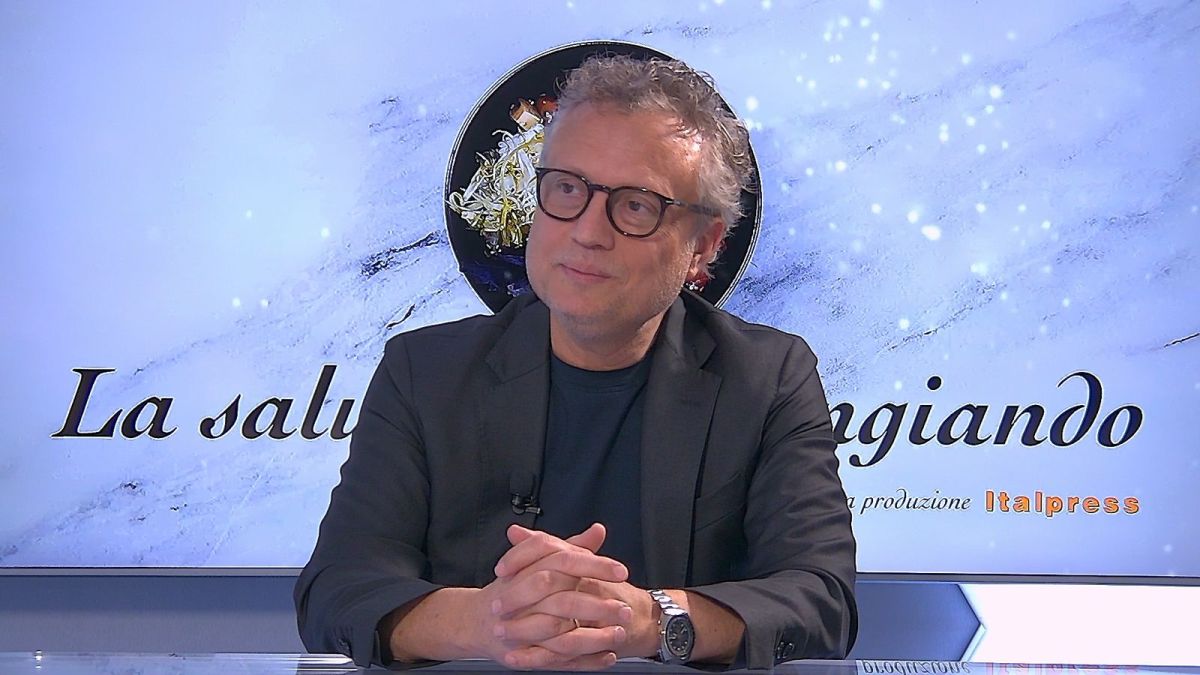
ROMA (ITALPRESS) – The steps ahead of scientific research for innovative therapies, the process for the authorization of new medicinal products, the results of legislation on orphan drugs. These are the themes at the heart of Rosanna Lambertucci’s interview with Robert Nisticò, president of the Italian Pharmaco Agency, for “La Salute Vien Mangiando”, TV format of the Italpress agency. “Innovation has led to advanced, personalized, sophisticated and intelligent therapies, which have the characteristic of curing not only symptoms, but above all the processes that are at the base of diseases – explains Nisticò. Gene therapy is able to replace a defective gene, while genomic editing, even more sophisticated, can correct the deficit of a single gene. Another type of advanced therapies is that of so-called CAR-T: blood withdrawals in patients who have, for example, cancers such as oncoematologic ones. These lymphocytes that are taken are engineered in the laboratory and then reintroduced into the organism. This modification allows to recognize the target, that is the tumor cell. There is a great advancement of the knowledge that leads to drugs that are increasingly able to impact not only on the progression of the disease, but on the quality of life of patients”. To the question of the reason for the differences between the regions for access to new drugs, the president of Aifa responds by explaining that “for the authorization of drugs some steps are necessary. The first is European. There is the centralised procedure that ensures that the EMA, the European Medicines Agency, gives authorization” on the basis of a favorable benefit-risk budget. “Then Member States make their assessments, even with other parameters, for example, regarding sustainability for the national health service, which in Italy is universalistic, seeks to guarantee care to all – continues -. After the authorization of AIFA, the drugs must be inserted in the regional pharmaceutical prontuary, because Italy has 20 regional health systems. We have established an Aifa-Regions table to try to simplify and harmonize as much as possible the introduction of these drugs.” On the other hand, in cases where drug shortages occur, the causes may be different. “There can be, for example, problems of supplying raw materials – emphasizes Nisticò -. Raw drugs come mostly from China and India, more than 70%. This is why Italy and Europe are being given a policy to be increasingly independent. The deficiencies may also be linked to difficulties or problems in production sites, or to increased, exponential consumption of drugs in a very limited period of time. On the basis of the problem the Aifa intervenes”. For the development of the drug, today artificial intelligence is taking giant steps. “While before there was an average of 10-13 years since the drugs were designed to when they were authorized, artificial intelligence based on algorithms and data, clearly not only speeds time, but also reduces costs. We must also implement these systems in our work to be efficient and not be the bottleneck compared to innovation. Artificial intelligence must be used with caution, but it cannot be done without it.” On the face of rare diseases, Nisticò recalls the importance of legislation on the so-called orphan drugs, so that they may remain orphans of investments, “to give incentives to research and a regulatory system that can facilitate their development. Today we have hundreds of orphan drugs on the market, this policy to encourage its development has led to concrete results for patients.”.
– Photo Italpress –
(ITALPRESS).