
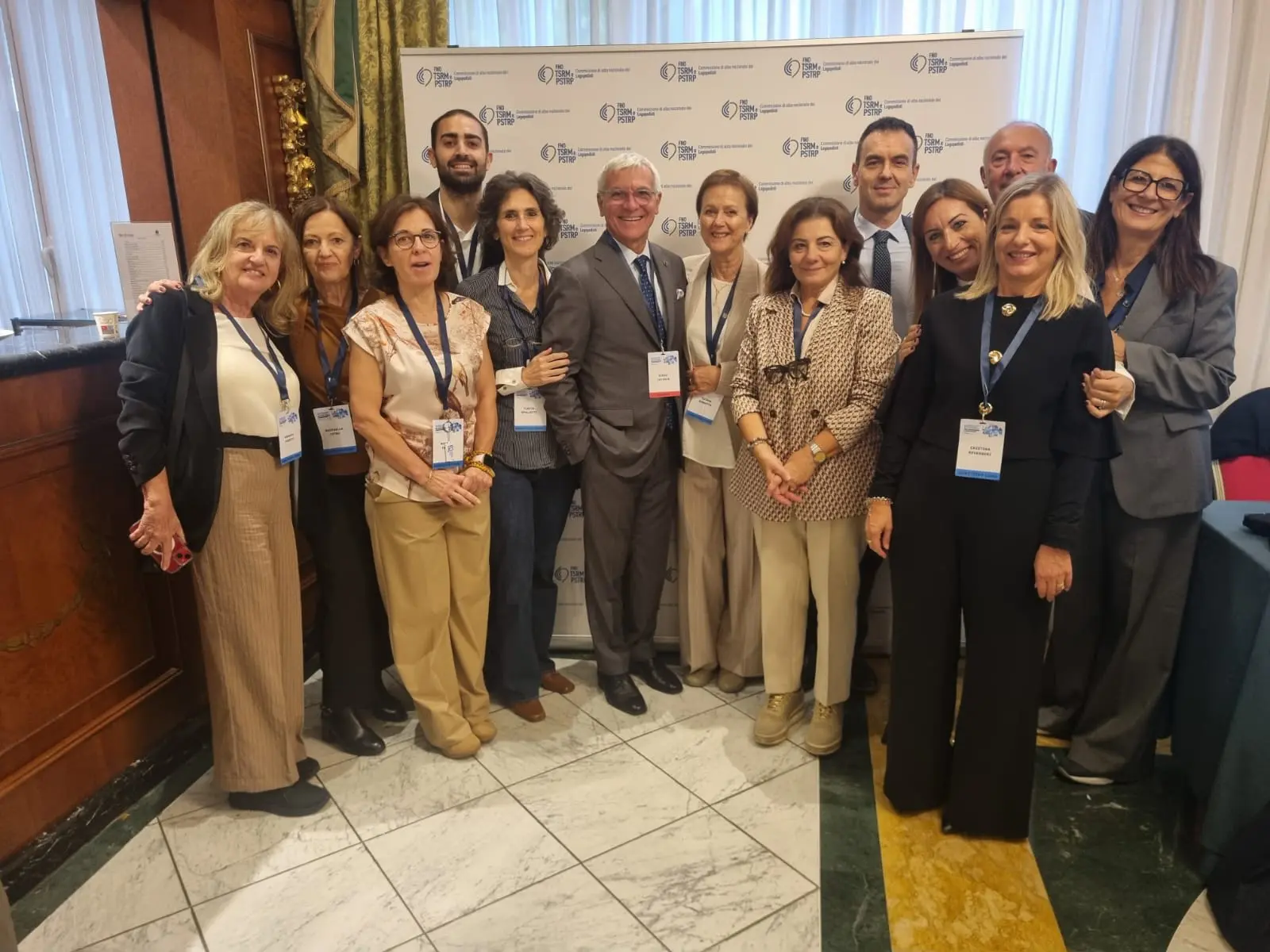
BOLOGNA (ITALPRESS) – Who does a family address when a child does not speak, or does an oncological patient lose their voice after surgery? To a Logopedist. Health professional who on many clinical cases has gained advanced skills in the field, in everyday work, but who can not yet count on a recognized specialization path. From Bologna, where the 2nd National Congress of Logopaedists closed, comes the request to fill this void with a reform that introduces clinical specialist degrees for the profession.
The event was promoted by the National Association of Logopaedists, which is part of the National Federation of Orders of Technical Health Professions, Rehabilitation and Prevention (Fno Tsrm and Pstrp). Opening the work, Tiziana Rossetto, president of the Albo Commission, put the training at the heart of the day: “This Congress focuses on a fundamental theme for healthcare professionals, training.” In his view, global health, with its clinical, organizational, epidemiological and social complexity, obliges professionals to continuously update knowledge and skills, indispensable to respond to the new needs of assisted people and the community.
The Italian Logopaedists enrolled in the albo are about 15 thousand, 24 every 100 thousand inhabitants, against a European average of 40. The job, for graduates, is not missing. According to the XXVIII AlmaLaurea Report, a year under the title is occupied 89.7% of the graduates in Logopedia of 2024. And the interest of young people is not lacking. For the academic year 2026/2027 the state universities received 5,707 applications for admission to Logopedia for 1,150 places, about five for each place, the second highest ratio among the 22 health professions, with an increase of 13.7% in one year. However, a profession that is passionate and offers occupation still lacks an advanced training path to the responsibility that the Logopaedists already exercise. 400 professionals from all over Italy attended the congress.
After the institutional greetings, the morning started with a session on how to program health professions looking at the health needs of the population, as well as the shortage of staff, and how the formation of the Logopedist can pass from knowledge to skills. The comparison then expanded to Europe, with the experience of France, where the master’s degree in logopedia lasts five years. To bring the Oltralpe experience the president of the national federation of the French Logopaedists, Sarah Degiovani: “In France, the advancement of training has led to greater autonomy and greater professional responsibility and, subsequently, to a different level of framement of the Logopaedists. I hope that advanced training will become a reality throughout Europe,” he explained.
A round table reported the discussion on the Italian level, comparing more points of view on how to build an advanced training to the height of new health needs, passing the witness to the research, indicated as a strategic lever for the future of the profession. The afternoon was dedicated to advanced field skills: pediatrics, neurological and geriatric area, oncology and audiology, with particular attention to digital and technological skills that make care more personalized and accessible. There is also room for new speech contexts, from pediatric palliative care to emergency. In parallel, five poster sessions collected over 100 national and international scientific contributions, from the critical area and from neonathology to the voice and swallowing of the adult, up to the evolutionary age and learning disorders.
In its conclusions, President Tiziana Rossetto indicated the direction of work awaiting the Commission: “The Logopaedists who already have advanced skills, with full responsibility for the safety of care, are entitled to a recognized training path. Our commitment is to bring the request, together with the National Federation, to all competent offices.” Diego Catania, president of the Fno Tsrm and Pstrp, intervened at the congress, has brought back the request of the Commission to the path of reorganization of health professions, where the advanced skills are subject to discussion: “Today the Logopaedists have the need to give greater emphasis to specialized training, indispensable to respond to new health needs. For the National Federation this request is a priority. In the reform for the reorganization of health professions advanced skills are a test bench, and we will strive to bring them into that discussion together with the albo commissions, universities and regions.”.
– photo press office Fno Fno Tsrm and Pstrp –
(ITALPRESS).