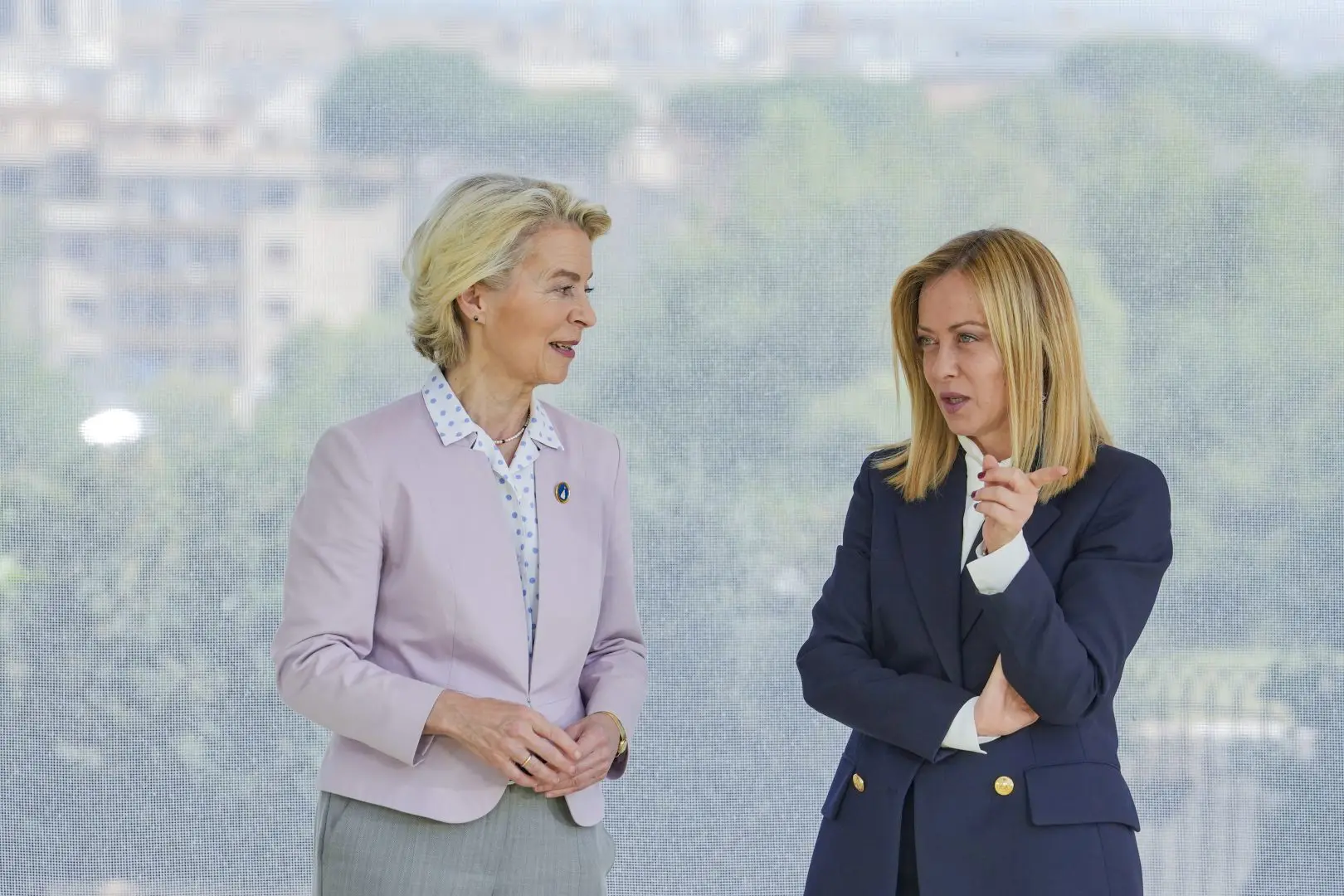
ROMA (ITALPRESS) – “Gentile President, dear Ursula, as we enter the last quarter of the year, the hopes of a rapid resolution of the crisis in the Middle East have been disappointed and the energy markets remain extremely tense. The price of crude oil in euro is almost 80% higher than in the beginning of the year, while the cost of natural gas increased by 156%. Although most Member States have intervened to mitigate the increase in fuel prices and bills, the real disposable income of households is undergoing a hard blow, with the overall inflation that in September reached a new maximum.” Thus the President of the Council, Giorgia Meloni, in the letter sent to the President of the European Commission Ursula von der Leyen. “In addition, the competitiveness of European enterprises has been seriously jeopardized by the greatest energy costs. In this context, net expenditure paths agreed within the framework of the European budget leave limited margins to alleviate the impact on families and enterprises without resorting to restrictive measures, precisely in a phase characterized by significant downside risks for the economy – continues Meloni. As you know, the short-term increase in indirect taxes resulting from higher inflation cannot be used to finance fiscal measures of compensatory support, unless the Member State has margins of manoeuvre within the agreed net expenditure path.”.
“These support measures are classified as discretionary changes in revenue. Although this feature of EU tax rules aims to ensure the solidity of public accounts in the medium term, we should still seek ways to use at least one part of the extra revenue to mitigate the increase in energy costs in a temporary and targeted manner. However, there is further criticality in tax rules while we update our budget plans for 2027 – still explains the premier –. The ceiling on net expenditure growth is fixed in nominal terms and, as such, could not fully absorb the budgetary impact of an inflation that exceeds significantly the projections at the basis of the agreed net expenditure path; public expenditure, in fact, can increase due to mechanisms and market dynamics that escape government control. The most significant example is pension payments, which are linked, albeit with a timeline, to consumer prices. The scale of this phenomenon is relevant: in the Italian case, the share of expenditure directly influenced by an inflation that significantly exceeds the projections at the base of the budget plan is 20.4% of GDP”.
“Other components of expenditure that will be affected by higher inflation in 2027 amounted to 12.0 percent of GDP. We are aware of the risk inherent in the modification of recently introduced budgetary rules, aimed at pursuing a goal that we all share: the sustainability of debt. We are also fully aware of Italy’s commitments under the ongoing excessive deficit procedure and the need to respect the corrective path of net expenditure. However, we believe that the budgetary framework allows the European Commission to take account of the relevant factors which I have just highlighted in evaluating ex ante the compliance with the expenditure rule, during the examination of the next budgetary programmatic Documents – Meloni concludes. I think this is an urgent, no longer deferable issue, which should be discussed by the Finance Ministers at the next ECOFIN meeting. I remain available, along with my staff, to deepen the issues briefly illustrated in this letter and to define the operational methods of our common response”.
L’UE RISPONDE ALL’ITALIA “GIA’ CONCESSO MAGGIORE FLESSIBILITA’”
“I can confirm that we received the letter from the President of the Meloni Council and the Prime Minister (Czech) Babis, and we are examining it.” The EU spokesman Paula Pinho said this, answering the questions of journalists during the daily briefing with the press.
Pinho answered the question on the document drawn up by Italy and the Czech Republic on interventions against expensive energy. The spokesman added that it is “normal practice” to receive contributions and suggestions from the Member States in view of the European Council. The next Council was set in two weeks. Pinho also pointed out that the EU has “already given more flexibility to Member States”, on the request of the Italian government of greater flexibility against the increase in inflation.
– photo IPA Agency –
(ITALPRESS).