ROMA (ITALPRESS) – In Italy income makes the difference even when it comes to caring: renounce, in fact, to a specialist visit more than a person out of 10 (-12%) among those with the lowest incomes, against 8% of those that fall instead in the higher redditual bands. This is what emerges from the “Sussidity and Health” Report of the Foundation for Susidiarity, presented at the meeting “Universalism and Sustainability of the National Health System” at the University of Insubria. A gap that shows how access to care is not the same for everyone: the problem is not so much in the national average level of dissatisfied health needs as in the variance that this aggregate hides between social classes and territories. Also in Lombardy, region that more than any other attracts patients from the rest of the country, there is a rate of renunciation of care (5.3%) that places the region to the 7th place in the national panorama. The incidence rises to 9.5% for renouncing specialist visits. “The right to health must be protected more strongly. Universalism cannot be reduced to the formal affirmation of a right: it must be translated into the concrete possibility, for each person, to receive appropriate and timely care,” said Giorgio Vittadini, president of the Foundation for Sussidality.
“The National Health Service remains one of the most important social infrastructure in the country: it does not only protect health, but it is social glue, it is a source of development and an essential condition of democracy. For this reason, more subsidiarity is needed: a qualitative leap in public governance, called to ensure equity in access, quality of performance and taken care of patients, making the contribution of everyone to the common good. Subsidiarity in this sense is the institutional architecture of universalism.” In the European comparison, Italy shows a overall positive performance: in 2023 the share of people with unsatisfied health needs stood at 2%, against 3.8% of the EU average. If one considers only the obstacles to the functioning of the system – excessive costs, distance from services or long waiting lists – the Italian data drops to 1.8%, compared to 2.4% European. However, behind the national average there are significant differences in income, territory and type of performance. The main criticism concerns the passage from formal universalism to effective universalism: the right to health is guaranteed for all, but the possibility of early access to specialist visits, diagnostic checks and taking paths still depends too much on the place where you live and the resources you have.
“The sustainability of the National Health Service is not only a matter of resources, but requires the ability to transform them into concrete answers to the needs of people,” explained Maria Cristina Pierro, director of the University of Insubria. “In this challenge the University is a strategic actor: it forms health professionals, produces research and innovation and puts its skills in the service of the territory. Subsidiarity is the method of making a system, combining institutions, health, universities and communities in a shared responsibility.” The socio-economic differences are particularly evident. In Europe, 2.2% of people in the first five-year income claim that they could not have access to the necessary care because of the costs; the share drops to 0.2% among those who belong to the wealthiest quintile. In Italy the difference is more marked: 2.9% of people in the first five years give up care for economic reasons, compared with 0.2% of the fifth five-year period. The renunciation of performance confirms this dynamic. At national level, about 10% of respondents had to give up a specialist visit while needing it, while about 6% gave up a diagnostic examination. The renunciations decrease to the increase of wealth: about 12% of individuals in the first quintile renounce specialist visits, against 8% of the fifth quintile; for diagnostic tests the data passes from 7.5% to 5%.
The barriers are not only economic. For specialist visits, waiting lists are indicated as a waiver of 50% of respondents, while excessive costs weigh 46.7% and distance from services for 10.8%. For diagnostic tests, waiting lists rise to 52.8%, followed by costs to 45.9% and distance to 10.4%. If the resources available for the SSN have grown, from 114 billion euros in 2019 to 136,5 billion in 2025, with a forecast of 142,8 billion in 2026, the Report highlights how the issue is not only how many resources allocate to health, but how to turn them into value for citizens. The growth of needs – aging, chronicity, fragility, non-self-sufficiency – requires a less fragmented system and more capable of integrating health, socio-sanitary services and territorial assistance. “Cronicity and socio-health needs are steadily increasing. Our national health service has great excellence, but our society has changed. It takes a step change on the organizational model and towards a more mature relationship between public administration and the Third Sector” the words of Maria Chiara Gadda, MP and member of the Parliamentary Intergroup for Sussidiality.
“The European Union’s Action Plan for Social Economy confirms the importance of this world made up of non-profit institutions, cooperatives, and associations without which many socio-sanitary services would already become in difficulty. These realities cannot be involved only downstream of processes: they must be able to co-program and co-design with the institutions the answers to needs”. Report identifies the areas on which to intervene. In particular, following the last monitoring of the essential levels of assistance (LEA), territorial assistance, with a score of 76, has greater margins of improvement than prevention, which reaches 95, and to hospital assistance, which is at 86. The strengthening of the link between hospital and territory, home care and the integration between health and social services is therefore essential to ensure a more continuous takeover, especially of older people, chronic and fragile.
A further focus is on staff: Lombardy has 5.63 doctors and nurses of the National Health Service every 1,000 inhabitants, compared to an Italian average of 6.1. Also the presence of general medical doctors and pediatricians of free choice is lower than the national average, resulting in greater load of patients for basic physicians. The interventions of local health representatives have allowed these challenges to be linked with the concrete experience of the territory, recalling the need to enhance professionalism, improve the continuity of care and develop a closer collaboration between institutions, health structures and social realities.
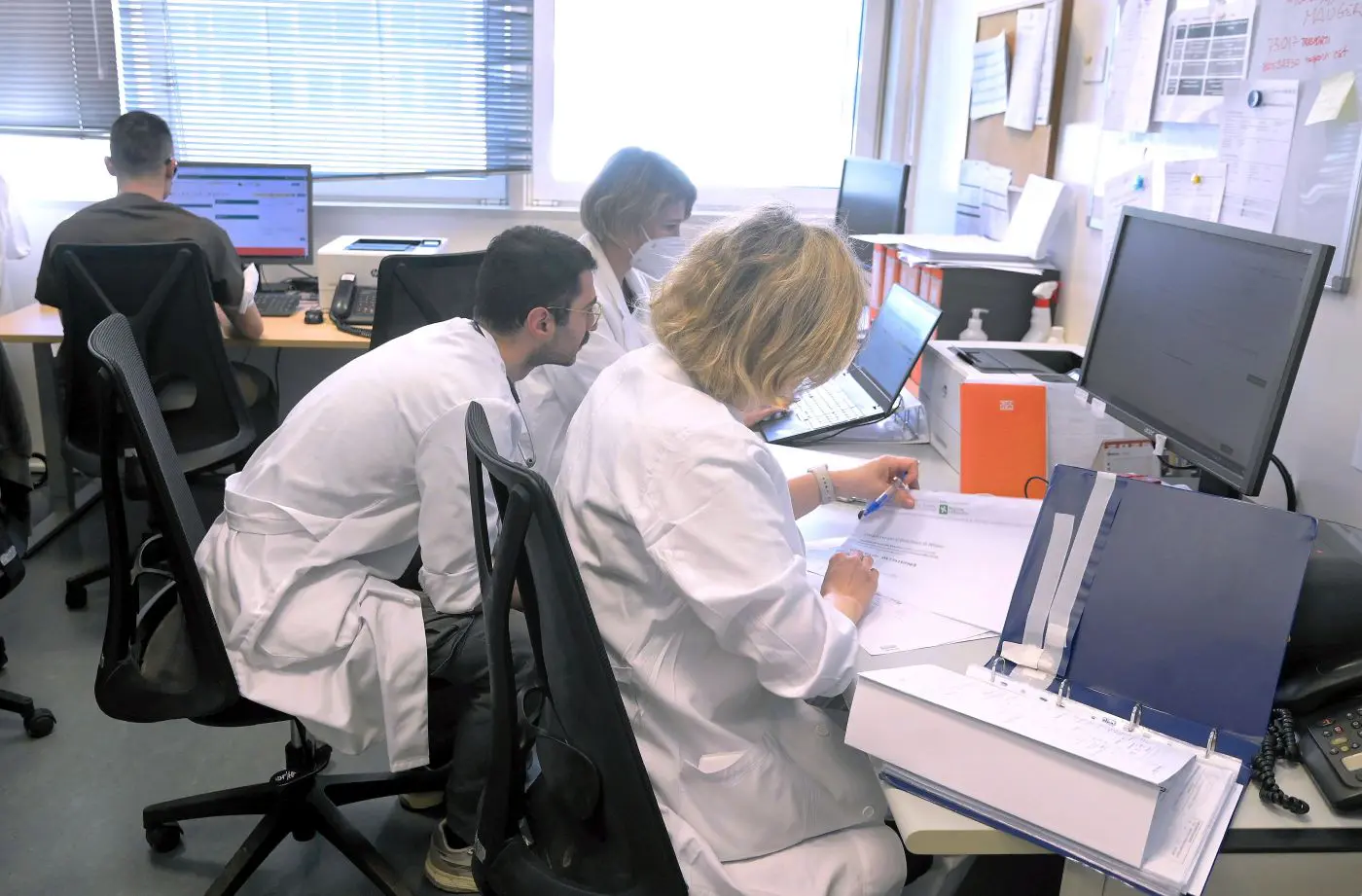
– photo IPA Agency –
(ITALPRESS).