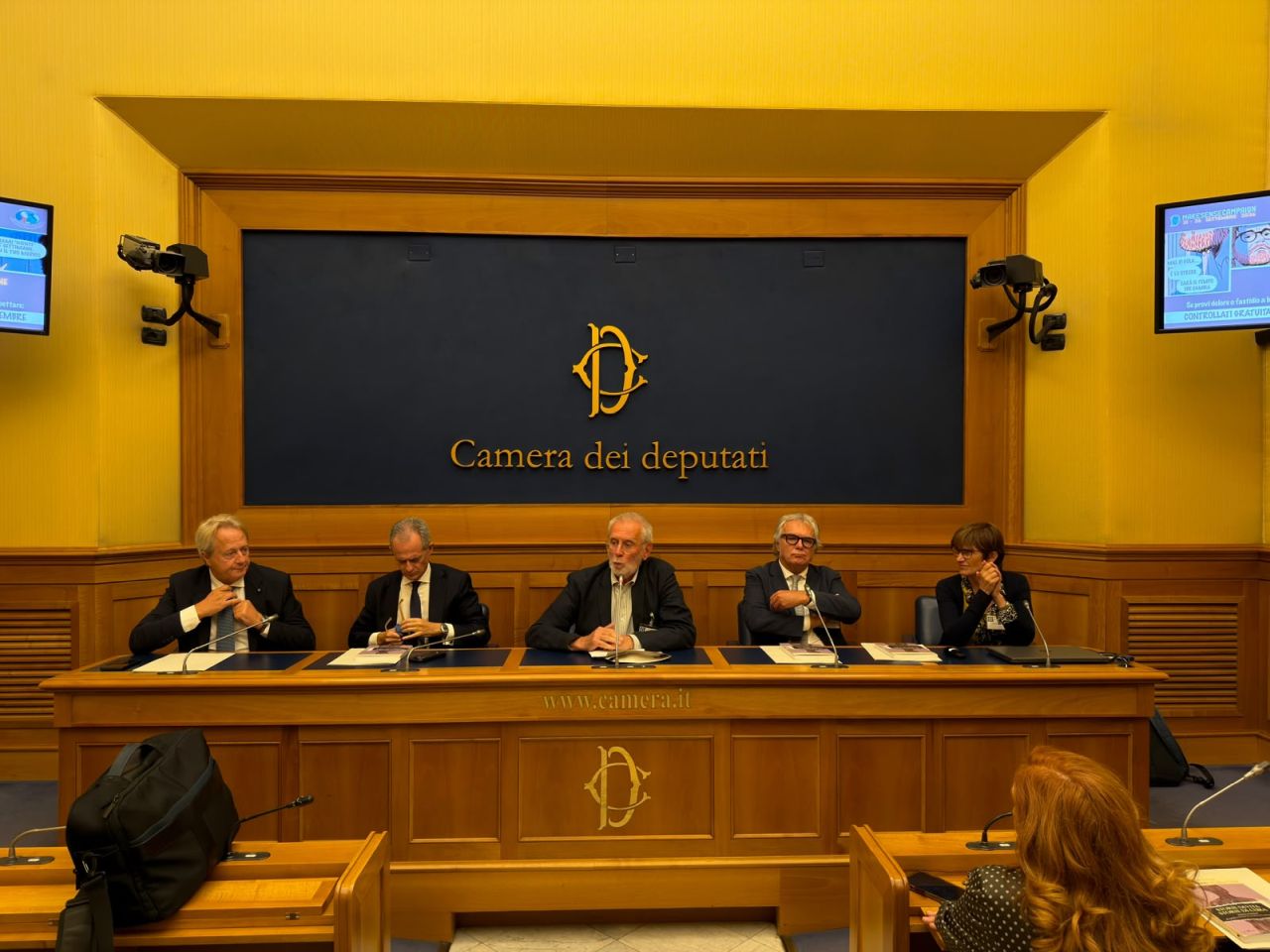
ROMA (ITALPRESS) – Nine thousand new cases diagnosed every year in Italy (AIRTUM data): they are the head-neck tumors, the seventh type of cancer most common in Europe and among the most common among rare forms. Yet, despite these figures, they remain among the most underrated oncological pathologies. It is on this danger that the Italian Association of Cervico-Cefalica ETS (AIOCC) wants to light the spotlight, promoting the XIV edition of the European campaign of education and awareness prevention “Make Sense Campaign” – with the motto “1 symptom for 3 weeks, 3 weeks for 1 life” – presented today, in the Press Room of the Chamber of Deputies at Palazzo Montecitorio, in Rome. Member of the European Head & Neck Society (EHNS), AIOCC is responsible for the formation, information and study of cervical-cephalic oncology. In Italy it is the only existing multidisciplinary association and this guarantees a unique and extremely effective approach. This year the initiative will involve more than 185 public and private health facilities from 21 to 26 September, including hospitals, clinics, ASL, AUSL and ASST, which in that week will offer specialist visits to free access or upon reservation. The complete list of participating centres is available on www.aiocc.it. Also, on the occasion of the campaign, on September 25th also comes Stories of life, stories of care. Head-neck: biography in comics of an anatomical district, published by BeccoGiallo for the series Graphic Anatomy, written by Massimo Cirri and illustrated by Davide Narducci and Ernesto Anderle, with the scientific collaboration of AIOCC, at the press conference of the Make Sense Campaign were attended by Matteo Rosso; Giuseppe Sanguineti president AIOCC, Director UOC Oncologia Radioterapica Institute, IRC Michele Barbara president of the Italian Society of Otorinolaringoiatria and Chirurgia Cervico Facial and Director UO Otorinolaringoiatria, Ospedale Di Venere, Bari); Claudio Donadio Caporale president of the Associazione Otorinolaringologi Ospedalieri Italiani, Director UOC Otorinolaringoiatria, Ospedale di Pescara; Francesco De Lorenzo Past President of the Italian Federation of Volunteer Associations in Oncology; Raffaele Picaro (ordinary Professor of private law and Director of the Department of Law of the University of Campania Luigi Vanvitelli and former patient). The meeting was moderated by journalist Massimo Cirri. Among the topics covered by debate, particular attention was devoted to the need to develop shared tools that allow to trace the volumes of specialized activities in the field of head-neck tumors. The lack of data related to the individual patient, able to collect all therapeutic steps, prevents in fact to organize a correct grip on the part of the health facilities, resulting in difficulty in ensuring the patient an integrated and multidisciplinary assistance. It has been underlined that, in this framework, oncological networks active throughout Italy can play a key role in taking care of patients, so as to ensure uniform care on the territory and know the actual volume of patients. The main goals of the Make Sense Campaign are to educate the public on the symptoms and risk factors of head-neck neoplasms to promote early recognition, and to emphasize the importance of prevention, promoting a message that goes beyond the single week of initiatives, to encourage control practices and healthy lifestyles every day. One of the most critical aspects of cancers in the head-neck district, which include all neoplasms originating in this area – excluding eyes, brains and esophagus – is diffdiagnosis. These are tumors that manifest with common symptoms, easily confoundable with seasonal or negligible disorders. Premature diagnosis is decisive, as the survival rate reaches 80-90% in patients where the disease is detected in the initial stages and the necessary treatments are less aggressive. On the contrary, a late diagnosis involves a lower chance of care and poor quality of life. From here, the “1×3” rule, which inspires the campaign’s claim: if even 1 of the symptoms potentially linked to head-neck cancer persists for 3 weeks or more, it is essential to consult the doctor, as an early diagnosis can save life. Symptoms not to be ignored include: difficulty moving the tongue, ulcers that do not heal, red or white spots in the mouth, sore throat and persistent shortness, difficulty or pain during swallowing, swelling of the neck, nasal obstruction on one side or bleeding losses from the nose. In addition to outpatient activity, some participating health structures will participate in the Campaign with dissemination and awareness-raising initiatives, with the aim of creating a direct dialogue with patients and direct them to early screening activities. All initiatives can be consulted in the list of participating centres on www.aiocc.it, in correspondence of the proposing body. Among the initiatives planned, on 18 September the Choir of the Larynxomized of Cesena will hold a concert closed doors, that will be recorded and made available in the following days on the site of AIOCC: the video will be accessible from the list of centers belonging to the Campaign, in correspondence of the Company USL of Romagna – Presidio Ospedaliero “M. Bufalini” of Cesena.
– Photo mec/Italpress –