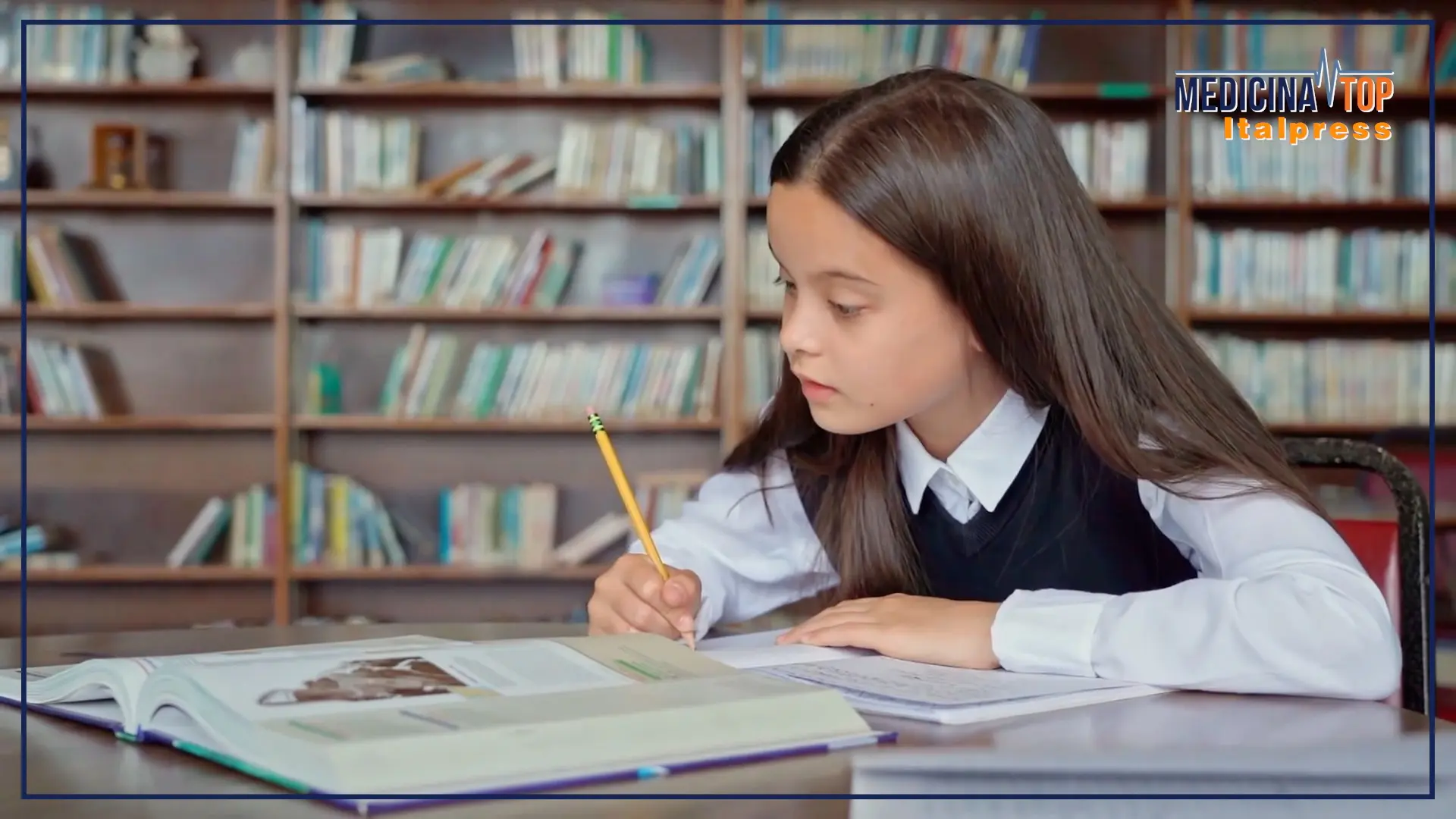
ROMA (ITALPRESS) – It arrives September and returns to school, a crucial moment in the lives of children and children: after months of holidays resume rhythms and find the rules, companions and teachers is a great change. Especially in the first days it is normal that some children manifest a certain agitation: for the young can be fear of detachment from parents, for the older can weigh the school expectations, the desire to be accepted by the peer group, the fear of verifications or a new environment. Anxiety, especially in the evolutionary age, is not always expressed by words: it often speaks through the body. Benchache, headaches, nausea and loss of appetite can be signals of an emotional discomfort that resolves in a few days, but also symptoms of a physical condition to deal with promptly: for this it is important to know how to observe with clarity and react correctly to the different symptoms.
“The abdominal pain brings 15% of children to the emergency room: only 5% of them arrive at surgery. The causes of abdominal pain in the child are various, from feeding errors to alvo disorders: a healthy diet is very important. There is then a part that has a surgical origin: on that we have to be a little more careful”. Ernesto Leva, director of the complex structure of pediatric surgery at the Milan Polyclinic, interviewed for Top Medicine, TV format of the news agency Italpress.
The main alarm bell, according to Leva, is “the appearance of acute abdominal pain: this also happens in full well-being and must lead the child to make a medical evaluation, if possible also by a surgeon-paediatric. Not to be underestimated also vomiting, a symptom that overlaps many other pathologies not of surgical interest but which can undergo a very serious surgical pathology, such as the bowel volvule. Same speech for the appearance of fever and progressive deterioration, which in children is sudden: unlike the adult, which tends to deteriorate within a few hours, the child remains stable and then decay quickly; the smaller the child, the more this event manifests”.
Basically, he adds, do not underestimate the pathology and do all the examinations of the case, addressing a specialized medical profile: “In abdominal pain there is an important anamnestic collection: the cores of our work are represented by an objective examination, then it aims at the possible request of an imaging. Today ultrasound is widely used, also because ultrasound systems are very advanced and do not radiate children: it definitely makes sense to do it in case of doubt. In the suspicion of a surgical pathology it is important that the child arrives in a reality where there are both pediatrician and surgeon. The seat of pain is very important: the right quadrants often associate a picture of inflammation of the appendix, as well as a widespread pain throughout the abdomen and with very violent cramps; also this is a very important sign, that we surgeons must keep in mind for the bowel volvolo. A child with repeated bellyache must be brought in the first line from the pediatrician, who has all the tools to exclude those pathologies that can be treated at home: in a hospital you have to investigate a series of motivations, which can go from allergy to intolerances to anatomical abnormalities that can then vent in a surgical acuzziness”.
The most delicate age range is that of the first three years of life where, Leva explains, “a normal appendicite very often comes to become a peritonitis, because it is normal that at that age a person does not go to think about appendicitis: just a few weeks ago I operated a three-month-old baby who suffered from it. The real pediatric surgery is for children up to 12 years: even the newborn can have symptoms of abdominal pain, which underwent a often malformative pathology. For the taking of these children, whatever the age group, it is important that it be a team dedicated to intervention: the surgeon, the anesthesiologist, the nursing staff. Mininvasive techniques have taken more and more foot and represent great advantages for the child: today we also use them in infants, with extremely thin and small tools, and in some cases even in fetal surgery; also robotic surgery is entering into pediatric surgery.”.
The Director of Paediatric Surgery of the Polyclinic finally focuses on the collaboration between the hospital and Cieli Azzurri, a foundation that “supports us in the activities that we carry out in the hospital, from the formation of doctors to the realization of structures dedicated to the child. Today we have some very beautiful projects: the first is the hospital of Uno in Bambino, in the new Policlinico, with an area entirely dedicated to children; we also have a project called Da Grande Milano, where we go to offer a smile to those children who perhaps have gone through very challenging moments at the hospital level. In addition, Milan, through sports such as Inter, Milan, basketball and volleyball and cultural realities such as the Duomo and La Scala, offers them the opportunity to smile”.
– Photos from Top Medicine –
(ITALPRESS)