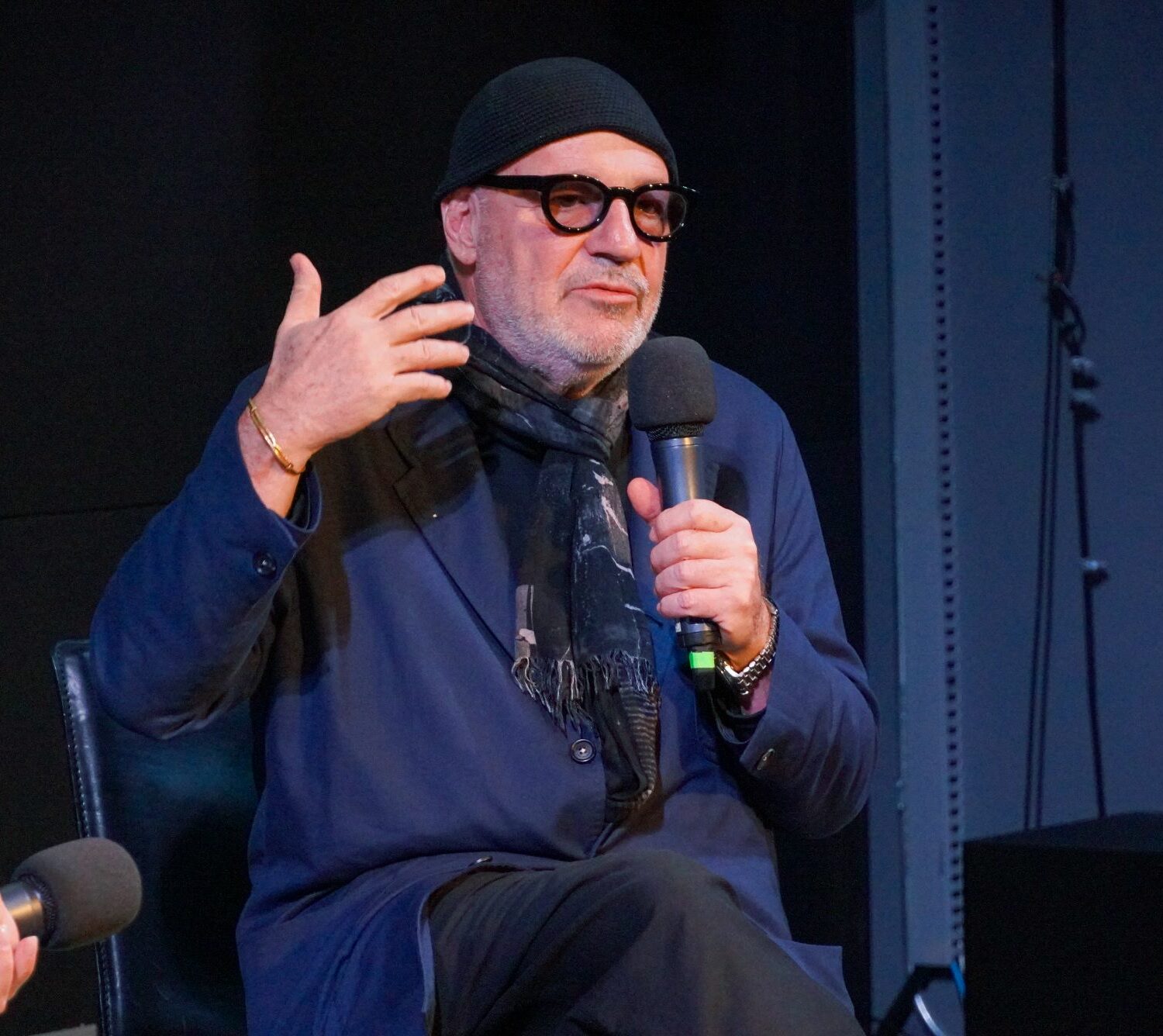
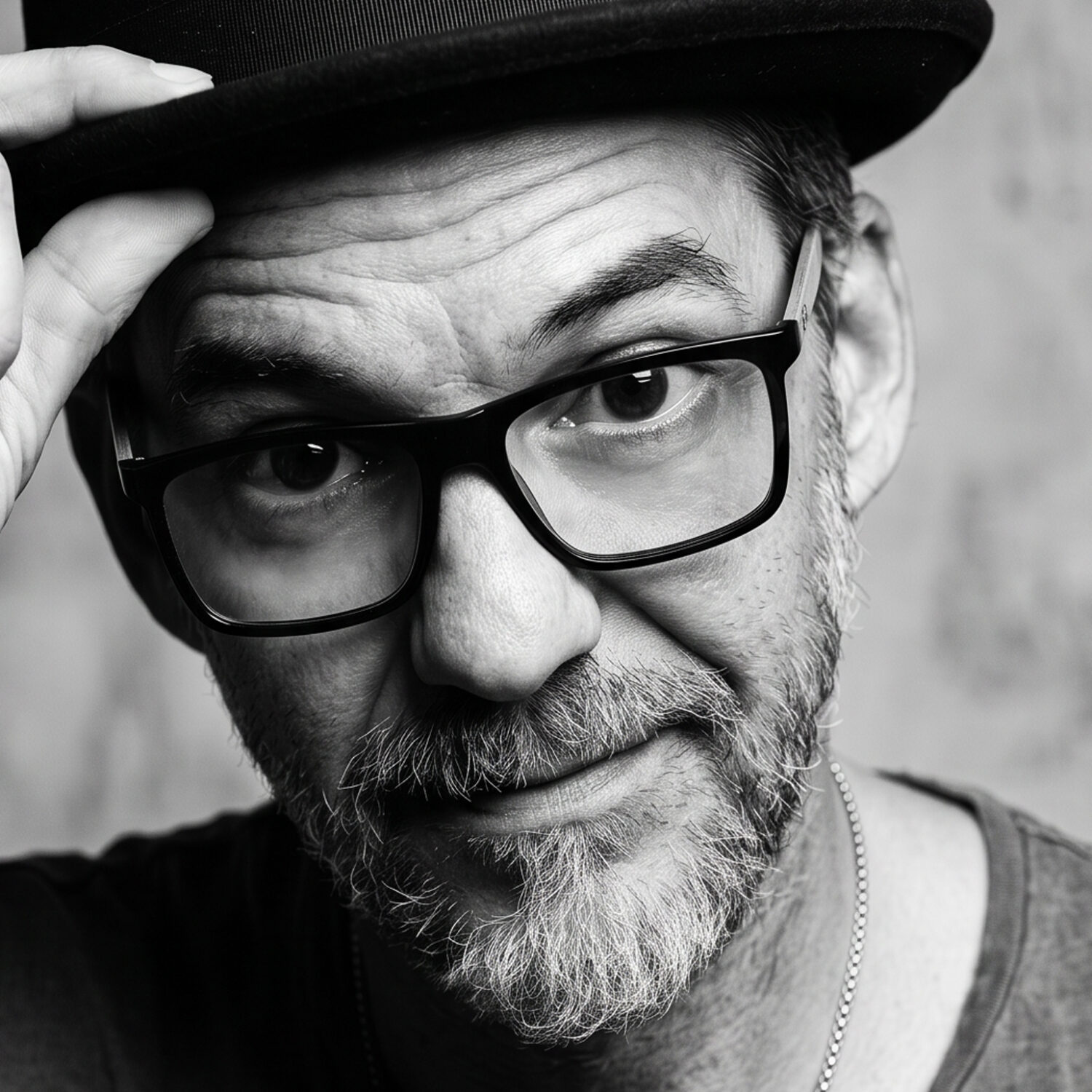
Alessandro Taini is an Italian illustrator and concept artist. After starting work in London, he entered the video game studio that would become Ninja Theory, where in twelve years he went from concept artist to Art Director. In 2018 he moved to California to work in animation. He participated in Star Trek: Prodigy, winning an Emmy Award, and later worked for Naughty Dog at Intergalactic video game: The Here Prophet. Today is Production Designer of a new animation project linked to Ghostbusters, set in New York.
When did you realize the design could become your job?
I’ve always been an illustrator. As a child I had a passion for drawing and attended several art schools. I wanted that passion to become my work, even going against the idea, quite widespread in Italy, according to which to make the artist is not a real job.
At one point I realized that in Italy it would have been difficult to live out of illustration. I had been to Mondadori and had proposed to make a cover of a book. By making two calculations, I realized I couldn’t live with the little money on a cover, always assuming I had one a month.
So I decided to try abroad. I was twenty-five years old and I left for London, where for the first three years I did different jobs, especially in the kitchen. At the time it seemed to me to start late, because today many boys leave at seventeen or eighteen years, but I still felt I had made the first step.
What is the road that led her to work as a concept artist?
In London I had to learn the language first. I didn’t know English and I learned it by living there and talking to people. Still today I have a very strong Italian accent, but after a few years and many peripecies I managed to become a concept artist for a video game studio.
At first my goal was cinema. My references were artists like Moebius and H. R. Giger, that of Alien. The first time I read the term concept artist was in relation to Alien. I wondered what it meant, and I started to inform myself.
At the time there was no internet and in Italy that professional figure was not much known. I found out there was a similar role in video games and I thought that could be a way to get to the cinema one day.
His first great experience came with the study that would become Ninja Theory.
Yes, the first opportunity came from a Cambridge studio that at the time was called Just Add Monsters. After a reorganization, Ninja Theory was born. Thanks to a deal with Sony we could stay open.
I’ve been there for 12 years. I started as a concept artist and after about four years I became Art Director. It was an important turning point, because that role gave me a lot of experience and made me know in the video game industry, first in England and then abroad.
It is curious that you have achieved such an important role in video games without being a gamer.
That’s right. As a boy, I didn’t even know why the others played. When in summer I went to the sea and saw my friends close in the games rooms, I thought: “But why do they play? There is the sea.” I wasn’t a player and, in part, this was my luck.
When I was working video games, I had no direct references in my head. My sources were comics, movies and theater. I never used a video game as a model, simply because I didn’t know them enough.
Ninja Theory, however, produced very cinematographic video games, with many dialogues and an articulated history. The gameplay served to support the narrative and this was the aspect I was interested in most.
In those years he also worked with Andy Serkis. What experience was that?
Through those video games I met Andy Serkis, the actor who played Gollum and who today also works as a director. He played for two characters of Heavenly Sword and Enslaved: Odyssey to the West.
It was an incredible experience. He is very sympathetic and seeing him acting, while helping to build the character, was something special. I had made a painting for one of the characters he had to interpret and gave it to him. He later posed for some photographs I used to make illustrations for marketing.
The cinema continued to stay inside me. Seeing a character I had created to come to life, talk and communicate made me think that maybe I could focus on that aspect.
Is that what pushed her towards animation?
Yes. In video games there were cutscenes, film sequences in which the characters recited and the story went on. I was interested in seeing a character have a life and not just remain a drawing.
During cutscenes, you do not control the character directly: it has its own identity and almost seems to watch a small film within the video game. I thought I could concentrate on this.
After twelve years in the video game industry, I had the opportunity to move to America thanks to Ben Hibon, who I had met working on video game projects. When he called me to start an animation project in California, I heard the words “America” and “animation film” and I immediately said yes. It was 2018.
What attracted you to that change?
I liked Ben calling me first. I knew his style and I was excited about working with him. Also I wanted to change completely and learn something new. The initial idea was to work as an Art Director in an animation film.
The thing I like most is to create a style and try to go beyond what goes of fashion. I like to draw on my experience and everything I brought with me from illustration, comics and cinema.
The first American project, however, has never been produced.
I arrived at Luma Pictures, a study that mainly dealt with visual effects for Marvel. They had allocated a budget to make the animation film, but then they realized that it would be much more difficult and expensive than expected. Finally the project was set aside and I stayed there for about a year.
In animation often happens. You can work for a year or two for preproduction and production of a film, then the project changes, is deleted or remains firm. For an artist he is frustrating, because much of the work ends in the portfolio. If the film does not come out, however, you cannot freely show what you have done.
It is not only an economic question: while you were working you were paid. It is above all a professional problem. You’ve done things you’re proud of, you can’t wait for them to be seen, and then that job remains hidden.
After that cancellation he returned to England, but there was a twist..
Yes. Not being a VFX artist, I didn’t know what I could do at Luma Pictures when the project ended. I also had some personal issues because my fiancée lived in England. So I thought I’d go back to London.
Meanwhile there was the problem of the visa. To work in America, I had to apply for an O-1 visa, the visa for artists and professionals with special awards. To get it takes months and, while I was expecting, Ben left the studio.
When I returned to England, however, Ben Hibon called me back to work at Star Trek. In order to return to the United States I had to get a new visa, because every time you change the project can also change the sponsor. Finally the visa arrived and I returned to Los Angeles.
He arrived in the United States in a particular period..
I arrived two weeks before the start of the lockdown. I also had a small office inside Nickelodeon, in Burbank. For me it was the first time: in video games I had never had a personal office. I was so happy.
I had to work as Art Director. It was a role I had played in video games, but I had never covered in an animation project. After two weeks, however, the lockdown started and we had to work from home. Star Trek: Prodigy became my first experience as an Art Director in an animated series, and I had to work completely remotely.
What is the difference between working on a film and a series of animation?
In a series there are many more bets and the overall budget is distributed on a greater number of episodes. So you don’t have the same resources as a movie.
In video games I was used to working in independent studios and with lower budgets than in reality like Naughty Dog. We could not compete with them on the economic level, but we tried to do so through originality and ideas.
If you can’t achieve something technically incredible, you have to make sure it’s visually amazing. I have always tried to find the best solution with available resources. Even in animation you have to solve problems and find effective ideas without always being able to count on the most expensive solution.
Has the distance work changed its way of working?
Yes, especially because I am very good in personal interaction. In video games I was walking through the desks, talking to artists, looking directly at what they were doing and giving immediate indications. I was trying to make sure the team trusted me and I wanted to be a reference point for those who worked on the project.
In the animation, during the lockdown, I was home alone. I didn’t know the artists, I saw them through Zoom and I didn’t have the same immediacy. I had to wait for the call to talk to someone.
Even now that many studies have reopened, this habit has remained. Sometimes we’re all in the same building, but we still have to set a call to discuss something..
With Star Trek: Prodigy has also reached an Emmy Award.
Yes. Star Trek: Prodigy was nominated and then we won the Emmy. In video games I thought I deserved a prize, but when I was working in that industry I had never had this chance.
I won in the Production Designer category, although in the project my role was Art Director. In a nutshell, Production Designer is a very close figure to Art Director. It was the first year that the Emmys had created a category dedicated to children’s and families programs.
First the animated productions ended all in the same cauldron. A children’s board could compete with a series of superheroes or with a production intended for a teenage audience. When they created that specific category, we won just in the first year.
After the Emmy, however, he had to face again the problem of the visa..
I never applied for the green card. Maybe it was still the Covid period and everything seemed more complicated, so I kept rescheduling.
Every time you finish a project you have to find another job that will allow you to stay in the United States or you have to get a new visa. When the visa expires, you have very little time to leave the country. You have to take everything you built in three years and leave.
Between 2022 and 2023 I realized I had to quickly find a new job. In the animation I won an Emmy, but they didn’t know me enough yet. In video games, I already had a reputation. I found an opportunity in Naughty Dog, the studio that made The Last of Us.
What role did he play in Naughty Dog?
They offered me the position of Principal Concept Artist and made me a new visa. I worked for about nine months at the new Intergalactic video game: The Here Prophet.
It was interesting to enter such an important study, but moving from the role of Art Director to being one of the many artists was a significant change. Naughty Dog is a huge reality, but from the point of view of the career seemed almost a regression.
I thought I could stay there and become Art Director, but I realized it wouldn’t be possible. It is a completely different structure from Ninja Theory and, in reality, often the leadership roles are entrusted to people who work internally for many years. After a while I realized that they didn’t necessarily see me there as Art Director.
Ben Hibon proposed a new project.
Yes. Ben called me and said, “It would be good to go back to work together this time at Sony.” We had a wonderful experience on Star Trek: Prodigy and there was the desire to continue that collaboration on a new project.
When we started talking about the role I could have, Ben told me something like: “I know you, I know you want to be directly involved in the creative part, working with artists, drawing and developing ideas.” And he was actually right. This is the part of the work I love most: being close to artists and contributing directly to the construction of a project’s visual identity.
Speaking together, we realized that the role of Production Designer was the most suitable for me and the kind of contribution I wanted to make.
That’s how I joined Sony Pictures Animation as Production Designer of Ghostbusters’ new animated project.
The project is set in New York.
Yes. I took advantage of a New York New Year to take pictures and collect reference. It was important to me. When you have to work on a city, it is not enough to collect on the Internet pictures of the most famous places: you have to see and touch things.
I was interested in observing the confusion of the streets, the smoke coming out of the graves, the materials of the sidewalks, the fire stairs and the details of the buildings. They are elements that we always see in movies, but that we do not know how to explain.
This time I did not go to see only the main places. I photographed things that as a tourist I probably would never have looked, like the gravel and the streets. These are the details that give credibility to the environment.
When is Ghostbusters coming out?
The show is scheduled to go out in 2027 and I can’t wait for the audience to finally see it. I can’t anticipate much more for the moment.
Did he know many Italians working in animation in the United States?
Yes, we created a small community of Italians working in animation. We tell ourselves about our experiences and we often write to tell us what happened at work.
We do different activities: there are those who deal with concept, visual development and those who work on the characters. I come from video games, cinema and illustration, while many of them come directly from animation. That is why I am interested in their way of reasoning and we often work together.
When I was working at Star Trek, I called two of them to work on the project. If you have the opportunity to involve people you trust, it is easier to work: we understand each other on the fly and it is not necessary to explain everything from the start.
In America I immediately looked for these Italian moments. When I was in England, instead, I was trying to stay away from the Italians, perhaps because I was afraid to affectionate myself to people who would then leave. In the United States, I wanted to find those things I missed, like Italian speaking and coffee together.
When I lived in Burbank I could see the other Italians at least a couple of times a week. Now we meet more or less every two weeks. They are simple moments, but for those who live far from Italy they have a huge value.
L’articolo Alessandro Taini, from video games to the new Ghostbusters animation project proviene da IlNewyorkese.