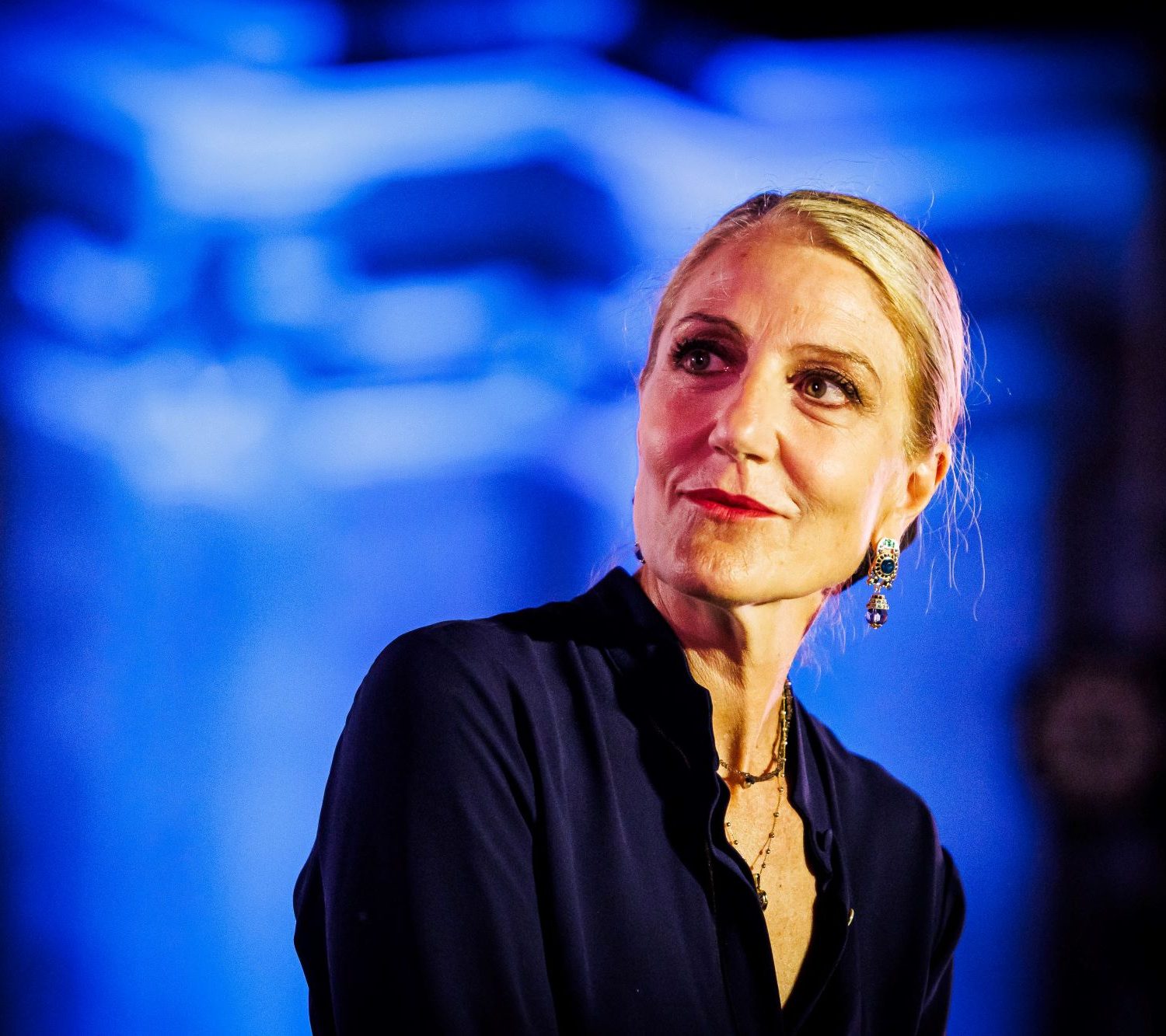
Giulia Ghia has been working for more than twenty years around the cultural heritage, from restoration to curatorship, from museum management to public administration. In recent years an important part of his work has concentrated on Rome, where he is a Councillor for Culture and the School of the First City Hall of Rome. Here, every day, it relates with a city of immense and ever-changing heritage: from contemporary art exhibitions in the historical center to digital tools to tell, to the relationships built with Manhattan and to the project of an international network between the historical centers of the great cities.
In this interview he tells the path that has brought it here and above all the idea that he holds it together: to consider culture a matter of administration and public responsibility, which concerns the functioning of the institutions and the daily life of people. The conversation also starts from what is out of the assignments – the family, sports, friendships, failures – and arrives at its ambitions for the next few years, between Rome, New York and a curatorial activity that Ghia does not intend to leave.
If you should present yourself without using any of your professional titles – historical art, restorer, curator, teacher, council member – who would say you are?
I guess I’m a curious person. It is the curiosity that guided every choice of my life. I always needed to understand how things worked: a painting, a museum, a city, an institution, even a community. I think the red thread of my path is this. I’ve never been content to observe the cultural heritage. I always wanted to figure out how it could improve people’s lives.
She comes from a large family and especially from a genealogy of very strong women. How much did they count on building his character?
Very much. I grew up in a family where women never told us about emancipation. They simply lived it. I’ve never had the feeling that there were work from men or women. I’ve always seen people studying, working, building, taking responsibility. That was my model.
His great-grandmother Leonarda Vaccari was the first female graduate of the Academy of Fine Arts in Sicily..
Yes. And it’s a figure I often think of. She was a pioneer without wanting to be. He didn’t try to prove something: he simply did what he thought was right. He also piloted airplanes when he was almost unthinkable that a woman could. I think she learned something fundamental from her: do not ask for permission to pursue an idea.
His mother is now running the Leonarda Vaccari Institute..
It is probably the person who taught me more about the concrete meaning of the word “cura”. The Institute follows more than three hundred people with disabilities every day. Growing next to that reality means understanding that institutions exist to take care of people. This has profoundly influenced my way of understanding culture. Culture is not only used to produce beauty. It’s for citizenship.
What about your father?
I learned from him the rigor and freedom. They seem distant words, but they’re together. The rigour in the study, in the work, in compliance with the commitments. Freedom in thought. My father never told me which road to follow. He taught me to have the tools to build it myself.
Is it hard to be a woman who works so hard?
Yes. And it’s useless to pretend otherwise. But I think the problem is not to reconcile two worlds. The problem is to build a life in which no size cancels the other. I don’t want to be defined only by my work. I’m a mother, wife, daughter, friend. All this also makes my way of administering better.
When did you realize that cultural heritage would become your life?
Very soon. But I understood as soon as possible that knowing a work of art was not enough. It was necessary to learn how to govern the institutions that guard it. For this reason, after the Central Institute for Restoration, I chose the management and marketing of cultural goods. At the time it seemed almost a provocation. Today I believe it is an indispensable competence.
Is that where Verderame was born?
Yes. It was my lab. For almost ten years I have built projects of protection, restoration, fundraising, relations with public entities, enterprises and patrons. We collected over half a million euros for cultural heritage. There I learned that an idea, to be really public, must also be sustainable.
Since 2016 he has been sitting in the Board of Directors of the National Etruscan Museum of Villa Giulia.
It was a fundamental experience. I have seen a museum from within, not only as a place of research but as a complex organism, made of balance sheets, strategies, public, staff, sustainability. This is where I have gained the conviction that a contemporary museum should be a civic infrastructure, not simply a container of works.
Then politics comes.
Actually, the administration comes. I still consider myself a technique for politics today. I accepted why I thought it was time to turn ideas into public policies.
In these years he has reported contemporary art in the historical center of Rome.
Yes. Colbert, Meggiato, Botero, Tony Cragg, Joana Vasconcelos, Sean Scully. I don’t think contemporary threatens Rome. I believe the opposite: a historical city remains alive only if it continues to dialogue with its own time.
At the same time he invested a lot on digital.
Because digital does not replace the museum. He prepares it. He’s accompanying him. Prolongs it. ITER was born from this idea: helping citizens and visitors to get to know a less predictable Rome, distributing the fruition and telling stories that often remain invisible.
The relationship with New York seems to have a special place on its path.
New York is not just a city for me. It’s a lab. I taught in the United States, I founded a 501(c)(3), I built relationships that today have translated into the agreement between the City Hall Rome I Center and the First District of Manhattan. It is a project that I consider among the most important of my administrative experience.
Is the Charter of Rome born from this?
Exactly. I would like to build an international network of historical centers in the world. A permanent place of discussion on urban and cultural policies. I believe that the future of cultural diplomacy will go more and more from cities.
He will also continue his curatorial activity.
Yes. Mucha in Lyon. San Gennaro’s Treasure in New York. Marco Tamburro in Rome. Curating exhibitions helps me not to lose contact with scientific research. It is important to continue living both dimensions.
Meanwhile, his new book is about to come out.
Yes. It is called “Governorting the imagination. The public responsibility of culture.” It is an attempt to put in order twenty-five years of work and to reflect on a conviction that has always accompanied me: culture is not a councillor. It’s a government method.
The article Culture as a public responsibility: Giulia Silvia Ghia between Rome and New York comes from IlNewyorkese.