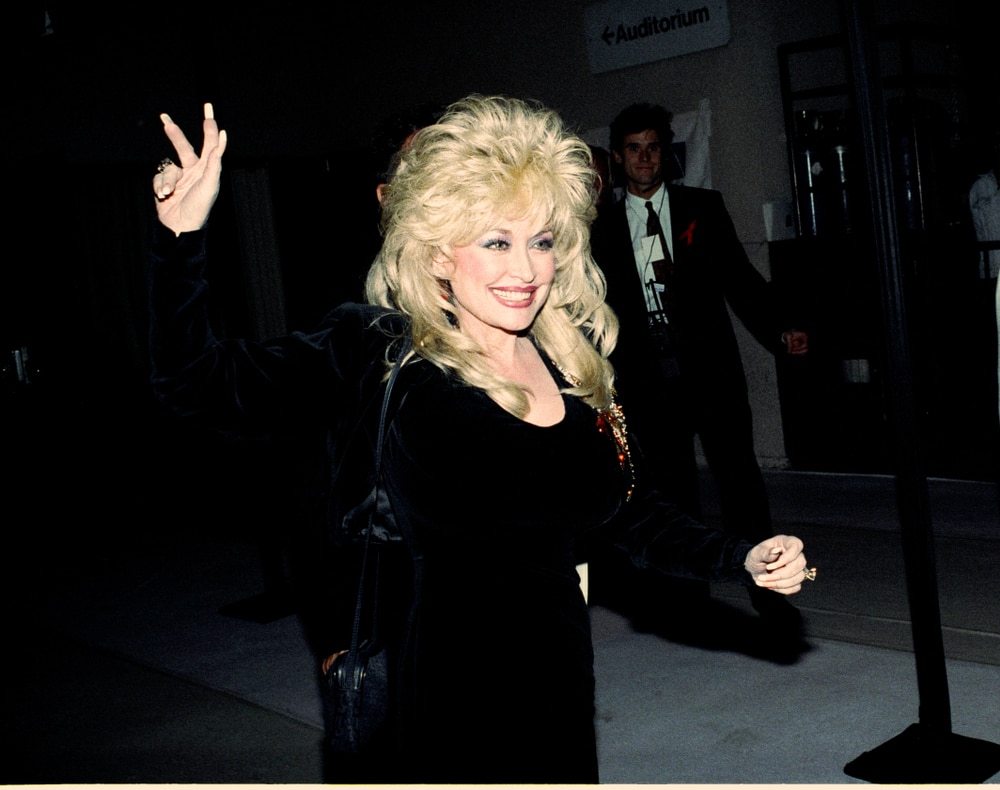
Dolly Parton died on Tuesday, August 25 in Nashville, Tennessee, where she was admitted to the Vanderbilt-Ingram Cancer Center. She was 80. The death was announced by his nephew Bryan Seaver, who for many years was also responsible for his safety. Shortly after his representatives said that Parton had had had a “short battle against cancer”, without specifying what type. For about a year he had reduced public commitments to health issues and in 2025 he lost his husband Carl Dean, with whom he had been married for almost sixty years.
Saying Parton was a country singer is correct and together quite reductive. For almost sixty years he was one of the few characters of the American show recognizable practically by anyone: in the rural states of the South as in the big cities, between the traditional audience of the country and the pop, among the evangelical Christians and in the LGBTQ+ community. It had built this popularity without hiding any of the things that seemed to make it unsuitable to the general public: the marked accent of Tennessee, the poor origin, a very present religiosity and an aspect so artificial to become almost a costume scene. To keep everything together there were mostly songs. He wrote thousands and in it he put a piece of America that in national popular culture had often been told from outside, and almost always with condescension.
Parton was born on January 19, 1946 in Locust Ridge, on the Great Smoky Mountains, in East Tennessee. It was the fourth of twelve children. The family lived in a small house without many of the services that were already common in the rest of the United States and his father, Robert Lee Parton, was illiterate. Dolly began singing in the pentecostal church of his grandfather, then on local radio and television. As soon as the school ended in 1964, she left for Nashville, which was less than four hours away, but belonged to a completely different world. The Country Music Hall of Fame recalls that in the mid-1960s it was already known as author: other singers had begun to bring in the charts the songs he wrote.
The first true notoriety came in 1967, when he entered the Porter Wagoner Show, one of the most important television programs in the country of that time. Wagoner was already a star and Parton was initially presented as his partner in the duets. The collaboration lasted seven years and worked very well, but over time it became the first professional relationship from which Parton had to gain independence. When he decided to leave the program, Wagoner didn’t take it well. She wrote a song to explain to him that she wanted to leave: The Will Always Love You.
The title made it possible for decades to be heard mostly as a love song, and in 1992 Whitney Houston turned it into one of the most famous singles in pop history. The original spoke instead of the end of a working relationship and said something quite simple: I love you, I am grateful, but I have to continue alone. It was one of the ideas most often used in Parton’s music. People could love family, partner or place they came from without having to stay forever. Parton also reported that he wrote I Will Always Love You and Jolene on the same day. “A good day of writing,” he said years later.
There was a second story, which became almost as famous as the song. Elvis Presley wanted to record I Will Always Love You, but his manager, Colonel Tom Parker, claimed Parton gave half of the editorial rights of the piece. She refused, although she knew how much it would mean to have her own song played by Presley. He continued to possess his rights when the Houston version arrived. The story is also told by the Library of Congress and is useful because it shows an aspect of Parton that his public character often hid: behind the wigs and jokes there was a musician very attentive to the property of his work.
The early 1970s songs explain even better because Parton became so important to the American country. In Coat of Many Colors of 1971, he told about when his mother sewed her a coat using different pieces of cloth because the family could not afford a new one. In school, the other children teased her. Parton turned that episode into a song about poverty that didn’t try to hide it and even make it picturesque. In 2011 Coat of Many Colors was included in the National Recording Registry: in the essay prepared for the Library of Congress, musicologist Nadine Hubbs observed that in the 1960s the Appalachian had become, for the rest of the United States, an official image of American poverty, told by newspapers and politics as a backward place to observe from the outside. Parton did something different: he let people talk to us.
His relationship with those origins was less sentimental than the character of the country girl who remained linked to the mountains suggested. On the 1973 album My Tennessee Mountain Home, he recalled childhood with affection and at the same time explained how much he wanted to leave. In a song ironically titled In the Good Old Days (When Times Were Bad) he said that no sum of money would convince him to live again in the condition of his childhood. Parton had done what the American myth prescribed – had come out of poverty thanks to talent and work – but without claiming that poverty was a useful or noble experience.
Even the women of his songs were often people that the country of the time struggled to tell. In 1968, in Just Because I’m a Woman, he wrote of the different judgment reserved for men and women for their sexual experiences. Two years later, Down from Dover told a pregnant and unmarried girl, abandoned by her family and companion. Porter Wagoner tried to convince her not to publish it; when she came out, many country radios refused to broadcast it. Parton almost never called himself a feminist and always kept a certain distance from organized political movements, but some of his songs came to the radio in the same years when the American feminist movement discussed work, sexual freedom and economic independence.
In 1980 this became much more explicit with 9 to 5. Parton recited with Jane Fonda and Lily Tomlin in the homonymous film, a three-time comedy that rebelled against a sexist leader, and wrote the main song by imitating the rhythm of the nail noise on a typewriter. The single came at the same time to the first place of the American country and pop charts and turned Parton as Nashville’s great star into national celebrities. The film spoke of harassment, wage differences and precariousness in the office with the language of a commercial comedy; the song managed to do something similar in less than three minutes.
The pop passage started a few years earlier. Here You Come Again, in 1977, had reached third place on the Billboard Hot 100, while the eponymous album became the first record of a country singer to sell a million copies in the United States. From that moment on Parton continued to move between worlds that the music industry preferred to keep apart: traditional country, pop, bluegrass, gospel and then also rock. In total, he scored more than one hundred songs on Billboard’s country chart, twenty-five in the first place, and was successful in the Top 20 country in seven decades. He sold over a hundred million records. The Recording Academy attributes 10 competitive Grammys and 55 nominations, as well as the Lifetime Achievement Award received in 2011.
There was then the way it appeared, impossible to separate from its music. Huge platinum blonde hair, fake eyelashes, heavy makeup, very long nails, heels and clothes covered with rhinestones. Parton told many times that she was inspired by the woman who in the country where she grew up was considered “the little good” of the place: as a child she saw in that look the very idea of glamour. When producers and collaborators advised her to dress more soberly to be taken seriously, she did the opposite.
In a famous 1977 television interview, Barbara Walters told her, in essence, that she didn’t need to appear like that, and asked her if she didn’t hesitate to look like a joke. Parton replied that he knew very well that people were making fun of her and that he knew equally well what he was doing. The interview today is interesting because it puts one in front of the other two ways of understanding respectability and success: the sophisticated journalist of national television and the singer who deliberately transformed the aesthetic codes considered “volgari” of rural America into a brand of millions of dollars. The fact that Parton was able to joke all the time about his breasts, wigs and aesthetic surgery also made it difficult to use those same things to diminish it.
It is also one of the reasons why he became, quite surprisingly for a country singer who grew up in a Tennessee Christian family, an LGBTQ+ icon. Exaggerated aesthetics were easily readable through the dragon culture, but Parton also made very concrete statements for gay people and marriage between people of the same sex. His religiosity remained central and precisely in the name of the faith challenged the idea that it was up to Christians to judge others.
Defining Parton ‘apolitics’, as has often been done, requires some clarification. He carefully avoided siding with candidates and parties, and explained that among his fans there were both Republicans and Democrats. He rejected the Presidential Medal of Freedom three times: two offers arrived during the Trump administration and one during that Biden, although in the first two cases the husband’s disease and pandemic came into play. At the same time, he expressed himself on the rights of LGBTQ+ people, on the treatment of women and poverty. More than having positions, he chose not to turn them into a partisan membership. In a country where country music had become increasingly politically identified, this allowed it to preserve an unusually transversal audience.
In 1986 he participated in the transformation of an amusement park near his home in Dollywood, which over the years became one of Tennessee’s main tourist attractions and an important employer in the area. Two years later he created the Dollywood Foundation. In 1995, the Imagination Library, inspired by father’s illiteracy, started in its county. Every month, the program sends a book to children from birth to five. In thirty years it has expanded from the United States to Canada, the United Kingdom, Australia and Ireland and has exceeded 300 million books distributed.
In 2020 Parton also donated a million dollars to Vanderbilt University for research on the coronavirus; a part of that funding contributed to the studies that led to the modern vaccine. Also in this case he kept his usual record: when the time came to vaccinate publicly, he rewrites Jolene replacing the name with vaccine. It was the way he had handled almost everything during his career: a serious thing accompanied by a joke, without making the joke less serious.
Parton still said he considered himself a songwriter first. It is probably the most useful way to remember it. The amusement park, movies, TV shows, wigs and even its fame outside the country came after the songs. He wrote about three thousand and some survived so well in the context in which they were born to seem always belonged to American music. Jolene has been reinterpreted by generations of singers; The Will Always Love You became one of Whitney Houston’s most famous recordings; 9 to 5 continues to be used every time someone wants to tell a bad job and an unbearable boss.
What Parton brought into those songs came from a very precise place: a crowded house on the Smoky Mountains, the church, the women of the country, the clothes sewed because the new ones cost too much, the need to leave and the fear of losing what was left. His career coincided with sixty years in which America changed a lot and became more distant from the cultural industry he had helped create. Dolly Parton managed to enter the center of that industry without correcting his accent, without making his appearance more discreet and, above all, without stopping writing about that place. It is an important part of why in the United States it was something more than a country singer.
L’articolo Dolly Parton was a piece of America proviene da IlNewyorkese.